This is a question that we face a lot here at the church due to the fact that we stand on the Word of God as ultimate Truth, Rick Phillips does a great job of answering this question for us. Charles J Paul
I will deal with this question by offering three positive evidences that the Bible is the Word of God and therefore true. The first is the testimony of the Scripture itself. Indeed, I want to begin with Jesus’ own belief about the Scripture. It will not take much digging to find that He had the highest view of Scripture. Jesus very clearly made it the rule for His own teaching and conduct. When He was tempted in the wilderness, it was to the Bible that He turned to refute the devil. “Man does not live on bread alone,” He said, quoting Dt. 8:3, “but on every word that comes from the mouth of God” (Mt. 4:4). Jesus believed and taught that the Scriptures came from the mouth of God.
In John 10:35, Jesus taught that “the Scripture cannot be broken;” in Mt. 5:18, He said, “I tell you the truth, until heaven and earth disappear, not the smallest letter, not the least stroke of a pen, will by any means disappear from the Law until everything is accomplished.” Jesus actually referred there to the Hebrew letter yod, which is the smallest letter, as well as to what is called a “tittle,” that is a tiny stroke of the pen that distinguishes some letters from others. The point He was making is that not only will the Bible’s message not fade away, but it will endure in the most minute details, down to the very letter of the text. What, then, allows the Law to endure, but that it is of God. Anything of man does pass away. As Isaiah 40:8 says, “The word of our God stands forever.”
You will find all through the Gospels that Jesus treated the Old Testament as completely true and as the very Word of God. He believed in a literal Adam, as well as the events of the Patriarchs and the Exodus. Jesus endorsed the New Testament with a similar view. In John’s Gospel He explained His provision for the giving of the New Testament. John 14:26 says, “The Counselor, the Holy Spirit, whom the Father will send in my name, will teach you all things and will remind you of everything I have said to you.” John 16:13-14 says, “When he, the Spirit of truth, comes, he will guide you into all truth... He will bring glory to me by taking from what is mine and making it known to you.”
This does not prove that the Bible is true. But it does show that it is utterly inconsistent to profess faith in Jesus and hold any but the highest view of the truthfulness and divine authorship of the Bible.
There are many other passages that clearly express the Bible’s testimony about itself. Paul writes in 2 Tim. 3:16 that “All Scripture is God-breathed.” That is, it is not merely the work of divinely inspired men, but is breathed out from the very mouth of God. 2 Peter 1:20-21 is a very important text, telling us how to relate the human writers to the divine author. We do not deny that various men were used by God to reveal Himself in Scripture, nor that these men left their mark on Scripture, brought their experiences, situations, and even their attitudes. What we do deny is that the human authors in any way interfered with the process of divine revelation. Rather, they were the means provided and employed by God. Here is what Peter says to explain:
Above all, you must understand that no prophecy of Scripture came about by the prophet's own interpretation. For prophecy never had its origin in the will of man, but men spoke from God as they were carried along by the Holy Spirit. 2 Peter 1:20-21
Despite human agency, it is not the human writer’s interpretation that we have, for the origin of Scripture is God. The key formula is, “Men spoke from God as they were carried along by the Holy Spirit.”
That is what the Bible says about itself. Second, I want to turn to what we observe by examining the Bible. We start here with the unity of the Bible. There are forty human authors, and yet there is but one integrated story and message. These authors are separated by over 1300 years and by considerable historical, linguistic, and cultural barriers. And yet they all speak of the same God, with the same character and purposes. They refer to one problem in history, namely, sin, and one solution, the forward-moving work of redemption that centers on Jesus Christ. It is mind-boggling to account for this unless there is one author behind the whole, even God Himself. There certainly are real differences between early books and later ones, between wisdom literature and apocalypse. But through it all there is an organic unity, with a pedagogical flow. The ideas and themes develop and deepen, crystallize and focus as the revelatory process moves forward.
To this we add what the Westminster Confession refers to as “the heavenliness of the matter.” If you compare the Bible to its competitors you will find a profound difference in quality. The Old and New Testaments reveal a different logic than in found anywhere else, one that conspires to glorify God while humbling man. What the Bible teaches is foolishness to men and wisdom to God. Surely the Puritan Thomas Watson was right to conclude:
I wonder whence the Scriptures should come, if not from God. Bad men could not be the authors of it. Would their minds be employed in indicting such holy lines? Would they declare so fiercely against sin? Could good men be the authors of it? Could they write in such a strain? Or could it stand with their grace to counterfeit God’s name and put “Thus saith the Lord” to a book of their own devising?1
Third, and finally, I want to point to fulfilled prophecy as the Bible’s own intended proof of its divine authorship and truth. God said through Isaiah in the 8th century B.C., “I am God, and there is none like me. I make known the end from the beginning, from ancient times, what is still to come” (Isa. 46:9-10). The point is that God declared in minute detail things that did not happen until hundreds of years later, so that their fulfillment proves the Bible. I do not have time to work through the many, many prophecies that have demonstrably come true in history. I will mention two categories, beginning with the prophecies of the Lord Jesus Christ. There are dozens and dozens of prophecies about Christ in the Old Testament that are fulfilled in the Gospels, including more than twenty that were fulfilled on the day of His crucifixion.
The other great theme of prophecy is one that was commended to the famous Prussian King Frederick the Great. Frederick was a man of the Enlightenment and had many doubts about the Bible. One day he demanded of his chaplain a simple defense of the Bible. The minister boldly replied, “Sire, I can do that with just one word.” The king was astonished and demanded what it was. “Israel,” was the reply. Indeed, the history and presence of the Jews marvelously proves the Bible right before our eyes.
God said to Abraham, “Your descendants will be like the sands on the seashore.” Abraham saw only one descendant, but we see great multitudes of them, still thriving, the people of Israel, Abraham’s seed of the flesh. I defy you to show me any other people from the time of the Book of Genesis. Show me a Hittite, an Amorite, a Moabite, even a Babylonian. But there they are right before our eyes, the walking proofs of the truth of Scripture, the very children of Abraham and Isaac, distinct as the same people, with the same language and culture and religious traditions from the earliest time of Scripture.
All this commends the Bible as true, but I have not yet really answered the question, “How can I know the Bible is true?” There is only one answer to that. You must read it, seeking to know the truth. As Jesus said, “Ask and it will be given to you; seek and you will find; knock and the door will be opened to you” (Mt. 7:7). And as He said to those who look to His Word with faith, “Then you will know the truth, and the truth will set you free” (Jn. 8:32).
--------------------------------------------------------------------------------
Monday, January 22, 2007


Sunday, January 21, 2007
RISE AND SHINE FIRST SERVICE THAT'S RIGHT ...8:30AM
It was a Great first service in our new location, we are looking forward to our growth as a body of believers who loves the Lord and proclaims His truth.
I look forward to seeing you all next Sunday at 8:30 am for service, child care will be provided during service.
Thank you in advance for your continued support as we move into the future.
I look forward to seeing you all next Sunday at 8:30 am for service, child care will be provided during service.
Thank you in advance for your continued support as we move into the future.
Saturday, January 20, 2007
IS GOD'S COVENANT CONDITIONAL??????
Rick Phillips does a great job in answering this question on the covenant, as I am preaching through the book of Hebrews and will be concluding chapter 9 tomorrow I thought this would be great reading for you. Pastor Charles J Paul
“Is God’s covenant conditional?” This is an important theological question with tremendous personal and practical significance.
The question recognizes that God’s covenants contain both unconditional and conditional elements. The Bible begins with the covenant between God and our first father, Adam, in the Garden. This was a conditional covenant, requiring obedience and specifying punishment for disobedience. God told Adam, “You are free to eat from any tree in the garden; but you must not eat from the tree of the knowledge of good and evil, for when you eat of it you will surely die” (Gen. 2:15). This is referred to as the Covenant of Works. Adam broke this covenant, meriting God’s curse of death and alienation on our race.
After man fell into sin, the breech could only be repaired from God’s side, the story of which is the subject matter of the Bible. The Covenant of Works having led to sin and condemnation, God provided the Covenant of Grace, which was first revealed to Abraham and which centers on the saving work of Jesus Christ.
God called Abraham to leave his home and go to the Promised Land. But God also gave Abraham sweeping, unconditional promises. Genesis 12:2-3 lists 7 “I will’s” that God unilaterally guaranteed: “I will make you into a great nation and I will bless you; I will make your name great, and you will be a blessing. I will bless those who bless you, and whoever curses you I will curse; and all peoples on earth will be blessed through you.” God later gave conditions to Abraham, particularly the rite of circumcision. But the promises came first. God staked his own reputation on his promises to Abraham coming true, and the conditions came after these promises and rested upon them.
God’s covenant with Abraham is regarded as generally unconditional, but it was followed by another covenant that was strongly conditional. This was the Mosaic or Old Covenant given to Israel in the Exodus. This was an extension of God’s covenant to Abraham; God delivered Israel and gave the Law in order to be faithful to his promises to Abraham.
The conditions of this covenant are well-known. God gave the Ten Commandments, and the people ominously said, “We will do everything the LORD has said” (Ex. 19:8). Deuteronomy 28:1-2, 15 records Moses saying, “If you fully obey the LORD your God and carefully follow all his commands… all these blessings will come upon you… However, if you do not obey the LORD your God and do not carefully follow all his commands and decrees… all these curses will come upon you” (Dt. 28:1-2, 15). That is a clear statement of conditions. If Israel did not obey God’s Law they would not remain a people before him. And yet, we must realize that this did not nullify the unconditional promises God had given to Abraham regarding his descendants. Nor should we forget that even the Old Covenant began with unconditional promises that God gave through Moses. God did not send Moses to the mud pits of Egypt to say that he would deliver them if they kept his Law. No, first he gave them promises, then he delivered them, and only then did he give the conditions of the Law. Before the conditions were given at Mt. Sinai, God gave his “I will’s” to Israel as to Abraham before: “I will free you… I will redeem you… I will take you as my own people, and I will be your God” (Ex. 6:6-8). Even if those promises relied on the conditions being met, God unconditionally promised it would happen.
Next comes the New Covenant, first promised through Jeremiah and accomplished by the death and resurrection of Jesus Christ. Again, we start with divine “I will’s”: “I will make a new covenant with the house of Israel and with the house of Judah… I will put my law in their minds and write it on their hearts. I will be their God, and they will be my people. For I will forgive their wickedness and will remember their sins no more” (Jer. 31:31-34). Those are unconditional statements, and yet the conditions followed surely enough. Jesus himself stipulated the condition of saving faith in him. John 3:16-18 says, “For God so loved the world that he gave his one and only Son, that whoever believes in him shall not perish... but whoever does not believe stands condemned.”
What we call the Covenant of Grace is that way of salvation that God unfolded first to Abraham, then to Israel, and finally to us in Christ. It rests on unconditional promises but includes conditions. So, yes, God’s covenant is conditional. If anyone says God accepts you unconditionally, therefore, they are wrong. But the condition—our response of faith—rests upon and relies upon God’s prior unconditional promise.
Let’s go back to the beginning, where God unconditionally promised Abraham so many physical and spiritual descendants. That was an unconditional promise on which God staked his own reputation! But for it to come true, Abraham would have to be faithful in keeping circumcision, Israel would have to obey the Law, and we would have to believe on Christ. God allowed his faithfulness to depend on human obedience! God made promises that could only be kept if his conditions were met, knowing that we would fail to keep those conditions.
How can this be, you ask? The answer is that while sinful men and women are not able to keep the conditions, God is able to supply them. God not only mandates the conditions but he himself supplies their fulfillment.
The record of the Bible is one of human failure; we think especially of Israel’s failure to keep the Law. For Abraham to have the offspring God promised, those offspring had to keep the conditions, which they did not. But here is how God himself fulfilled the condition of obedience—by sending his own Son as the true Israel to keep the Law in our place. Jesus fulfilled the covenant condition of obedience for us. He fulfilled the Covenant of Works Adam broke; he fulfilled the Law that Israel transgressed. Now he offers to credit his obedient righteousness to our account, under the Covenant of Grace, if only we will believe on him. Faith, now, is the condition of our salvation. And this also is fulfilled by God as the Spirit gives his people the saving gift of faith (Eph. 2:8-9). To fulfill his unconditional promises, God satisfies his own conditions through the work of Jesus Christ and his effectual grace ministered by the Holy Spirit. In this way, God has a people who truly love and serve him while all the glory belongs to him alone.
The Bible begins with Adam failing the Covenant of Works so that he is cast out from the Garden and the Tree of Life. At the end of the Bible, Jesus speaks of that covenant’s fulfillment and that blessing being regained. Revelation 2:7 says, “To him who overcomes, I will give the right to eat from the tree of life.” And, of course, it is in him that his people do overcome. First, he fulfills the Covenant of Works for us, and then he works faith in us so that we may be saved by the Covenant of Grace. So sure is Jesus of this condition being fulfilled, that he says unconditionally to all who trust in him, “Never will I leave; never will I forsake you,” and we can say in return, “The Lord is my helper; I will not be afraid” (Heb. 13:5-6).
“Is God’s covenant conditional?” This is an important theological question with tremendous personal and practical significance.
The question recognizes that God’s covenants contain both unconditional and conditional elements. The Bible begins with the covenant between God and our first father, Adam, in the Garden. This was a conditional covenant, requiring obedience and specifying punishment for disobedience. God told Adam, “You are free to eat from any tree in the garden; but you must not eat from the tree of the knowledge of good and evil, for when you eat of it you will surely die” (Gen. 2:15). This is referred to as the Covenant of Works. Adam broke this covenant, meriting God’s curse of death and alienation on our race.
After man fell into sin, the breech could only be repaired from God’s side, the story of which is the subject matter of the Bible. The Covenant of Works having led to sin and condemnation, God provided the Covenant of Grace, which was first revealed to Abraham and which centers on the saving work of Jesus Christ.
God called Abraham to leave his home and go to the Promised Land. But God also gave Abraham sweeping, unconditional promises. Genesis 12:2-3 lists 7 “I will’s” that God unilaterally guaranteed: “I will make you into a great nation and I will bless you; I will make your name great, and you will be a blessing. I will bless those who bless you, and whoever curses you I will curse; and all peoples on earth will be blessed through you.” God later gave conditions to Abraham, particularly the rite of circumcision. But the promises came first. God staked his own reputation on his promises to Abraham coming true, and the conditions came after these promises and rested upon them.
God’s covenant with Abraham is regarded as generally unconditional, but it was followed by another covenant that was strongly conditional. This was the Mosaic or Old Covenant given to Israel in the Exodus. This was an extension of God’s covenant to Abraham; God delivered Israel and gave the Law in order to be faithful to his promises to Abraham.
The conditions of this covenant are well-known. God gave the Ten Commandments, and the people ominously said, “We will do everything the LORD has said” (Ex. 19:8). Deuteronomy 28:1-2, 15 records Moses saying, “If you fully obey the LORD your God and carefully follow all his commands… all these blessings will come upon you… However, if you do not obey the LORD your God and do not carefully follow all his commands and decrees… all these curses will come upon you” (Dt. 28:1-2, 15). That is a clear statement of conditions. If Israel did not obey God’s Law they would not remain a people before him. And yet, we must realize that this did not nullify the unconditional promises God had given to Abraham regarding his descendants. Nor should we forget that even the Old Covenant began with unconditional promises that God gave through Moses. God did not send Moses to the mud pits of Egypt to say that he would deliver them if they kept his Law. No, first he gave them promises, then he delivered them, and only then did he give the conditions of the Law. Before the conditions were given at Mt. Sinai, God gave his “I will’s” to Israel as to Abraham before: “I will free you… I will redeem you… I will take you as my own people, and I will be your God” (Ex. 6:6-8). Even if those promises relied on the conditions being met, God unconditionally promised it would happen.
Next comes the New Covenant, first promised through Jeremiah and accomplished by the death and resurrection of Jesus Christ. Again, we start with divine “I will’s”: “I will make a new covenant with the house of Israel and with the house of Judah… I will put my law in their minds and write it on their hearts. I will be their God, and they will be my people. For I will forgive their wickedness and will remember their sins no more” (Jer. 31:31-34). Those are unconditional statements, and yet the conditions followed surely enough. Jesus himself stipulated the condition of saving faith in him. John 3:16-18 says, “For God so loved the world that he gave his one and only Son, that whoever believes in him shall not perish... but whoever does not believe stands condemned.”
What we call the Covenant of Grace is that way of salvation that God unfolded first to Abraham, then to Israel, and finally to us in Christ. It rests on unconditional promises but includes conditions. So, yes, God’s covenant is conditional. If anyone says God accepts you unconditionally, therefore, they are wrong. But the condition—our response of faith—rests upon and relies upon God’s prior unconditional promise.
Let’s go back to the beginning, where God unconditionally promised Abraham so many physical and spiritual descendants. That was an unconditional promise on which God staked his own reputation! But for it to come true, Abraham would have to be faithful in keeping circumcision, Israel would have to obey the Law, and we would have to believe on Christ. God allowed his faithfulness to depend on human obedience! God made promises that could only be kept if his conditions were met, knowing that we would fail to keep those conditions.
How can this be, you ask? The answer is that while sinful men and women are not able to keep the conditions, God is able to supply them. God not only mandates the conditions but he himself supplies their fulfillment.
The record of the Bible is one of human failure; we think especially of Israel’s failure to keep the Law. For Abraham to have the offspring God promised, those offspring had to keep the conditions, which they did not. But here is how God himself fulfilled the condition of obedience—by sending his own Son as the true Israel to keep the Law in our place. Jesus fulfilled the covenant condition of obedience for us. He fulfilled the Covenant of Works Adam broke; he fulfilled the Law that Israel transgressed. Now he offers to credit his obedient righteousness to our account, under the Covenant of Grace, if only we will believe on him. Faith, now, is the condition of our salvation. And this also is fulfilled by God as the Spirit gives his people the saving gift of faith (Eph. 2:8-9). To fulfill his unconditional promises, God satisfies his own conditions through the work of Jesus Christ and his effectual grace ministered by the Holy Spirit. In this way, God has a people who truly love and serve him while all the glory belongs to him alone.
The Bible begins with Adam failing the Covenant of Works so that he is cast out from the Garden and the Tree of Life. At the end of the Bible, Jesus speaks of that covenant’s fulfillment and that blessing being regained. Revelation 2:7 says, “To him who overcomes, I will give the right to eat from the tree of life.” And, of course, it is in him that his people do overcome. First, he fulfills the Covenant of Works for us, and then he works faith in us so that we may be saved by the Covenant of Grace. So sure is Jesus of this condition being fulfilled, that he says unconditionally to all who trust in him, “Never will I leave; never will I forsake you,” and we can say in return, “The Lord is my helper; I will not be afraid” (Heb. 13:5-6).
Friday, January 19, 2007
If your serious about preaching this workshop is for you.
As a pastor my time as an intern at Tenth under the care of Dr Ryken and his staff as been a challenge well worth the work, I know that as a Pastor I'm called to Shepherd God's people teach and to care for them, but I also know that unless I continue to grow I will lead them to a dead end. So I encourage you if you are a pastor and want to better yourself come to this workshop. For more info on how to register you can call Tenth Church at 215-735-7688. Pastor Charles J Paul
Dr Ryken
There is still time to register for the Workshop on Biblical Exposition at Tenth Presbyterian Church February 6-8. One of last year's participants wrote: "I want to thank you again for the Workshop on Biblical Exposition. It has changed my preparation and my preaching. My deacons and congregation have made numerous comments about the change in my preaching and how much it has affected them. So thank you for all of your labor. Your ministry is bearing fruit in my life."
Link to this post
Dr Ryken
There is still time to register for the Workshop on Biblical Exposition at Tenth Presbyterian Church February 6-8. One of last year's participants wrote: "I want to thank you again for the Workshop on Biblical Exposition. It has changed my preparation and my preaching. My deacons and congregation have made numerous comments about the change in my preaching and how much it has affected them. So thank you for all of your labor. Your ministry is bearing fruit in my life."
Link to this post
Thursday, January 18, 2007
CAN YOU TAKE THE PROSPERITY GOSPEL TO THE BANK? BY Rev. Richard Phillips
Tonight’s question has to do with the so-called Prosperity Gospel, as taught in the Word of Faith movement. “Is this sound teaching?” I am asked. Or, as I would like to put it, “Can we take it to the bank?” This teaching is spread by numerous televangelists, such as Benny Hinn, Kenneth Hagen, Kenneth Copeland, and T. D. Jakes. The question I received asked about the aptly-named Creflo Dollar, who pastors a 20,000 member church in Atlanta, so I want to focus on his teaching.
According to his websites,1 Creflo Dollar believes in total life prosperity. This means that those who trust in God will “prosper economically, socially, emotionally, mentally, and physically.” It is, he says, God’s will for you to have financial prosperity. He argues this from the fact that we are called God’s heirs, and by citing passages like Psalm 35:27, which says that God, and I will cite the King James Version, “hath pleasure in the prosperity of his servant.” On this basis, Dollar exclaims, “Claim it NOW! You possess the blessing to seize and command wealth and riches to come to you.” Later, he writes, “Owning corporations is a part of your destiny as a believer,” citing as proof the large catches of fish Peter was able to make after he had joined up with Christ. According to Dollar believers also have power to heal themselves and others, to ensure their ability to bear healthy children, and even to raise the dead by their own command.
I want to respond by citing just a couple of passages from Scripture that did not make it onto Creflo Dollar’s website. The first that comes to my mind is Matthew 6:19-21, in which Jesus told his disciples:
Do not store up for yourselves treasures on earth, where moth and rust destroy, and where thieves break in and steal. But store up for yourselves treasures in heaven, where moth and rust do not destroy, and where thieves do not break in and steal. For where your treasure is, there your heart will be also.
Dollar packages his teaching in a Believer’s Bill of Rights. Jesus, however, taught in strikingly different terms. In Luke 9:23-25 he said, “If anyone would come after me, he must deny himself and take up his cross daily and follow me. For whoever wants to save his life will lose it, but whoever loses his life for me will save it. What good is it for a man to gain the whole world, and yet lose or forfeit his very self?”
Just these two citations not only debunk the Prosperity Gospel, but also show that it relies on a selective presentation of Bible texts. Viewers are constantly being told to take God’s Word at face value, while passages are presented without context or comparison to other Bible verses. A key principle of Bible interpretation is that Scripture interprets Scripture. If Jesus says you are not to devote yourself to storing up money on earth, then broad and general statements about God’s blessing cannot mean that he intends us to all enjoy earthly riches.
In addition to their selective use of Scripture it is important to know the Word of Faith teachers’ concept of faith. Without doubt, one of their key texts is Hebrews 11:1, which says, again in the King James, that “faith is the substance of things hoped for.” That is a verse to which they constantly refer. According to them, this means that by faith you have power to possess practically anything. Dollar writes, “Words are nothing but containers.” God speaks in order to create and so can we, causing things to take substance by the power of faith. This is where the expression, “Name it and claim it,” comes from, the view that faith is a divine power capable of shaping reality, a teaching that fits in quite well in with the dominant pantheistic and mystical attitude of our age.
But faith is not a power. By believing something, you do not possess power to make it happen. Believing might make you more confident, the way a baseball player is more likely to hit the ball if he believes he can. But faith does not grant to you the attributes that God possesses as Creator. Christian faith is powerful not because of itself but because of its object. Our faith is generally weak, but the Savior we grasp by faith is strong. The power we gain from him is for godliness, for self-sacrifice and service, for endurance in poverty and difficulties.
The third aspect of the Prosperity Gospel I want to point out is perhaps its most pernicious. According to teachers like Dollar, if you lack prosperity in any area of your life, if you are suffering in any way, if you are poor or sick, if you are unable to have children, if your child is sick or perhaps has died, the reason is that you just didn’t believe hard enough. This is their fool-proof answer to the evidence against their teaching. It is also a cruel and godless manipulation that is mainly used to draw money out of peoples’ wallets as a sign of their renewed commitment to faith. In one article, Dollar lists twelve things you must do with your money to show the kind of faith needed to make you rich. Giving to teachers like him is placed ahead of providing for family and children, paying bills, and giving to the poor.
I want to conclude by returning to the question I received. The writer seemed to realize the problems of the Prosperity Gospel. But he is afraid of “saying or viewing God's anointed teachers in the wrong way.” The problem with this is that false teachers generally promote themselves as “anointed.” But the Bible plainly tells us that we must be on guard against false teachers. Jesus said in Matthew 24:24 that “false Christs and false prophets will appear,” and even anticipates their deceptive use of purported miracles. In 2 Timothy 3:1-5, Paul describes the false teachers who will arise in the church as “lovers of themselves, lovers of money, boastful, proud, abusive … treacherous, rash, conceited, lovers of pleasure rather than lovers of God-having a form of godliness but denying its power.” I cannot think of a better description of Creflo Dollar, or Benny Hinn, or Kenneth Hagen, or T.D. Jakes. Paul concludes his description with advice we need to follow: “Have nothing to do with them.”
Given the certain threat of false teachers, it is the duty of every Christian to obtain a sound grasp of doctrine from the Bible so as not to be, as Paul puts it in Ephesians 4:14, “blown here and there by every wind of teaching and by the cunning and craftiness of men in their deceitful scheming.” Standing firm upon God’s Word, we are to shun and oppose false and anti-Christian teachers who rise up in the church, “speaking the truth in love” (v. 15) for the protection and edification of weaker brothers and sisters in Christ’s fold.
According to his websites,1 Creflo Dollar believes in total life prosperity. This means that those who trust in God will “prosper economically, socially, emotionally, mentally, and physically.” It is, he says, God’s will for you to have financial prosperity. He argues this from the fact that we are called God’s heirs, and by citing passages like Psalm 35:27, which says that God, and I will cite the King James Version, “hath pleasure in the prosperity of his servant.” On this basis, Dollar exclaims, “Claim it NOW! You possess the blessing to seize and command wealth and riches to come to you.” Later, he writes, “Owning corporations is a part of your destiny as a believer,” citing as proof the large catches of fish Peter was able to make after he had joined up with Christ. According to Dollar believers also have power to heal themselves and others, to ensure their ability to bear healthy children, and even to raise the dead by their own command.
I want to respond by citing just a couple of passages from Scripture that did not make it onto Creflo Dollar’s website. The first that comes to my mind is Matthew 6:19-21, in which Jesus told his disciples:
Do not store up for yourselves treasures on earth, where moth and rust destroy, and where thieves break in and steal. But store up for yourselves treasures in heaven, where moth and rust do not destroy, and where thieves do not break in and steal. For where your treasure is, there your heart will be also.
Dollar packages his teaching in a Believer’s Bill of Rights. Jesus, however, taught in strikingly different terms. In Luke 9:23-25 he said, “If anyone would come after me, he must deny himself and take up his cross daily and follow me. For whoever wants to save his life will lose it, but whoever loses his life for me will save it. What good is it for a man to gain the whole world, and yet lose or forfeit his very self?”
Just these two citations not only debunk the Prosperity Gospel, but also show that it relies on a selective presentation of Bible texts. Viewers are constantly being told to take God’s Word at face value, while passages are presented without context or comparison to other Bible verses. A key principle of Bible interpretation is that Scripture interprets Scripture. If Jesus says you are not to devote yourself to storing up money on earth, then broad and general statements about God’s blessing cannot mean that he intends us to all enjoy earthly riches.
In addition to their selective use of Scripture it is important to know the Word of Faith teachers’ concept of faith. Without doubt, one of their key texts is Hebrews 11:1, which says, again in the King James, that “faith is the substance of things hoped for.” That is a verse to which they constantly refer. According to them, this means that by faith you have power to possess practically anything. Dollar writes, “Words are nothing but containers.” God speaks in order to create and so can we, causing things to take substance by the power of faith. This is where the expression, “Name it and claim it,” comes from, the view that faith is a divine power capable of shaping reality, a teaching that fits in quite well in with the dominant pantheistic and mystical attitude of our age.
But faith is not a power. By believing something, you do not possess power to make it happen. Believing might make you more confident, the way a baseball player is more likely to hit the ball if he believes he can. But faith does not grant to you the attributes that God possesses as Creator. Christian faith is powerful not because of itself but because of its object. Our faith is generally weak, but the Savior we grasp by faith is strong. The power we gain from him is for godliness, for self-sacrifice and service, for endurance in poverty and difficulties.
The third aspect of the Prosperity Gospel I want to point out is perhaps its most pernicious. According to teachers like Dollar, if you lack prosperity in any area of your life, if you are suffering in any way, if you are poor or sick, if you are unable to have children, if your child is sick or perhaps has died, the reason is that you just didn’t believe hard enough. This is their fool-proof answer to the evidence against their teaching. It is also a cruel and godless manipulation that is mainly used to draw money out of peoples’ wallets as a sign of their renewed commitment to faith. In one article, Dollar lists twelve things you must do with your money to show the kind of faith needed to make you rich. Giving to teachers like him is placed ahead of providing for family and children, paying bills, and giving to the poor.
I want to conclude by returning to the question I received. The writer seemed to realize the problems of the Prosperity Gospel. But he is afraid of “saying or viewing God's anointed teachers in the wrong way.” The problem with this is that false teachers generally promote themselves as “anointed.” But the Bible plainly tells us that we must be on guard against false teachers. Jesus said in Matthew 24:24 that “false Christs and false prophets will appear,” and even anticipates their deceptive use of purported miracles. In 2 Timothy 3:1-5, Paul describes the false teachers who will arise in the church as “lovers of themselves, lovers of money, boastful, proud, abusive … treacherous, rash, conceited, lovers of pleasure rather than lovers of God-having a form of godliness but denying its power.” I cannot think of a better description of Creflo Dollar, or Benny Hinn, or Kenneth Hagen, or T.D. Jakes. Paul concludes his description with advice we need to follow: “Have nothing to do with them.”
Given the certain threat of false teachers, it is the duty of every Christian to obtain a sound grasp of doctrine from the Bible so as not to be, as Paul puts it in Ephesians 4:14, “blown here and there by every wind of teaching and by the cunning and craftiness of men in their deceitful scheming.” Standing firm upon God’s Word, we are to shun and oppose false and anti-Christian teachers who rise up in the church, “speaking the truth in love” (v. 15) for the protection and edification of weaker brothers and sisters in Christ’s fold.
LETS TAKE THE TIME AND READ WHAT GOT THIS PARTY STARTED........
Martin Luther's 95 Theses
Here are the 95 Theses Martin Luther nailed on the church door at Wittenburg.
1. When our Lord and Master Jesus Christ said, "Repent" (Matthew 4:17), he willed the entire life of believers to be one of repentance.
2. This word cannot be understood as referring to the sacrament of penance, that is, confession and satisfaction, as administered by the clergy.
3. Yet it does not mean solely inner repentance; such inner repentance is worthless unless it produces various outward mortification of the flesh.
4. The penalty of sin remains as long as the hatred of self (that is, true inner repentance), namely till our entrance into the kingdom of heaven.
5. The pope neither desires nor is able to remit any penalties except those imposed by his own authority or that of the canons.
6. The pope cannot remit any guilt, except by declaring and showing that it has been remitted by God; or, to be sure, by remitting guilt in cases reserved to his judgment. If his right to grant remission in these cases were disregarded, the guilt would certainly remain unforgiven.
7. God remits guilt to no one unless at the same time he humbles him in all things and makes him submissive to the vicar, the priest.
8. The penitential canons are imposed only on the living, and, according to the canons themselves, nothing should be imposed on the dying.
9. Therefore the Holy Spirit through the pope is kind to us insofar as the pope in his decrees always makes exception of the article of death and of necessity.
10. Those priests act ignorantly and wickedly who, in the case of the dying, reserve canonical penalties for purgatory.
11. Those tares of changing the canonical penalty to the penalty of purgatory were evidently sown while the bishops slept (Matthew 13:25).
12. In former times canonical penalties were imposed, not after, but before absolution, as tests of true contrition.
13. The dying are freed by death from all penalties, are already dead as far as the canon laws are concerned, and have a right to be released from them.
14. Imperfect piety or love on the part of the dying person necessarily brings with it great fear; and the smaller the love, the greater the fear.
15. This fear or horror is sufficient in itself, to say nothing of other things, to constitute the penalty of purgatory, since it is very near to the horror of despair.
16. Hell, purgatory, and heaven seem to differ the same as despair, fear, and assurance of salvation.
17. It seems as though for the souls in purgatory fear should necessarily decrease and love increase.
18. Furthermore, it does not seem proved, either by reason or by Scripture, that souls in purgatory are outside the state of merit, that is, unable to grow in love.
19. Nor does it seem proved that souls in purgatory, at least not all of them, are certain and assured of their own salvation, even if we ourselves may be entirely certain of it.
20. Therefore the pope, when he uses the words "plenary remission of all penalties," does not actually mean "all penalties," but only those imposed by himself.
21. Thus those indulgence preachers are in error who say that a man is absolved from every penalty and saved by papal indulgences.
22. As a matter of fact, the pope remits to souls in purgatory no penalty which, according to canon law, they should have paid in this life.
23. If remission of all penalties whatsoever could be granted to anyone at all, certainly it would be granted only to the most perfect, that is, to very few.
24. For this reason most people are necessarily deceived by that indiscriminate and high-sounding promise of release from penalty.
25. That power which the pope has in general over purgatory corresponds to the power which any bishop or curate has in a particular way in his own diocese and parish.
26. The pope does very well when he grants remission to souls in purgatory, not by the power of the keys, which he does not have, but by way of intercession for them.
27. They preach only human doctrines who say that as soon as the money clinks into the money chest, the soul flies out of purgatory.
28. It is certain that when money clinks in the money chest, greed and avarice can be increased; but when the church intercedes, the result is in the hands of God alone.
29. Who knows whether all souls in purgatory wish to be redeemed, since we have exceptions in St. Severinus and St. Paschal, as related in a legend.
30. No one is sure of the integrity of his own contrition, much less of having received plenary remission.
31. The man who actually buys indulgences is as rare as he who is really penitent; indeed, he is exceedingly rare.
32. Those who believe that they can be certain of their salvation because they have indulgence letters will be eternally damned, together with their teachers.
33. Men must especially be on guard against those who say that the pope's pardons are that inestimable gift of God by which man is reconciled to him.
34. For the graces of indulgences are concerned only with the penalties of sacramental satisfaction established by man.
35. They who teach that contrition is not necessary on the part of those who intend to buy souls out of purgatory or to buy confessional privileges preach unchristian doctrine.
36. Any truly repentant Christian has a right to full remission of penalty and guilt, even without indulgence letters.
37. Any true Christian, whether living or dead, participates in all the blessings of Christ and the church; and this is granted him by God, even without indulgence letters.
38. Nevertheless, papal remission and blessing are by no means to be disregarded, for they are, as I have said (Thesis 6), the proclamation of the divine remission.
39. It is very difficult, even for the most learned theologians, at one and the same time to commend to the people the bounty of indulgences and the need of true contrition.
40. A Christian who is truly contrite seeks and loves to pay penalties for his sins; the bounty of indulgences, however, relaxes penalties and causes men to hate them -- at least it furnishes occasion for hating them.
41. Papal indulgences must be preached with caution, lest people erroneously think that they are preferable to other good works of love.
42. Christians are to be taught that the pope does not intend that the buying of indulgences should in any way be compared with works of mercy.
43. Christians are to be taught that he who gives to the poor or lends to the needy does a better deed than he who buys indulgences.
44. Because love grows by works of love, man thereby becomes better. Man does not, however, become better by means of indulgences but is merely freed from penalties.
45. Christians are to be taught that he who sees a needy man and passes him by, yet gives his money for indulgences, does not buy papal indulgences but God's wrath.
46. Christians are to be taught that, unless they have more than they need, they must reserve enough for their family needs and by no means squander it on indulgences.
47. Christians are to be taught that they buying of indulgences is a matter of free choice, not commanded.
48. Christians are to be taught that the pope, in granting indulgences, needs and thus desires their devout prayer more than their money.
49. Christians are to be taught that papal indulgences are useful only if they do not put their trust in them, but very harmful if they lose their fear of God because of them.
50. Christians are to be taught that if the pope knew the exactions of the indulgence preachers, he would rather that the basilica of St. Peter were burned to ashes than built up with the skin, flesh, and bones of his sheep.
51. Christians are to be taught that the pope would and should wish to give of his own money, even though he had to sell the basilica of St. Peter, to many of those from whom certain hawkers of indulgences cajole money.
52. It is vain to trust in salvation by indulgence letters, even though the indulgence commissary, or even the pope, were to offer his soul as security.
53. They are the enemies of Christ and the pope who forbid altogether the preaching of the Word of God in some churches in order that indulgences may be preached in others.
54. Injury is done to the Word of God when, in the same sermon, an equal or larger amount of time is devoted to indulgences than to the Word.
55. It is certainly the pope's sentiment that if indulgences, which are a very insignificant thing, are celebrated with one bell, one procession, and one ceremony, then the gospel, which is the very greatest thing, should be preached with a hundred bells, a hundred processions, a hundred ceremonies.
56. The true treasures of the church, out of which the pope distributes indulgences, are not sufficiently discussed or known among the people of Christ.
57. That indulgences are not temporal treasures is certainly clear, for many indulgence sellers do not distribute them freely but only gather them.
58. Nor are they the merits of Christ and the saints, for, even without the pope, the latter always work grace for the inner man, and the cross, death, and hell for the outer man.
59. St. Lawrence said that the poor of the church were the treasures of the church, but he spoke according to the usage of the word in his own time.
60. Without want of consideration we say that the keys of the church, given by the merits of Christ, are that treasure.
61. For it is clear that the pope's power is of itself sufficient for the remission of penalties and cases reserved by himself.
62. The true treasure of the church is the most holy gospel of the glory and grace of God.
63. But this treasure is naturally most odious, for it makes the first to be last (Matthew 20:16).
64. On the other hand, the treasure of indulgences is naturally most acceptable, for it makes the last to be first.
65. Therefore the treasures of the gospel are nets with which one formerly fished for men of wealth.
66. The treasures of indulgences are nets with which one now fishes for the wealth of men.
67. The indulgences which the demagogues acclaim as the greatest graces are actually understood to be such only insofar as they promote gain.
68. They are nevertheless in truth the most insignificant graces when compared with the grace of God and the piety of the cross.
69. Bishops and curates are bound to admit the commissaries of papal indulgences with all reverence.
70. But they are much more bound to strain their eyes and ears lest these men preach their own dreams instead of what the pope has commissioned.
71. Let him who speaks against the truth concerning papal indulgences be anathema and accursed.
72. But let him who guards against the lust and license of the indulgence preachers be blessed.
73. Just as the pope justly thunders against those who by any means whatever contrive harm to the sale of indulgences.
74. Much more does he intend to thunder against those who use indulgences as a pretext to contrive harm to holy love and truth.
75. To consider papal indulgences so great that they could absolve a man even if he had done the impossible and had violated the mother of God is madness.
76. We say on the contrary that papal indulgences cannot remove the very least of venial sins as far as guilt is concerned.
77. To say that even St. Peter if he were now pope, could not grant greater graces is blasphemy against St. Peter and the pope.
78. We say on the contrary that even the present pope, or any pope whatsoever, has greater graces at his disposal, that is, the gospel,spiritual powers, gifts of healing, etc., as it is written, 1 Corinthians 12:28).
79. To say that the cross emblazoned with the papal coat of arms, and set up by the indulgence preachers is equal in worth to the cross of Christ is blasphemy.
80. The bishops, curates, and theologians who permit such talk to be spread among the people will have to answer for this.
81. This unbridled preaching of indulgences makes it difficult even for learned men to rescue the reverence which is due the pope from slander or from the shrewd questions of the laity.
82. Such as: "Why does not the pope empty purgatory for the sake of holy love and the dire need of the souls that are there if he redeems an infinite number of souls for the sake of miserable money with which to build a church? The former reason would be most just; the latter is most trivial.
83. Again, "Why are funeral and anniversary masses for the dead continued and why does he not return or permit the withdrawal of the endowments founded for them, since it is wrong to pray for the redeemed?"
84. Again, "What is this new piety of God and the pope that for a consideration of money they permit a man who is impious and their enemy to buy out of purgatory the pious soul of a friend of God and do not rather, because of the need of that pious and beloved soul, free it for pure love's sake?"
85. Again, "Why are the penitential canons, long since abrogated and dead in actual fact and through disuse, now satisfied by the granting of indulgences as though they were still alive and in force?"
86. Again, "Why does not the pope, whose wealth is today greater than the wealth of the richest Crassus, build this one basilica of St. Peter with his own money rather than with the money of poor believers?"
87. Again, "What does the pope remit or grant to those who by perfect contrition already have a right to full remission and blessings?"
88. Again, "What greater blessing could come to the church than if the pope were to bestow these remissions and blessings on every believer a hundred times a day, as he now does but once?"
89. "Since the pope seeks the salvation of souls rather than money by his indulgences, why does he suspend the indulgences and pardons previously granted when they have equal efficacy?"
90. To repress these very sharp arguments of the laity by force alone, and not to resolve them by giving reasons, is to expose the church and the pope to the ridicule of their enemies and to make Christians unhappy.
91. If, therefore, indulgences were preached according to the spirit and intention of the pope, all these doubts would be readily resolved. Indeed, they would not exist.
92. Away, then, with all those prophets who say to the people of Christ, "Peace, peace," and there is no peace! (Jeremiah 6:14)
93. Blessed be all those prophets who say to the people of Christ, "Cross, cross," and there is no cross!
94. Christians should be exhorted to be diligent in following Christ, their Head, through penalties, death and hell.
95. And thus be confident of entering into heaven through many tribulations rather than through the false security of peace (Acts 14:22).
Here are the 95 Theses Martin Luther nailed on the church door at Wittenburg.
1. When our Lord and Master Jesus Christ said, "Repent" (Matthew 4:17), he willed the entire life of believers to be one of repentance.
2. This word cannot be understood as referring to the sacrament of penance, that is, confession and satisfaction, as administered by the clergy.
3. Yet it does not mean solely inner repentance; such inner repentance is worthless unless it produces various outward mortification of the flesh.
4. The penalty of sin remains as long as the hatred of self (that is, true inner repentance), namely till our entrance into the kingdom of heaven.
5. The pope neither desires nor is able to remit any penalties except those imposed by his own authority or that of the canons.
6. The pope cannot remit any guilt, except by declaring and showing that it has been remitted by God; or, to be sure, by remitting guilt in cases reserved to his judgment. If his right to grant remission in these cases were disregarded, the guilt would certainly remain unforgiven.
7. God remits guilt to no one unless at the same time he humbles him in all things and makes him submissive to the vicar, the priest.
8. The penitential canons are imposed only on the living, and, according to the canons themselves, nothing should be imposed on the dying.
9. Therefore the Holy Spirit through the pope is kind to us insofar as the pope in his decrees always makes exception of the article of death and of necessity.
10. Those priests act ignorantly and wickedly who, in the case of the dying, reserve canonical penalties for purgatory.
11. Those tares of changing the canonical penalty to the penalty of purgatory were evidently sown while the bishops slept (Matthew 13:25).
12. In former times canonical penalties were imposed, not after, but before absolution, as tests of true contrition.
13. The dying are freed by death from all penalties, are already dead as far as the canon laws are concerned, and have a right to be released from them.
14. Imperfect piety or love on the part of the dying person necessarily brings with it great fear; and the smaller the love, the greater the fear.
15. This fear or horror is sufficient in itself, to say nothing of other things, to constitute the penalty of purgatory, since it is very near to the horror of despair.
16. Hell, purgatory, and heaven seem to differ the same as despair, fear, and assurance of salvation.
17. It seems as though for the souls in purgatory fear should necessarily decrease and love increase.
18. Furthermore, it does not seem proved, either by reason or by Scripture, that souls in purgatory are outside the state of merit, that is, unable to grow in love.
19. Nor does it seem proved that souls in purgatory, at least not all of them, are certain and assured of their own salvation, even if we ourselves may be entirely certain of it.
20. Therefore the pope, when he uses the words "plenary remission of all penalties," does not actually mean "all penalties," but only those imposed by himself.
21. Thus those indulgence preachers are in error who say that a man is absolved from every penalty and saved by papal indulgences.
22. As a matter of fact, the pope remits to souls in purgatory no penalty which, according to canon law, they should have paid in this life.
23. If remission of all penalties whatsoever could be granted to anyone at all, certainly it would be granted only to the most perfect, that is, to very few.
24. For this reason most people are necessarily deceived by that indiscriminate and high-sounding promise of release from penalty.
25. That power which the pope has in general over purgatory corresponds to the power which any bishop or curate has in a particular way in his own diocese and parish.
26. The pope does very well when he grants remission to souls in purgatory, not by the power of the keys, which he does not have, but by way of intercession for them.
27. They preach only human doctrines who say that as soon as the money clinks into the money chest, the soul flies out of purgatory.
28. It is certain that when money clinks in the money chest, greed and avarice can be increased; but when the church intercedes, the result is in the hands of God alone.
29. Who knows whether all souls in purgatory wish to be redeemed, since we have exceptions in St. Severinus and St. Paschal, as related in a legend.
30. No one is sure of the integrity of his own contrition, much less of having received plenary remission.
31. The man who actually buys indulgences is as rare as he who is really penitent; indeed, he is exceedingly rare.
32. Those who believe that they can be certain of their salvation because they have indulgence letters will be eternally damned, together with their teachers.
33. Men must especially be on guard against those who say that the pope's pardons are that inestimable gift of God by which man is reconciled to him.
34. For the graces of indulgences are concerned only with the penalties of sacramental satisfaction established by man.
35. They who teach that contrition is not necessary on the part of those who intend to buy souls out of purgatory or to buy confessional privileges preach unchristian doctrine.
36. Any truly repentant Christian has a right to full remission of penalty and guilt, even without indulgence letters.
37. Any true Christian, whether living or dead, participates in all the blessings of Christ and the church; and this is granted him by God, even without indulgence letters.
38. Nevertheless, papal remission and blessing are by no means to be disregarded, for they are, as I have said (Thesis 6), the proclamation of the divine remission.
39. It is very difficult, even for the most learned theologians, at one and the same time to commend to the people the bounty of indulgences and the need of true contrition.
40. A Christian who is truly contrite seeks and loves to pay penalties for his sins; the bounty of indulgences, however, relaxes penalties and causes men to hate them -- at least it furnishes occasion for hating them.
41. Papal indulgences must be preached with caution, lest people erroneously think that they are preferable to other good works of love.
42. Christians are to be taught that the pope does not intend that the buying of indulgences should in any way be compared with works of mercy.
43. Christians are to be taught that he who gives to the poor or lends to the needy does a better deed than he who buys indulgences.
44. Because love grows by works of love, man thereby becomes better. Man does not, however, become better by means of indulgences but is merely freed from penalties.
45. Christians are to be taught that he who sees a needy man and passes him by, yet gives his money for indulgences, does not buy papal indulgences but God's wrath.
46. Christians are to be taught that, unless they have more than they need, they must reserve enough for their family needs and by no means squander it on indulgences.
47. Christians are to be taught that they buying of indulgences is a matter of free choice, not commanded.
48. Christians are to be taught that the pope, in granting indulgences, needs and thus desires their devout prayer more than their money.
49. Christians are to be taught that papal indulgences are useful only if they do not put their trust in them, but very harmful if they lose their fear of God because of them.
50. Christians are to be taught that if the pope knew the exactions of the indulgence preachers, he would rather that the basilica of St. Peter were burned to ashes than built up with the skin, flesh, and bones of his sheep.
51. Christians are to be taught that the pope would and should wish to give of his own money, even though he had to sell the basilica of St. Peter, to many of those from whom certain hawkers of indulgences cajole money.
52. It is vain to trust in salvation by indulgence letters, even though the indulgence commissary, or even the pope, were to offer his soul as security.
53. They are the enemies of Christ and the pope who forbid altogether the preaching of the Word of God in some churches in order that indulgences may be preached in others.
54. Injury is done to the Word of God when, in the same sermon, an equal or larger amount of time is devoted to indulgences than to the Word.
55. It is certainly the pope's sentiment that if indulgences, which are a very insignificant thing, are celebrated with one bell, one procession, and one ceremony, then the gospel, which is the very greatest thing, should be preached with a hundred bells, a hundred processions, a hundred ceremonies.
56. The true treasures of the church, out of which the pope distributes indulgences, are not sufficiently discussed or known among the people of Christ.
57. That indulgences are not temporal treasures is certainly clear, for many indulgence sellers do not distribute them freely but only gather them.
58. Nor are they the merits of Christ and the saints, for, even without the pope, the latter always work grace for the inner man, and the cross, death, and hell for the outer man.
59. St. Lawrence said that the poor of the church were the treasures of the church, but he spoke according to the usage of the word in his own time.
60. Without want of consideration we say that the keys of the church, given by the merits of Christ, are that treasure.
61. For it is clear that the pope's power is of itself sufficient for the remission of penalties and cases reserved by himself.
62. The true treasure of the church is the most holy gospel of the glory and grace of God.
63. But this treasure is naturally most odious, for it makes the first to be last (Matthew 20:16).
64. On the other hand, the treasure of indulgences is naturally most acceptable, for it makes the last to be first.
65. Therefore the treasures of the gospel are nets with which one formerly fished for men of wealth.
66. The treasures of indulgences are nets with which one now fishes for the wealth of men.
67. The indulgences which the demagogues acclaim as the greatest graces are actually understood to be such only insofar as they promote gain.
68. They are nevertheless in truth the most insignificant graces when compared with the grace of God and the piety of the cross.
69. Bishops and curates are bound to admit the commissaries of papal indulgences with all reverence.
70. But they are much more bound to strain their eyes and ears lest these men preach their own dreams instead of what the pope has commissioned.
71. Let him who speaks against the truth concerning papal indulgences be anathema and accursed.
72. But let him who guards against the lust and license of the indulgence preachers be blessed.
73. Just as the pope justly thunders against those who by any means whatever contrive harm to the sale of indulgences.
74. Much more does he intend to thunder against those who use indulgences as a pretext to contrive harm to holy love and truth.
75. To consider papal indulgences so great that they could absolve a man even if he had done the impossible and had violated the mother of God is madness.
76. We say on the contrary that papal indulgences cannot remove the very least of venial sins as far as guilt is concerned.
77. To say that even St. Peter if he were now pope, could not grant greater graces is blasphemy against St. Peter and the pope.
78. We say on the contrary that even the present pope, or any pope whatsoever, has greater graces at his disposal, that is, the gospel,spiritual powers, gifts of healing, etc., as it is written, 1 Corinthians 12:28).
79. To say that the cross emblazoned with the papal coat of arms, and set up by the indulgence preachers is equal in worth to the cross of Christ is blasphemy.
80. The bishops, curates, and theologians who permit such talk to be spread among the people will have to answer for this.
81. This unbridled preaching of indulgences makes it difficult even for learned men to rescue the reverence which is due the pope from slander or from the shrewd questions of the laity.
82. Such as: "Why does not the pope empty purgatory for the sake of holy love and the dire need of the souls that are there if he redeems an infinite number of souls for the sake of miserable money with which to build a church? The former reason would be most just; the latter is most trivial.
83. Again, "Why are funeral and anniversary masses for the dead continued and why does he not return or permit the withdrawal of the endowments founded for them, since it is wrong to pray for the redeemed?"
84. Again, "What is this new piety of God and the pope that for a consideration of money they permit a man who is impious and their enemy to buy out of purgatory the pious soul of a friend of God and do not rather, because of the need of that pious and beloved soul, free it for pure love's sake?"
85. Again, "Why are the penitential canons, long since abrogated and dead in actual fact and through disuse, now satisfied by the granting of indulgences as though they were still alive and in force?"
86. Again, "Why does not the pope, whose wealth is today greater than the wealth of the richest Crassus, build this one basilica of St. Peter with his own money rather than with the money of poor believers?"
87. Again, "What does the pope remit or grant to those who by perfect contrition already have a right to full remission and blessings?"
88. Again, "What greater blessing could come to the church than if the pope were to bestow these remissions and blessings on every believer a hundred times a day, as he now does but once?"
89. "Since the pope seeks the salvation of souls rather than money by his indulgences, why does he suspend the indulgences and pardons previously granted when they have equal efficacy?"
90. To repress these very sharp arguments of the laity by force alone, and not to resolve them by giving reasons, is to expose the church and the pope to the ridicule of their enemies and to make Christians unhappy.
91. If, therefore, indulgences were preached according to the spirit and intention of the pope, all these doubts would be readily resolved. Indeed, they would not exist.
92. Away, then, with all those prophets who say to the people of Christ, "Peace, peace," and there is no peace! (Jeremiah 6:14)
93. Blessed be all those prophets who say to the people of Christ, "Cross, cross," and there is no cross!
94. Christians should be exhorted to be diligent in following Christ, their Head, through penalties, death and hell.
95. And thus be confident of entering into heaven through many tribulations rather than through the false security of peace (Acts 14:22).
OUR COMFORTER
In Communion with God, John Owen explains why we need the comforts, or consolations, of the Holy Spirit:
Without them, we shall either despise afflictions or faint under them, and God be neglected as to his intendments in them.
Without them, sin will either harden us to a contempt of it, or cast us down to a neglect of the remedies graciously provided against it.
Without them, duties will either puff us up with pride, or leave us without that sweetness which is in new obedience.
Without them, prosperity will make us carnal, sensual, and to take up our contentment in these things, and utterly weaken us for the trials of adversity.
Without them, the comforts of our relations will separate us from God, and the loss of them make our hearts as Nabal’s [1 Samuel 25].
Without them, the calamity of the church will overwhelm us, and the prosperity of the church will not concern us.
Without them, we shall have wisdom for no work, peace in no condition, strength for no duty, success in no trial, joy in no state—no comfort in life, no light in death.
Without them, we shall either despise afflictions or faint under them, and God be neglected as to his intendments in them.
Without them, sin will either harden us to a contempt of it, or cast us down to a neglect of the remedies graciously provided against it.
Without them, duties will either puff us up with pride, or leave us without that sweetness which is in new obedience.
Without them, prosperity will make us carnal, sensual, and to take up our contentment in these things, and utterly weaken us for the trials of adversity.
Without them, the comforts of our relations will separate us from God, and the loss of them make our hearts as Nabal’s [1 Samuel 25].
Without them, the calamity of the church will overwhelm us, and the prosperity of the church will not concern us.
Without them, we shall have wisdom for no work, peace in no condition, strength for no duty, success in no trial, joy in no state—no comfort in life, no light in death.
Wednesday, January 17, 2007
EMERGENT CHURCH...By Carl Truman
I hate to break up the hilarity in which my good friends Messrs Trotter and Plectrum-Smith seem to be indulging, but I just spent a few moments looking at the webpage of a leading Emergent figure.
I won't comment on the theology; my concern lies deeper -- and, as it happens, ultimately closer to home. His webpage begins with a list of the great things other people have said about him: "One of the church's most important and provocative thinkers." "One of the 50 Most Influential Christians in America" "No church leader understands better how to navigate the seas of the 21st century." "A writer of vast imagination, poise and charm." What is so depressing about this is how absolutely antithetical to the mind and spirit of Christ it is. It is, in effect, anti-Christian. Now, all publishers in the business of selling books will put blurbs of praise on the covers of their products. But it is a foolish man who chooses to believe them rather than be embarrassed by them; and it is an even more foolish man who then parades them on his own webpage as a means of attracting others. And foolishness is the essence of pride: it occurs when we begin to think we are something special and lose sight of the fact that we are what we are, neither more nor less, only through grace, and that obtained by the one described in Philippians 2 whose attitude we are commanded unconditionally to cultivate within ourselves.
But it is easy to throw brickbats at others. `I thank you Lord, that I am not like other men; even this Emergent guy.....'. The issue actually cuts closer to home. How does any Christian leader or organisation pitch itself in the public marketplace? How do we attract others to what we have that is good without drawing attention to ourselves rather than to Christ? To describe ourselves in any sense as the greatest, the soundest, the most faithful or, most self-defeating of all, the most humble, is surely to rob ourselves of the very thing we should have in this world and culture: the prophetic voice, the voice of the cross, the voice that exposes the values of this world by bringing them into collision with those of God's world, the world of the kingdom that is not of this world. In promoting ourselves, we too often give up the spirit of Christ for the spirit of this age.
We can be Emergent and puff ourselves as the church's most trendy and influential thinkers; we can be Reformed and puff ourselves as the world's greatest and most eloquent preachers; we can be confessional and puff ourselves as the soundest and most theological church leaders around; but in doing so, indeed, in the very moment we do so, we can be sure of only one thing: we are not what we claim to be; rather, we are in fact the very opposite.
I won't comment on the theology; my concern lies deeper -- and, as it happens, ultimately closer to home. His webpage begins with a list of the great things other people have said about him: "One of the church's most important and provocative thinkers." "One of the 50 Most Influential Christians in America" "No church leader understands better how to navigate the seas of the 21st century." "A writer of vast imagination, poise and charm." What is so depressing about this is how absolutely antithetical to the mind and spirit of Christ it is. It is, in effect, anti-Christian. Now, all publishers in the business of selling books will put blurbs of praise on the covers of their products. But it is a foolish man who chooses to believe them rather than be embarrassed by them; and it is an even more foolish man who then parades them on his own webpage as a means of attracting others. And foolishness is the essence of pride: it occurs when we begin to think we are something special and lose sight of the fact that we are what we are, neither more nor less, only through grace, and that obtained by the one described in Philippians 2 whose attitude we are commanded unconditionally to cultivate within ourselves.
But it is easy to throw brickbats at others. `I thank you Lord, that I am not like other men; even this Emergent guy.....'. The issue actually cuts closer to home. How does any Christian leader or organisation pitch itself in the public marketplace? How do we attract others to what we have that is good without drawing attention to ourselves rather than to Christ? To describe ourselves in any sense as the greatest, the soundest, the most faithful or, most self-defeating of all, the most humble, is surely to rob ourselves of the very thing we should have in this world and culture: the prophetic voice, the voice of the cross, the voice that exposes the values of this world by bringing them into collision with those of God's world, the world of the kingdom that is not of this world. In promoting ourselves, we too often give up the spirit of Christ for the spirit of this age.
We can be Emergent and puff ourselves as the church's most trendy and influential thinkers; we can be Reformed and puff ourselves as the world's greatest and most eloquent preachers; we can be confessional and puff ourselves as the soundest and most theological church leaders around; but in doing so, indeed, in the very moment we do so, we can be sure of only one thing: we are not what we claim to be; rather, we are in fact the very opposite.
WHY.... EXPOSITORY PREACHING IS FOR ME ...AND SHOULD BE FOR EVERY PULPIT
There is something to be said for being concise. Maybe that’s why my favorite definition of expository preaching consists of only six words: a display of what is there.
What I like about this definition (which is not original with me, by the way) is how it so simply captures the two core elements of expositional preaching—accurate interpretation and clear proclamation. Expository preaching, in other words, involves discovering what is there in the biblical text (accurate interpretation) and putting it on display (clear proclamation). If the goal of the preacher is to expose the meaning of God’s Word to His people, both are indispensable.
What I like about this definition (which is not original with me, by the way) is how it so simply captures the two core elements of expositional preaching—accurate interpretation and clear proclamation. Expository preaching, in other words, involves discovering what is there in the biblical text (accurate interpretation) and putting it on display (clear proclamation). If the goal of the preacher is to expose the meaning of God’s Word to His people, both are indispensable.
THE HEART OF PRAYER
Prayer is the offspring of humility. It is the cry of a lowly heart that recognizes its own weakness and calls upon the Lord for divine provision. In contrast, prayerlessness is the offspring of pride. It is the silence of an arrogant heart that imagines its own sufficiency and whispers to God: “I don’t need you, Lord. I will be fine on my own.” The way to revolutionize my prayer life, then, is not simply through the discipline of my will but the humbling of my heart in which I cultivate small thoughts of me and great thoughts of Him.
Tuesday, January 16, 2007
ARE PARTS OF THE BIBLE OUT DATED FOR OUR USE TODAY???
I would like to thank Dr Sproul for getting us to stop and think long and hard on this very important thought. CJP
How can we as Christians ascertain when God's Word was applicable only to a certain culture and therefore may not be applicable to us today?
The real question here is, Is everything that is set forth in Scripture to be applied to all people of all time and of all cultures? I don’t know any biblical scholar who would argue that everything set forth in Scripture applies to all people at all times. Since Jesus sent out the seventy and he told them not to wear shoes, does that mean that evangelists today would be disobedient unless they preached in their bare feet? Obviously that is an example of something practiced in the first-century culture that has no real application in our culture today.
When we come to the matter of understanding and applying Scripture, we have two problems. First, there is understanding the historical context in which the Scripture was first given. That means we have to go back and try to get into the skins and into the minds and languages of the first-century people who wrote down the Scriptures. We have to study the ancient languages—Greek and Hebrew—so that we can, as best as we know how, reconstruct the original meaning and intent of the Word of God.
The second difficulty is that we live in the twentieth century, and words that we use every day are conditioned and shaped by how they are used in our here and now. There’s a sense in which I’m tethered to the twentieth century, yet the Bible speaks to me from the first century and before. How do I bridge that gap?
I also think we need to study church history so that we can see those principles and precepts that the church has understood as applying across the centuries and speaking to Christians of all ages. It helps to have a historical perspective. You’ve heard the cliché that those who ignore the past are doomed to repeat it. There is much to be learned through a serious study of the history of the world and the history of the Christian faith, and how other generations and other societies have understood the Word of God and its application to their life situation. By doing that, we’ll readily see elements of scriptural instruction that the church of all ages has understood not to be limited to the immediate hearers of the biblical message but to have principle application down through the ages.
We certainly don’t want to relativize or historicize an eternal truth of God. My rule of thumb: We are to study to try to discern a difference between principle and custom. But if after having studied we can’t discern, I would rather treat something that may be a first-century custom as an eternal principle than risk being guilty of taking an eternal principle of God and treating it as a first-century custom.
How can we as Christians ascertain when God's Word was applicable only to a certain culture and therefore may not be applicable to us today?
The real question here is, Is everything that is set forth in Scripture to be applied to all people of all time and of all cultures? I don’t know any biblical scholar who would argue that everything set forth in Scripture applies to all people at all times. Since Jesus sent out the seventy and he told them not to wear shoes, does that mean that evangelists today would be disobedient unless they preached in their bare feet? Obviously that is an example of something practiced in the first-century culture that has no real application in our culture today.
When we come to the matter of understanding and applying Scripture, we have two problems. First, there is understanding the historical context in which the Scripture was first given. That means we have to go back and try to get into the skins and into the minds and languages of the first-century people who wrote down the Scriptures. We have to study the ancient languages—Greek and Hebrew—so that we can, as best as we know how, reconstruct the original meaning and intent of the Word of God.
The second difficulty is that we live in the twentieth century, and words that we use every day are conditioned and shaped by how they are used in our here and now. There’s a sense in which I’m tethered to the twentieth century, yet the Bible speaks to me from the first century and before. How do I bridge that gap?
I also think we need to study church history so that we can see those principles and precepts that the church has understood as applying across the centuries and speaking to Christians of all ages. It helps to have a historical perspective. You’ve heard the cliché that those who ignore the past are doomed to repeat it. There is much to be learned through a serious study of the history of the world and the history of the Christian faith, and how other generations and other societies have understood the Word of God and its application to their life situation. By doing that, we’ll readily see elements of scriptural instruction that the church of all ages has understood not to be limited to the immediate hearers of the biblical message but to have principle application down through the ages.
We certainly don’t want to relativize or historicize an eternal truth of God. My rule of thumb: We are to study to try to discern a difference between principle and custom. But if after having studied we can’t discern, I would rather treat something that may be a first-century custom as an eternal principle than risk being guilty of taking an eternal principle of God and treating it as a first-century custom.
Monday, January 15, 2007
THANK YOU... MOVE COMPLETE.. OUR FUTURE LOOKS BRIGHT
I would love to thank all of the volunteers that made our move on Saturday a great success.
you hard work and Love was felt by everyone.
I hope to see all you of very soon, remember our new service time for Sunday Worship will be 8:30 am please join us.
May God Bless you
you hard work and Love was felt by everyone.
I hope to see all you of very soon, remember our new service time for Sunday Worship will be 8:30 am please join us.
May God Bless you
WHAT COLOR IS YOUR WALK?
DO YOU WALK IN WHITE?
By Chambers
"Buried with Him . . . that . . . even so we also should walk in newness of life." Romans 6:4
No one enters into the experience of entire sanctification without going through a "white funeral" - the burial of the old life. If there has never been this crisis of death, sanctification is nothing more than a vision. There must be a "white funeral," - a death that has only one resurrection - a resurrection into the life of Jesus Christ. Nothing can upset such a life, it is one with God for one purpose, to be a witness to Him.
Have you come to your last days really? You have come to them often in sentiment, but have you come to them really? You cannot go to your funeral in excitement, or die in excitement. Death means you stop being. Do you agree with God that you stop being the striving, earnest kind of Christian you have been? We skirt the cemetery and all the time refuse to go to death. It is not striving to go to death, it is dying - "baptized into His death."
Have you had your "white funeral," or are you sacredly playing the fool with your soul? Is there a place in your life marked as the last day, a place to which the memory goes back with a chastened and extraordinarily grateful remembrance - "Yes, it was then, at that 'white funeral,' that I made an agreement with God."
"This is the will of God, even your sanctification." When you realize what the will of God is, you will enter into sanctification as naturally as can be. Are you willing to go through that "white funeral" now? Do you agree with Him that this is your last day on earth? The moment of agreement depends upon you.
By Chambers
"Buried with Him . . . that . . . even so we also should walk in newness of life." Romans 6:4
No one enters into the experience of entire sanctification without going through a "white funeral" - the burial of the old life. If there has never been this crisis of death, sanctification is nothing more than a vision. There must be a "white funeral," - a death that has only one resurrection - a resurrection into the life of Jesus Christ. Nothing can upset such a life, it is one with God for one purpose, to be a witness to Him.
Have you come to your last days really? You have come to them often in sentiment, but have you come to them really? You cannot go to your funeral in excitement, or die in excitement. Death means you stop being. Do you agree with God that you stop being the striving, earnest kind of Christian you have been? We skirt the cemetery and all the time refuse to go to death. It is not striving to go to death, it is dying - "baptized into His death."
Have you had your "white funeral," or are you sacredly playing the fool with your soul? Is there a place in your life marked as the last day, a place to which the memory goes back with a chastened and extraordinarily grateful remembrance - "Yes, it was then, at that 'white funeral,' that I made an agreement with God."
"This is the will of God, even your sanctification." When you realize what the will of God is, you will enter into sanctification as naturally as can be. Are you willing to go through that "white funeral" now? Do you agree with Him that this is your last day on earth? The moment of agreement depends upon you.
Sunday, January 14, 2007
A heretic.....NEVER...........BOUND TO THE SERVICE OF CHRIST....... ALWAYS.
I shall never be a heretic; I may err in dispute, but I do not wish to decide anything finally; on the other hand, I am not bound by the opinions of men..... Martin Luther
MAINLINE DECLINE, PART 2. Dr Phil Ryken
This is the second installment in a series of occasional selections from Dave Shiflett's Exodus: Why Americans Are Fleeing Liberal Churches for Conservative Christianity. To prove his thesis, Mr. Shiflett must first prove that Americans are, in fact, fleeing liberal churches, and also explain why. He thinks it has something to do with the fact that liberal churches have bought into a secular agenda:"Bishop John Shelby Spong's vigorous rejection of traditional Christian belief has set cash registers to ringing throughout the world He is hardly alone. But he and other progressive clerics have found themselves increasingly lonely over the past several decades. To again employ economic terms, they have lost market share. Their sermons may be brilliant, and to their minds highly relevant, as they take up the most contentious subjects of the day: war and peace, homosexuality, economic justice, the importance of recycling. Yet they have made a profound miscalculation. Most people don't go to church to learn the minister's opinions on whatever happens to be in the headlines. They can get similar opinions sitting on their sofas watching television, quite possibly presented by someone much better-looking."
Saturday, January 13, 2007
IS THE CHRISTIAN FAITH WHAT!!!!!!!!!!!
Is the Christian faith really rational? By RC Sproul
By all means! It is intensely rational. Now, I’ve had the question asked of me, “Is it true that you are a Christian rationalist?” I said, “By no means! That’s a contradiction in terms. A rationalist is somebody who embraces a philosophy that sets itself over and against Christianity.” And so, while a true Christian is not a rationalist, the Christian faith is certainly rational. Is Christianity coherent? Is it intelligible? Does it makes sense? Does it fit together in a consistent pattern of truth, or is it the opposite of rational—is it irrational? Does it indulge in superstition and embrace Christians who believe that Christianity is manifestly irrational? I think that’s a great tragedy. The God of Christianity addresses people’s minds. He speaks to us. We have a Book that is written for our understanding. When I say that Christianity is rational, I do not mean that the truth of Christianity in all of its majesty can be deduced from a few logical principles by a speculative philosopher. There is much information about the nature of God that we can find only because God himself chooses to reveal it to us. He reveals these things through his prophets, through history, through the Bible, and through his only begotten Son, Jesus. But what he reveals is intelligible; we can understand it with our intellect. He doesn’t ask us to throw away our minds in order to become Christians. There are people who think that to become a Christian, one must leave one’s brain somewhere in the parking lot. The only leap that the New Testament calls us to make is not into the darkness but out of the darkness into the light, into that which we can indeed understand. That is not to say that everything the Christian faith speaks of is manifestly clear with respect to rational categories. I can’t understand, for example, how a person can have a divine nature and a human nature at the same time, which is what we believe about Jesus. That’s a mystery—but mysterious is not the same as irrational. Mystery doesn’t apply only to religion. I don’t understand the ultimate force of gravity. These things are mysterious to us, but they’re not irrational. It’s one thing to say, “I don’t understand from my finite mind how these things work out,” and it’s another thing to say, “They’re blatantly contradictory and irrational, but I’m going to believe them anyway.” That’s not what Christianity does. Christianity says that there are mysteries, but those mysteries cannot be articulated in terms of the irrational; if that were so, then we have moved away from Christian truth.
By all means! It is intensely rational. Now, I’ve had the question asked of me, “Is it true that you are a Christian rationalist?” I said, “By no means! That’s a contradiction in terms. A rationalist is somebody who embraces a philosophy that sets itself over and against Christianity.” And so, while a true Christian is not a rationalist, the Christian faith is certainly rational. Is Christianity coherent? Is it intelligible? Does it makes sense? Does it fit together in a consistent pattern of truth, or is it the opposite of rational—is it irrational? Does it indulge in superstition and embrace Christians who believe that Christianity is manifestly irrational? I think that’s a great tragedy. The God of Christianity addresses people’s minds. He speaks to us. We have a Book that is written for our understanding. When I say that Christianity is rational, I do not mean that the truth of Christianity in all of its majesty can be deduced from a few logical principles by a speculative philosopher. There is much information about the nature of God that we can find only because God himself chooses to reveal it to us. He reveals these things through his prophets, through history, through the Bible, and through his only begotten Son, Jesus. But what he reveals is intelligible; we can understand it with our intellect. He doesn’t ask us to throw away our minds in order to become Christians. There are people who think that to become a Christian, one must leave one’s brain somewhere in the parking lot. The only leap that the New Testament calls us to make is not into the darkness but out of the darkness into the light, into that which we can indeed understand. That is not to say that everything the Christian faith speaks of is manifestly clear with respect to rational categories. I can’t understand, for example, how a person can have a divine nature and a human nature at the same time, which is what we believe about Jesus. That’s a mystery—but mysterious is not the same as irrational. Mystery doesn’t apply only to religion. I don’t understand the ultimate force of gravity. These things are mysterious to us, but they’re not irrational. It’s one thing to say, “I don’t understand from my finite mind how these things work out,” and it’s another thing to say, “They’re blatantly contradictory and irrational, but I’m going to believe them anyway.” That’s not what Christianity does. Christianity says that there are mysteries, but those mysteries cannot be articulated in terms of the irrational; if that were so, then we have moved away from Christian truth.
Friday, January 12, 2007
CAN WE MAKE DEMANDS FROM GOD.... IN REGARDS TO OUR HEALING???
In the church world today it is very popular to just say it and its yours you know just claim it. But does the Bible support that claim, lets hear what Dr Sprouls has to say in regard to healings.
Charles J Paul
What can Christians expect from God in regard to healing?
I don’t know how many times I’ve seen on the walls of pastors’ studies or in Christian homes the little sign, Expect a Miracle. If a miracle is something we can expect, like we expect the postman every morning, it ceases to be miraculous—it’s no longer extraordinary, and it no longer does the job that miracles were designed to do, namely, to call attention in an astonishing way to the intervention of God. On the other hand, the New Testament tells us to bring our prayers before God, particularly for those who are sick. So I expect God to be merciful because he promises to be merciful, and I expect God to be present in times of trouble because he promises to be present in every time of trouble. I expect that God will take our prayers seriously when we pray on behalf of the sick. I do not expect that God is going to heal everybody we pray for because I don’t know that God has ever promised to do that. And I have no right to expect something from God that he has not categorically promised in every situation. In the New Testament we see that Jesus, as far as we know, had a perfect healing record. When Jesus asked the Father to heal somebody, they were healed. But even the apostles were not that consistent. There were times when they prayed for the healing of people and those people were healed, and there were times when they prayed for people and they were not healed. I think that in those situations, practically speaking, what we should do is bring our requests before God in fear and trembling, in passionate intercession, and then let God be God. We do expect the presence of his Holy Spirit. The Bible tells us that in the world we have tribulation, the world is full of suffering, we are going to suffer, and God promises to go with us: “Yea though I walk through the valley of the shadow of death, I will fear no evil for thou art with me.” I have never ceased to be amazed at how some Christians I know have testified to the overwhelming sense of the presence of Christ that comes to them in those situations. That’s when we can most expect God to be with us.
Charles J Paul
What can Christians expect from God in regard to healing?
I don’t know how many times I’ve seen on the walls of pastors’ studies or in Christian homes the little sign, Expect a Miracle. If a miracle is something we can expect, like we expect the postman every morning, it ceases to be miraculous—it’s no longer extraordinary, and it no longer does the job that miracles were designed to do, namely, to call attention in an astonishing way to the intervention of God. On the other hand, the New Testament tells us to bring our prayers before God, particularly for those who are sick. So I expect God to be merciful because he promises to be merciful, and I expect God to be present in times of trouble because he promises to be present in every time of trouble. I expect that God will take our prayers seriously when we pray on behalf of the sick. I do not expect that God is going to heal everybody we pray for because I don’t know that God has ever promised to do that. And I have no right to expect something from God that he has not categorically promised in every situation. In the New Testament we see that Jesus, as far as we know, had a perfect healing record. When Jesus asked the Father to heal somebody, they were healed. But even the apostles were not that consistent. There were times when they prayed for the healing of people and those people were healed, and there were times when they prayed for people and they were not healed. I think that in those situations, practically speaking, what we should do is bring our requests before God in fear and trembling, in passionate intercession, and then let God be God. We do expect the presence of his Holy Spirit. The Bible tells us that in the world we have tribulation, the world is full of suffering, we are going to suffer, and God promises to go with us: “Yea though I walk through the valley of the shadow of death, I will fear no evil for thou art with me.” I have never ceased to be amazed at how some Christians I know have testified to the overwhelming sense of the presence of Christ that comes to them in those situations. That’s when we can most expect God to be with us.
Thursday, January 11, 2007
MAIN LINE DECLINE...... By Dr Phil Ryken
Mainline Decline, Part 1
Dave Shiflett has written a provocative book about the decline of liberal Christianity in America and the concomitant ascendancy of historically orthodox Christianity. The book is called Exodus: Why Americans Are Fleeing Liberal Churches for Conservative Christianity (New York: Sentinel, 2005). It should be noted that Shiflett himself is not a conservative, and his portrait of conservative churches is not always flattering. The facts are indisputable, though: all of the traditionally liberal denominations are in numeric decline, while conservative churches of various kinds are holding their own or growing.Shiflett opens his book by quoting something said to a conservative seminary student by a classmate when they were sharing lunch at a mainline seminary: "We have figured out your problem. You're the only one here who believes in God." From where I'm sitting, faith in God is a good problem to have. But the statement shows what is really at stake in the perennial conflict between Christianity and liberalism: the liberal thinks the believer has a problem because, in fact, the liberal has a problem with God.
Dave Shiflett has written a provocative book about the decline of liberal Christianity in America and the concomitant ascendancy of historically orthodox Christianity. The book is called Exodus: Why Americans Are Fleeing Liberal Churches for Conservative Christianity (New York: Sentinel, 2005). It should be noted that Shiflett himself is not a conservative, and his portrait of conservative churches is not always flattering. The facts are indisputable, though: all of the traditionally liberal denominations are in numeric decline, while conservative churches of various kinds are holding their own or growing.Shiflett opens his book by quoting something said to a conservative seminary student by a classmate when they were sharing lunch at a mainline seminary: "We have figured out your problem. You're the only one here who believes in God." From where I'm sitting, faith in God is a good problem to have. But the statement shows what is really at stake in the perennial conflict between Christianity and liberalism: the liberal thinks the believer has a problem because, in fact, the liberal has a problem with God.
Wednesday, January 10, 2007
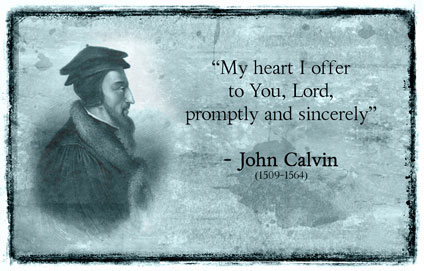
Tuesday, January 09, 2007
SOMETHING GOOD ON THE CROSS....Dr Phil Ryken
Something Good on the Cross
From my morning's reading, in preparation to preach on Luke 23:32-38:
"Now thou art lifted up, draw me to thee,And at thy death giving such liberal dole,Moist, with one drop of thy blood, my dry soul."-- John Donne, "Crucifying"
From my morning's reading, in preparation to preach on Luke 23:32-38:
"Now thou art lifted up, draw me to thee,And at thy death giving such liberal dole,Moist, with one drop of thy blood, my dry soul."-- John Donne, "Crucifying"
Monday, January 08, 2007
CHURCH LIFE..... Q&A WITH Dr. RC Sproul
What do we need to know about a church before we attend, and what do we need to know before we become a member?
Before we attend a church, we should know that it is a legitimate church. Now, obviously, if the sign on the front of the church reads “Church of Satan,” we know it isn’t a legitimate body of Christian believers. But what about churches that are not legitimate for less obvious reasons? Some religious bodies claim to be Christian that, in my judgment and in the judgment of many Christians, are not Christian churches or are apostate bodies. Even attending their services may be a sin. We can’t expect a church to be perfect. But does it hold to the essentials of the faith? Does it practice a basic, sound belief in the deity of Christ and aspects of Christ that we find outlined in the New Testament? Now, we may be worshiping every day with people who profess to be Christians but aren’t; this we can’t avoid because God hasn’t given us the ability to look at another person’s heart and say exactly where he or she is spiritually. But we can inquire into the basic beliefs of a church body, and we want to unite ourselves in worship only with a group of people who are attempting to do what is proper in the sight of God. Obviously that bare minimum applies before you attend the church. Before you join a church I would think you’d look more closely. You would ask questions such as, Is this a church where the gospel is being preached, where there is fidelity to the Scriptures? Is this a fellowship to which I am prepared to commit myself, my time, my money, my devotion, where I’m going to be instructed in spiritual growth, along with my family? I think those are the kinds of questions you need to look at very carefully before you make the commitment to join. In our country we often join churches in the same spirit that we join any other organization, forgetting that when we join the church, we take a sacred vow before God to do certain things—to be present in worship, to make diligent use of the means of grace, to be an active participant in that church. Before you take a vow to do something like that, you need to know what it is you’re joining and then, having made that vow, be prepared to keep it.
Sunday, January 07, 2007
7 DAY CHECK UP... By Charles J Paul
Well its been 7 days since the ball dropped in New York city, its been 7 days since we made those 2007 promises.
How are you doing with them, are you keeping up with what you said or maybe even though it has only been 7 days you have already forgotten all about it.
The good news for us as believers is that Jesus Christ has also made us a promise that is for sure, and that is that HE WILL NEVER LEAVE US OR FORSAKE US.
So let 2007 be the year that you walk forward not in the promises that man makes [ because they are weak and subject to failure ] But walk in the promise of your king and walk on solid ground.
How are you doing with them, are you keeping up with what you said or maybe even though it has only been 7 days you have already forgotten all about it.
The good news for us as believers is that Jesus Christ has also made us a promise that is for sure, and that is that HE WILL NEVER LEAVE US OR FORSAKE US.
So let 2007 be the year that you walk forward not in the promises that man makes [ because they are weak and subject to failure ] But walk in the promise of your king and walk on solid ground.
Saturday, January 06, 2007
UPDATE ON DR AL MOHLER BY RUSSELL MOORE
Albert Mohler Update
Friday, January 05, 2007
I just left from visiting Albert Mohler at the intensive care unit of Baptist East Hosptial here in Louisville. I am glad to report that he is doing much better than he was when I spoke to the radio audience of the program about this at 5:05 PM.
While his situation is still very serious, it seems that the doctors have his treatment well underway and he is recuperating well. Pulmonary emboli represent a serious concern under any circumstances but it seems that RAM is responding excellently to the treatment. We can all be grateful the doctors found this development so quickly.
The President is talking and in good spirits. Despite his incredible pain and having just lived through the scare of his life, he was actually able to discuss a book I brought to him the other day about, of all things, the life of Wendell Willkie.
Dr. Mohler still needs your prayers, as do Mary, Katie, and Christopher, so please don't stop them. But I am happy to say that I think his treatment is going well and I expect that he will be back to his life as normal sooner rather than later.
Friday, January 05, 2007
I just left from visiting Albert Mohler at the intensive care unit of Baptist East Hosptial here in Louisville. I am glad to report that he is doing much better than he was when I spoke to the radio audience of the program about this at 5:05 PM.
While his situation is still very serious, it seems that the doctors have his treatment well underway and he is recuperating well. Pulmonary emboli represent a serious concern under any circumstances but it seems that RAM is responding excellently to the treatment. We can all be grateful the doctors found this development so quickly.
The President is talking and in good spirits. Despite his incredible pain and having just lived through the scare of his life, he was actually able to discuss a book I brought to him the other day about, of all things, the life of Wendell Willkie.
Dr. Mohler still needs your prayers, as do Mary, Katie, and Christopher, so please don't stop them. But I am happy to say that I think his treatment is going well and I expect that he will be back to his life as normal sooner rather than later.
Q&A WITH DR. RC. SPROUL
How should Christian values impact business ethics in the office?
I remember having a discussion a few years ago in the boardroom of one of the Fortune 500 corporations here in the United States. I was speaking to the chairman of the board, the president, and several vice presidents of this corporation on the issue of the relationship between theology, philosophy, and ethics. At the end of the discussion the chairman of the board looked at me and said, “Do I understand you to be saying that ethical issues—that is, policies that we have in our business organization—touch the whole question of ethics, and in turn those ethics touch the question of philosophy, and in turn philosophy touches theology? Are you saying to us that how we run our business ultimately has theological significance?” I said, “Yes, that’s what I’m trying to say.” And it was like the lights came on in this man’s head for the first time in his life. It astonished me that he thought this principle to be so obscure. When we use the term ethics, we’re talking about doing what is right. From a Christian perspective, we believe that the ultimate norm and ultimate standard of rightness is the character of God and his perfect righteousness. So biblical principles of ethics have great relevance for the business world. I’m talking about simple things like God telling us it’s wrong to steal. You don’t have to be a Christian to appreciate honesty and respect for private property in the business community. I once talked to someone who was astonished because they gave $5,000 to an automobile salesman in Orlando, Florida, to have some work done and the guy took off with the $5,000 and never did the work. His wife was really upset, saying, “How can people do that? That’s crooked business.” One doesn’t have to be a Christian to feel violated when a businessman steals one’s money. The Bible tells us to honor contracts, to pay our bills on time. What businessman doesn’t appreciate it when his customers pay him what they owe him? The Bible has much to say about false weights and measures. How do you like it if you are buying “short measure” in perfume or in ketchup? That’s a business consideration. All of these are very practical, concrete principles of ethics that touch the very heart of doing business. Honesty, industry, integrity—we know that the Christian has no corner on these particular virtues. These virtues are significant in every realm of business and, most important, how we treat people in the realm of business. Do we treat them with dignity? That is a top priority of Christian ethics, that we treat our customers, our employees, our personnel with dignity.
I remember having a discussion a few years ago in the boardroom of one of the Fortune 500 corporations here in the United States. I was speaking to the chairman of the board, the president, and several vice presidents of this corporation on the issue of the relationship between theology, philosophy, and ethics. At the end of the discussion the chairman of the board looked at me and said, “Do I understand you to be saying that ethical issues—that is, policies that we have in our business organization—touch the whole question of ethics, and in turn those ethics touch the question of philosophy, and in turn philosophy touches theology? Are you saying to us that how we run our business ultimately has theological significance?” I said, “Yes, that’s what I’m trying to say.” And it was like the lights came on in this man’s head for the first time in his life. It astonished me that he thought this principle to be so obscure. When we use the term ethics, we’re talking about doing what is right. From a Christian perspective, we believe that the ultimate norm and ultimate standard of rightness is the character of God and his perfect righteousness. So biblical principles of ethics have great relevance for the business world. I’m talking about simple things like God telling us it’s wrong to steal. You don’t have to be a Christian to appreciate honesty and respect for private property in the business community. I once talked to someone who was astonished because they gave $5,000 to an automobile salesman in Orlando, Florida, to have some work done and the guy took off with the $5,000 and never did the work. His wife was really upset, saying, “How can people do that? That’s crooked business.” One doesn’t have to be a Christian to feel violated when a businessman steals one’s money. The Bible tells us to honor contracts, to pay our bills on time. What businessman doesn’t appreciate it when his customers pay him what they owe him? The Bible has much to say about false weights and measures. How do you like it if you are buying “short measure” in perfume or in ketchup? That’s a business consideration. All of these are very practical, concrete principles of ethics that touch the very heart of doing business. Honesty, industry, integrity—we know that the Christian has no corner on these particular virtues. These virtues are significant in every realm of business and, most important, how we treat people in the realm of business. Do we treat them with dignity? That is a top priority of Christian ethics, that we treat our customers, our employees, our personnel with dignity.
WHY PASTOR'S NEED ELDERS..... By Dr Philip Ryken
John Selden was a leading layman, churchman, and scholar who served as a member of the Westminster Assembly. His notable achievements include establishing the core 17th century collection of books for Oxford's Bodleian Library. Selden had this to say about why pastors need the assistance of elders in conducting the business of the church:"There must be some laymen in the Synod to overlook the clergy, lest they spoil the civil work, just as when the good woman puts a cat into the milkhouse to kill a mouse she sends her maid to look after the cat, lest the cat should eat up the milk.
Friday, January 05, 2007
URGENT PRAYER FOR DR. AL MOHLER
Dr. Mohler's health has sustained a setback. Over the past 36 hours Dr. Mohler has suffered from unrelenting pain. This unusual degree of pain signaled concern for the attending physicians and prompted additional tests this afternoon. In the past hour these tests have revealed that Dr. Mohler is suffering from pulmonary emboli in both lungs. His condition is quite serious and he has been moved to the intensive care unit of Baptist East Hospital in Louisville, KY for immediate treatment.
Please make this a matter of urgent prayer. Thank you once again for your concern and support during these days.
Please make this a matter of urgent prayer. Thank you once again for your concern and support during these days.
THE LION KING...... By Dr. Philip Ryken
The lion is the only animal that can dare lay claim to the title “the king of the beasts.” Really, there aren’t any other serious candidates. What other animal has the regal bearing of a lion, with its magnificent mane? What other animal sits with such quiet dignity, enthroned on its four great paws? What other animal has such a mighty and awesome roar? There is only one king of the beasts, and only the lion has title to that throne.My recent preaching tour in South Africa gave me a rare opportunity to visit a lion park near Johannesburg and see wild lions up close and in person. As our guide drove us into the first enclosure, suddenly they were there: a small pride of lions. After watching a lioness with her young cubs, we circled around for a closer view of a full-grown male sitting in the sun, the lord of all that he surveyed. The lion was no more than ten feet away from us, and the only thing separating us from him was our windshield. The lion looked absolutely magnificent. His tawny mane was golden in the late afternoon sun. His wide brown eyes seemed to express a depth of character, even of wisdom. His stately expression conveyed a sense of quiet strength—a king among beasts, if ever there was one.Suddenly the lion stood up, and I felt the tingling thrill that only comes in the presence of something that is truly awesome. Even that simple act of standing up showed the lion’s powerful athleticism. Every muscle of the great beast was alive; every nerve ending was alert. One had the sense that anything might happen, that the lion could do anything it wanted to do—absolutely anything. We were in the presence of greatness, and also danger. We knew this because our guides had told us a cautionary tale about an unfortunate tourist who tried to pose with the lions for a photograph and came to an unhappy end. Later on we saw the lord of another pride display a completely different aspect of the leonine temperament. The lion was sitting in the sun with his consort—his queen, if you will. She stood up, stretched, and prepared to walk away. But before she left, she took her leave of the king by gently nuzzling his face. As she stood kissing her mate, the end of her tail gently curled around his mane. The couple’s interaction expressed astonishing intimacy, as the mighty king tenderly embraced his lover. The lion is a familiar image from Scripture, where it is usually portrayed as a fierce and violent hunter (e.g. Num. 23:24; Ps. 22:13; Ezek. 22:25). People in biblical times feared the lion as a predator that killed their flocks and herds (e.g. Jer. 2:30; Zech. 11:3). They had also learned to respect the sound of its mighty voice (e.g. Job 4:10; Jer. 2:15). “The lion has roared,” wrote the prophet Amos, “who will not fear?” (Amos 3:8). If a lion ever attacked a person, there was no hope of escape unless God intervened. King David used this image—possibly drawing on his own experience as a shepherd—when he prayed: “O LORD my God, save me from all my pursuers and deliver me, lest like a lion they tear my soul apart, rending it in pieces, with none to deliver” (Ps. 7:1-2).The Bible also uses lions as a symbol of royalty, giving them the same status by revelation that they receive from creation: the lion is the king. In his final testament to his twelve sons, the tribes of Israel, Jacob conferred this royal blessing: “Judah, your brothers shall praise you; your hand shall be on the neck of your enemies; your father’s sons shall bow down before you. Judah is a lion’s cub; from the prey, my son, you have gone up. He stooped down; he crouched as a lion and as a lioness; who dares rouse him?” (Gen. 49:8-9).In other words, the line of Jacob would run through the royal tribe of Judah. Even though he was not his father’s eldest son, Judah would receive the praise, worship, and obedience of all his brothers. He would have the strength to crush his enemies the way a lion crushes its prey. And when Judah came into his kingdom, people would not dare to disturb him any more than they would dare to rouse a sleeping lion.Jacob’s prophecy came true. David and the other great kings of Israel came from the tribe of Judah. They ruled their brothers and defeated their enemies, just like Jacob promised. In time their kingdom came to be associated with the lion. For example, King Solomon’s throne was flanked with twelve golden lions (1 Kings 10:19-20). Eventually the same image was used to describe the greatest king of all: Jesus Christ. In his end times revelation of the church and the glory of God, John described the Great King who alone held the power of divine judgment: “Behold, the Lion of the tribe of Judah, the Root of David, has conquered, so that he can open the scroll and its seven seals” (Rev. 5:5).Jesus Christ is the Lion King. He is the beautiful, powerful, dangerous ruler of the universe. Therefore “the Lion of the tribe of Judah” is the perfect title for him. It speaks of his majestic authority and mighty dignity. It also declares that he is the king of his own tribe, who uses his fierce power to defend the people he loves. We should give this mighty king the reverence that he deserves, worshiping him with trembling and awe. For when you are in the living presence of a lion, the lion is the thing that commands your attention and demands your respect.
Thursday, January 04, 2007
UPDATE ON DR. JAMES KENNEDY
D. James Kennedy
D. James Kennedy, pastor of Coral Ridge Presbyterian Church in Fort Lauderdale, Fla., is recovering from a heart attack in his home on Dec. 28, 2006. On Monday, Jan. 1, Dr. Kennedy was was off life support, sitting up, and was able to speak with his family.
Our prayers are with you Dr Kennedy you are a gift to Gods people
D. James Kennedy, pastor of Coral Ridge Presbyterian Church in Fort Lauderdale, Fla., is recovering from a heart attack in his home on Dec. 28, 2006. On Monday, Jan. 1, Dr. Kennedy was was off life support, sitting up, and was able to speak with his family.
Our prayers are with you Dr Kennedy you are a gift to Gods people
HOW DO I FIND GOD' S WILL FOR MY LIFE? By Rev. Rick Philips
Tonight’s question asks, “How do I find God’s will for my life?” This is a question that burdens many believers, both because they fear to be out of God’s will and because they want to make decisions that God will bless.
Many Christians seek to know God’s through supernatural revelation. the example of Gideon is often cited: the hero of the Book of Judges laid out his fleece and by covering it with dew or not God revealed his will (Jud. 6:36-40). They fail to realize, however, that the Bible does not commend this practice and that as a Messianic forerunner Gideon had privileges most of us do not. In general, the Bible gives us no encouragement to supernatural directions as to whether or not we should marry Suzy, take the job in Cleveland, or even go off to the missions field.
One danger for those seeking some voice or vision to guide them is that their emotions are able to manufacture such experiences, especially when there is a great deal of intensity involved with a decision. Over the years, I have run across a number of ruinous examples of this. A woman told another, “God told me he wants you to marry a man who plays piano.” After the recipient spent two years waiting for her own Elton John, she learned that her prophetess was merely acting out of her own psychotic need to play god. Another danger is that those seeking divine guidance may be led by Satan just as easily as by the Lord. This is why John warned us: “Beloved, do not believe every spirit, but test the spirits to see whether they are from God, for many false prophets have gone out into the world” (1 Jn. 4:1). If you think God has revealed something specific about your life, you should test it against the teachings of the Bible – since God cannot contradict himself – and seek the counsel of trusted believers. In general, we should be skeptical of such supposed revelations, especially when we are under stress. Even the apostle Paul seems to have held this view. When he had the dream asking him to go to Macedonia, Luke says that, together with his associates, Paul “concluded” that they should in fact go (Acts 16:10). The Greek word for “concluded” indicates that Paul got together with his colleagues to exercise their godly discernment about the dream before following it.
So how should we seek God’s will? In his helpful little book, Discovering God’s Will, Sinclair Ferguson spells out 3 principles. First, he points us to God’s commands and prohibitions in Scripture. The Ten Commandments alone will clear up many decisions, but all through the Bible we are instructed by God’s moral dictates. All our decisions should be filtered through them if we want to serve God’s revealed will. Second, various principles are worked out in Scripture. “Seek first the kingdom of God and his righteousness,” Jesus taught (Mt. 6:33). 1 Timothy 6:10 says, “The love of money is a root of all kinds of evils.” Comparing potential decisions with these and other principles will help us to make godly choices. Third, we might compare our situation with the examples and illustrations in Scripture. What did David do in a similar trial? Where did Saul go wrong? Did Jesus ever face this situation? These are fruitful lines of questioning. In summary, Ferguson argues that instead of seeking some supernatural word that will relieve us of responsibility for making godly decisions, we are to cultivate biblical decision-making through familiarity with the Word God has already revealed. Ferguson cites counsel given by the pastor and hymn-writer John Newton. When asked how the Lord guides us, Newton replied, “In general, he guides and directs his people, by affording them in answer to prayer, the light of his Holy Spirit, which enables them to understand and to love the Scriptures. The word of God… is to furnish us with just principles, right apprehensions to regulate our judgments and affections, and thereby influence and direct our conduct.”
Often, when people say they want to know God’s will for their lives, they mean that they want to be assured that everything will go as they plan, without difficulty or trial. One thing we can be sure about God’s will is that this is not his plan. Instead of seeking relief from the prospect of difficulty or worldly failure, Christians should instead seek to honor God with decisions that are obedient to his Word, trusting him to make all our seemingly twisted paths straight in his loving care of our lives.
Many Christians seek to know God’s through supernatural revelation. the example of Gideon is often cited: the hero of the Book of Judges laid out his fleece and by covering it with dew or not God revealed his will (Jud. 6:36-40). They fail to realize, however, that the Bible does not commend this practice and that as a Messianic forerunner Gideon had privileges most of us do not. In general, the Bible gives us no encouragement to supernatural directions as to whether or not we should marry Suzy, take the job in Cleveland, or even go off to the missions field.
One danger for those seeking some voice or vision to guide them is that their emotions are able to manufacture such experiences, especially when there is a great deal of intensity involved with a decision. Over the years, I have run across a number of ruinous examples of this. A woman told another, “God told me he wants you to marry a man who plays piano.” After the recipient spent two years waiting for her own Elton John, she learned that her prophetess was merely acting out of her own psychotic need to play god. Another danger is that those seeking divine guidance may be led by Satan just as easily as by the Lord. This is why John warned us: “Beloved, do not believe every spirit, but test the spirits to see whether they are from God, for many false prophets have gone out into the world” (1 Jn. 4:1). If you think God has revealed something specific about your life, you should test it against the teachings of the Bible – since God cannot contradict himself – and seek the counsel of trusted believers. In general, we should be skeptical of such supposed revelations, especially when we are under stress. Even the apostle Paul seems to have held this view. When he had the dream asking him to go to Macedonia, Luke says that, together with his associates, Paul “concluded” that they should in fact go (Acts 16:10). The Greek word for “concluded” indicates that Paul got together with his colleagues to exercise their godly discernment about the dream before following it.
So how should we seek God’s will? In his helpful little book, Discovering God’s Will, Sinclair Ferguson spells out 3 principles. First, he points us to God’s commands and prohibitions in Scripture. The Ten Commandments alone will clear up many decisions, but all through the Bible we are instructed by God’s moral dictates. All our decisions should be filtered through them if we want to serve God’s revealed will. Second, various principles are worked out in Scripture. “Seek first the kingdom of God and his righteousness,” Jesus taught (Mt. 6:33). 1 Timothy 6:10 says, “The love of money is a root of all kinds of evils.” Comparing potential decisions with these and other principles will help us to make godly choices. Third, we might compare our situation with the examples and illustrations in Scripture. What did David do in a similar trial? Where did Saul go wrong? Did Jesus ever face this situation? These are fruitful lines of questioning. In summary, Ferguson argues that instead of seeking some supernatural word that will relieve us of responsibility for making godly decisions, we are to cultivate biblical decision-making through familiarity with the Word God has already revealed. Ferguson cites counsel given by the pastor and hymn-writer John Newton. When asked how the Lord guides us, Newton replied, “In general, he guides and directs his people, by affording them in answer to prayer, the light of his Holy Spirit, which enables them to understand and to love the Scriptures. The word of God… is to furnish us with just principles, right apprehensions to regulate our judgments and affections, and thereby influence and direct our conduct.”
Often, when people say they want to know God’s will for their lives, they mean that they want to be assured that everything will go as they plan, without difficulty or trial. One thing we can be sure about God’s will is that this is not his plan. Instead of seeking relief from the prospect of difficulty or worldly failure, Christians should instead seek to honor God with decisions that are obedient to his Word, trusting him to make all our seemingly twisted paths straight in his loving care of our lives.
Wednesday, January 03, 2007
CHANGE WHO NEEDS IT??? WHO WANTS IT??? By Pastor Charles J Paul
In our lives we change moment by moment, but what is very important for us as believers to keep a watch on is how we are changing. How do you and I deal with change, how do we face each new day?
What I believe we must first do is walk in the gift that God has given us today, make the most out of each day that He puts in your path.
Next we must walk in His truth seek to be used by Him in each day, and not let the world determine the direction we will go, remember the only one we are to follow is Christ Himself.
But when we do that and we follow scripture to the letter you will find that more than a normal amount of change will come your way, you will not be the most popular person on the block in fact you may even be hated.
So you see change and valleys and hardships are not a sign of defeat they are sign of victory in the fact that we are going in the right direction following our Lord Jesus Christ who was also hated and faced changes everyday.
So who wants Change the one who truly has been changed by the redeeming power of Jesus Christ.
What I believe we must first do is walk in the gift that God has given us today, make the most out of each day that He puts in your path.
Next we must walk in His truth seek to be used by Him in each day, and not let the world determine the direction we will go, remember the only one we are to follow is Christ Himself.
But when we do that and we follow scripture to the letter you will find that more than a normal amount of change will come your way, you will not be the most popular person on the block in fact you may even be hated.
So you see change and valleys and hardships are not a sign of defeat they are sign of victory in the fact that we are going in the right direction following our Lord Jesus Christ who was also hated and faced changes everyday.
So who wants Change the one who truly has been changed by the redeeming power of Jesus Christ.
Tuesday, January 02, 2007
CHRISTMAS EVE IN IRAQ.....By Aaron Messner
This just goes to show the power of the internet when it is used for the Glory of God Alone.
Pastor Charles J Paul
I asked Aaron Messner to write the following story he told us at staff meeting today:Here’s a special Christmas story. Marion Clark.
My sister-in-law was visiting for the Christmas holiday and attended the 7:30 Christmas Eve service with us. She thoroughly enjoyed the service and after we got back to the house, she asked if the service would become available online. I told her that the service was webcast live and would be available to download from the Tenth website in another day or so. Upon hearing this she said, “I’ve got to let my brother know about this.” Her brother is currently serving with the U.S. Air Force in Iraq. She immediately sent a text message to her brother, telling him that she had just attended a wonderful Christmas Eve service at Tenth Presbyterian Church in Philadelphia and she encouraged him to try to download the service if he had a chance over the coming days. Within minutes she received a surprising text message from her brother. He said that he was awake and on duty (it was the middle of the night in Iraq). He told her that while he was working, a fellow soldier had invited him over to his laptop computer. The soldier said to him “Hey, I’m downloading the Christmas Eve service from my home church back in Philadelphia, do you want to listen in?” It turns out that the soldier’s home church was none other than Tenth Presbyterian Church in Philadelphia. So, my sister-in-law’s brother had already listened to the Tenth service, he had enjoyed the live webcast in the wee hours of Christmas morning somewhere in Iraq. Paul Jones told me of a group of people from Sarah Childress's town in Ohio who gathered in one location to see and listen to the service on a large screen monitor. Where else were people listening in?
Pastor Charles J Paul
I asked Aaron Messner to write the following story he told us at staff meeting today:Here’s a special Christmas story. Marion Clark.
My sister-in-law was visiting for the Christmas holiday and attended the 7:30 Christmas Eve service with us. She thoroughly enjoyed the service and after we got back to the house, she asked if the service would become available online. I told her that the service was webcast live and would be available to download from the Tenth website in another day or so. Upon hearing this she said, “I’ve got to let my brother know about this.” Her brother is currently serving with the U.S. Air Force in Iraq. She immediately sent a text message to her brother, telling him that she had just attended a wonderful Christmas Eve service at Tenth Presbyterian Church in Philadelphia and she encouraged him to try to download the service if he had a chance over the coming days. Within minutes she received a surprising text message from her brother. He said that he was awake and on duty (it was the middle of the night in Iraq). He told her that while he was working, a fellow soldier had invited him over to his laptop computer. The soldier said to him “Hey, I’m downloading the Christmas Eve service from my home church back in Philadelphia, do you want to listen in?” It turns out that the soldier’s home church was none other than Tenth Presbyterian Church in Philadelphia. So, my sister-in-law’s brother had already listened to the Tenth service, he had enjoyed the live webcast in the wee hours of Christmas morning somewhere in Iraq. Paul Jones told me of a group of people from Sarah Childress's town in Ohio who gathered in one location to see and listen to the service on a large screen monitor. Where else were people listening in?
I WANT TO BE LIKE Ligon Duncan WHEN I GROW UP
I think it would do us all good to look close at Dr Duncans response to the question and ask ourselves what would we have said
Pastor Charles J Paul
A Reflection for the New Year By Justin Taylor
2007 is here! The New Year's Eve parties are all held, the ball has dropped, the fireworks are all exploded, confetti is being swept away, the parades are over, and minds are slowly turning to the reality of work tomorrow. Awww maannnn!Like most people, this has been a reflective time for me. It's natural... between the year now sunk into eternity past and the year that lays ahead should Jesus tarry (come, Lord Jesus!)... to speculate about, plan for, and pray over the year ahead. Thanks to having to prepare a sermon for New Year's Eve, I've done less of than than normal, but I've done some.What about you? What are your hopes, plans, and prayers for 2007? Please share. And I encourage all who read this post and any comments to pray for what others share.My main reflection is summed up by Ligon Duncan's opening response to the opening question on the opening panel of 2006's T4G Conference. The question was, "What are you doing with your life and why?" Okay, a great question right.
Lig' responded:
"When people ask me what my job is, I tell them that it is to minister to the people of God by preaching the Gospel. I:
preach the word;
love the people;
pray down heaven;
promote family religion; and
train the elders of the church.Underneath all that, I'm called to live a godly life."
Lig' shared this without batting an eye. I think it's in his bones. I can spend the entire year immersing myself in this rather full and absorbing summation of pastoral ministry. I'm both emotionally encouraged and spiritually challenged and practically helped by this. My New Year's reflection: I want to be like Lig' Duncan when I grow up.
Pastor Charles J Paul
A Reflection for the New Year By Justin Taylor
2007 is here! The New Year's Eve parties are all held, the ball has dropped, the fireworks are all exploded, confetti is being swept away, the parades are over, and minds are slowly turning to the reality of work tomorrow. Awww maannnn!Like most people, this has been a reflective time for me. It's natural... between the year now sunk into eternity past and the year that lays ahead should Jesus tarry (come, Lord Jesus!)... to speculate about, plan for, and pray over the year ahead. Thanks to having to prepare a sermon for New Year's Eve, I've done less of than than normal, but I've done some.What about you? What are your hopes, plans, and prayers for 2007? Please share. And I encourage all who read this post and any comments to pray for what others share.My main reflection is summed up by Ligon Duncan's opening response to the opening question on the opening panel of 2006's T4G Conference. The question was, "What are you doing with your life and why?" Okay, a great question right.
Lig' responded:
"When people ask me what my job is, I tell them that it is to minister to the people of God by preaching the Gospel. I:
preach the word;
love the people;
pray down heaven;
promote family religion; and
train the elders of the church.Underneath all that, I'm called to live a godly life."
Lig' shared this without batting an eye. I think it's in his bones. I can spend the entire year immersing myself in this rather full and absorbing summation of pastoral ministry. I'm both emotionally encouraged and spiritually challenged and practically helped by this. My New Year's reflection: I want to be like Lig' Duncan when I grow up.
BE STRONG..................
Be Strong!
Happy new year! As you enter into this new year, take heed to God's word given to Joshua (with slight adaptation): Marion Clark
Only be strong and very courageous, being careful to do according to all the law that [Christ] my servant commanded you. Do not turn from it to the right hand or to the left, that you may have good success wherever you go. This Book of the Law [and Gospel] shall not depart from your mouth, but you shall meditate on it day and night, so that you may be careful to do according to all that is written in it. For then you will make your way propserous, and then you will have good success. Have I not commanded you? Be strong and courageous. Do not be frightened, and do not be dismayed, for the Lord your God is with you wherever you go" (Joshua 1:7-9).
Happy new year! As you enter into this new year, take heed to God's word given to Joshua (with slight adaptation): Marion Clark
Only be strong and very courageous, being careful to do according to all the law that [Christ] my servant commanded you. Do not turn from it to the right hand or to the left, that you may have good success wherever you go. This Book of the Law [and Gospel] shall not depart from your mouth, but you shall meditate on it day and night, so that you may be careful to do according to all that is written in it. For then you will make your way propserous, and then you will have good success. Have I not commanded you? Be strong and courageous. Do not be frightened, and do not be dismayed, for the Lord your God is with you wherever you go" (Joshua 1:7-9).
UN-LOCKE THE CHURCH.!!!..... By Mark Dever
Un-Locke the Church!
Reflecting on the blessings God has given us in the United States, freedom of religion is certainly chief among them. And for them, we owe God thanks for one certain letter, which began:
"Honored Sir, Since you are pleased to inquire what are my thoughts about the mutual toleration of Christians in their different professions of religion, I must needs answer you freely that I esteem that toleration to be the chief characteristic mark of the true church. For whatsoever some people boast of the antiquity of places and names, or of the pomp of their outward worship; others, of the reformation of their discipline; all, of the orthodoxy of their faith—for everyone is orthodox to himself—these things, and all others of this nature, are much rather marks of men striving for power and empire over one another than of the church of Christ. Let anyone have never so true a claim to all these things, yet if he be destitute of charity, meekness, and goodwill in general toward all mankind, even to those that are not Christians, he is certainly yet short of being a true Christian himself.”
So John Locke writes in his Letter Concerning Toleration, (p.13). Locke's theology is certainly confused, but he went on to argue in his letter that folks of various theological persuasions had sufficient morality in common to be able to have a common, shared society. 2 quick comments:
1. Whether or not Locke (and the American founders) were right in this supposition is still open to question. When this letter was penned, abortion was assumed to be infanticide and homosexuality was considered immoral. What happens when large parts of the population no longer share such moral conclusions?
2. Locke's toleration somehow slipped from society at large into the church itself. As Robert Oliver has observed, “By the second decade of the eighteenth century it is clear that Locke’s Letter concerning Toleration was being used in a new way. Christians were moving beyond a readiness to tolerate heretics outside the church to a reluctance to discipline them within its bounds.”
I leave larger societal reflections to others more qualified than I. About the church, however, surely Christ clearly taught that false teachers would arise, that wolves would imitate sheep, that discernment would be needed and that discipline should be practiced. I just preached this morning on II Peter 2, a clear call for false teachers to be rejected. The New Testament has many other echoes of Christ's teaching in Matthew 24 (and elsewhere).
Confusing the world and the church is dangerous on just about any level, but cultivating a "toleration" about differing ways of salvation in the church is absolutely suicidal. Intolerance of serious error in the church promotes the Gospel. Particularly if you are a pastor reading this, join me in agreeing to work to un-Locke our churches!
Reflecting on the blessings God has given us in the United States, freedom of religion is certainly chief among them. And for them, we owe God thanks for one certain letter, which began:
"Honored Sir, Since you are pleased to inquire what are my thoughts about the mutual toleration of Christians in their different professions of religion, I must needs answer you freely that I esteem that toleration to be the chief characteristic mark of the true church. For whatsoever some people boast of the antiquity of places and names, or of the pomp of their outward worship; others, of the reformation of their discipline; all, of the orthodoxy of their faith—for everyone is orthodox to himself—these things, and all others of this nature, are much rather marks of men striving for power and empire over one another than of the church of Christ. Let anyone have never so true a claim to all these things, yet if he be destitute of charity, meekness, and goodwill in general toward all mankind, even to those that are not Christians, he is certainly yet short of being a true Christian himself.”
So John Locke writes in his Letter Concerning Toleration, (p.13). Locke's theology is certainly confused, but he went on to argue in his letter that folks of various theological persuasions had sufficient morality in common to be able to have a common, shared society. 2 quick comments:
1. Whether or not Locke (and the American founders) were right in this supposition is still open to question. When this letter was penned, abortion was assumed to be infanticide and homosexuality was considered immoral. What happens when large parts of the population no longer share such moral conclusions?
2. Locke's toleration somehow slipped from society at large into the church itself. As Robert Oliver has observed, “By the second decade of the eighteenth century it is clear that Locke’s Letter concerning Toleration was being used in a new way. Christians were moving beyond a readiness to tolerate heretics outside the church to a reluctance to discipline them within its bounds.”
I leave larger societal reflections to others more qualified than I. About the church, however, surely Christ clearly taught that false teachers would arise, that wolves would imitate sheep, that discernment would be needed and that discipline should be practiced. I just preached this morning on II Peter 2, a clear call for false teachers to be rejected. The New Testament has many other echoes of Christ's teaching in Matthew 24 (and elsewhere).
Confusing the world and the church is dangerous on just about any level, but cultivating a "toleration" about differing ways of salvation in the church is absolutely suicidal. Intolerance of serious error in the church promotes the Gospel. Particularly if you are a pastor reading this, join me in agreeing to work to un-Locke our churches!
Monday, January 01, 2007
BELONGING TO THE CHURCH By Dr. Ligon Duncan
Belonging to the Church
by lduncan
"The question whether or not to join the church or belong to the church is not one that is open for the Christian believer." (Donald Macleod)
"We don’t go to church; we are the church." (Ernest Southcott
by lduncan
"The question whether or not to join the church or belong to the church is not one that is open for the Christian believer." (Donald Macleod)
"We don’t go to church; we are the church." (Ernest Southcott
WHY READ JOHN OWEN?? By Kelly Kapic

Mr.Kapic is the Associate Professor of Biblical and Theological Studies at Covenant College
With the busyness of life, one of the realities that we all must face is the truth about our finitude. One aspect of coming to terms with this reality is embracing the fact that we have limited time – there are only twenty-four hours in a day, no matter how much we might wish it were otherwise. The demands on us are great, with family, work, church, and civic responsibilities all demanding our time and attention. Given this situation, one challenge is deciding what to read with the few opportunities most people have for such an activity amid their crowded lives. Such is the case not merely for laypeople, but also for pastors and theologians. When you add to this dilemma the fact that there are literally millions of books you can order from Amazon.com, how can one make wise choices about who or what to read?
When I am asked about what kind of Christian literature one should read, I believe one of the best things you can do is read authors from throughout the history of the Church. Avoid reading only what is ‘new’ or trendy. Learn to dip into the wisdom of ages past, for there you will find surprising refreshment and challenge. Authors writing from different historical and cultural contexts often bring insights that surprise, irritate, and stimulate. C. S. Lewis memorably captured this when he wrote:
None of us can fully escape this blindness [of our age], but we shall certainly increase it, and weaken our guard against it, if we read only modern books. Where they are true they will give us truths which we half knew already. Where they are false they will aggravate the error with which we are already dangerously ill. The only palliative is to keep the clean sea breeze of the centuries blowing through our minds, and this can be done only by reading old books. Not, of course, that there is any magic about the past. People were no cleverer then than they are now; they made as many mistakes as we. But not the same mistakes. They will not flatter us in the errors we are already committing; and their own errors, being now open and palpable, will not endanger us…. To be sure, the books of the future would be just as good a corrective as the books of the past, but unfortunately we cannot get at them.[1]
While I have elsewhere argued that the Puritans, in general, provide a set of voices worth our consideration, I would like to focus my attention here on one particular Puritan, John Owen (1616-1683).[2] This seventeenth century Puritan served in a variety of capacities throughout his life, doing everything from acting as an army chaplain for Oliver Cromwell to serving as the Vice-Chancellor of Oxford University. Owen, in many ways considered one of the intellectual giants of the Puritan movement, made an impact not merely among those living in the seventeenth century. His writings have remained in print over the last 350 years, and this can be attributed to the strange power his books continue to have on those who thoughtfully read them.
The question I want to briefly explore is, What is it about this man’s writings that have made so many people believe they are worthy of your precious time? This question becomes even more interesting when one considers the honest truth that this Puritan is not an ‘easy read.’ Owen’s writings take work. Not only can his sentence structure cumbersomely read in a kind of ‘Latinized English’ style, but his thoughts are often deep, dense, and unsettling.
When reading Owen, expect plenty of occasions when you will need to stop, reread, and then think through this Puritan’s claims. Sometimes this means you disagree with him, sometimes it means he takes you to a whole new level of understanding some aspect of the faith, yourself, or the world. No matter what the response, Owen tends to refresh and invigorate those who humbly read him, even when they do not always concur with his judgments. The reason so many people over the past centuries have invested the energy in reading Owen is because they have found wisdom and insight in this sensitive theologian. As a taste of what you will find, let me highlight just three observations – many more can and should be added to this list – that Owen provides for those interested in theology.
I. Owen reminds us that the best theology is always pastoral theology
All too often in life we find ourselves separating what ought to stay together. An example of this tendency is frequently found in theological methodology. It is always a temptation to divorce rigorous theological scholarship from practical application. Academic theology runs the risk of becoming a detached intellectual exercise, while pastoral ministry may lapse into an endless list of tasks without the needed times of reflection which are necessary to rightly frame one’s ministry. But the best pastors and theologians throughout the history of the Church have consistently rejected pitting these two against one another, instead seeing that theology and life are inseparable. To put it another way, if we detach our theology from our ethics, our dogmatics become lifeless and our ethics become groundless. Owen serves as a wonderful example of someone who always pushes us to avoid such a false dichotomy.
For Owen, the best theology is and must always be pastoral theology. In this way Owen’s theology can be described as ‘anthroposensitive.’ What I mean by anthroposensitive is that Owen’s methodology refuses to “divorce theological considerations from practical human application, since theological reflections are always interwoven with anthropological concerns.”[3] Said differently, Owen operated on the assumption that any theology that rightly focused on God, did so in a way that always pointed humanity toward communion with the risen Lord Jesus Christ.
Owen consistently reminds us that loving and knowing God calls us to a holistic engagement with God, in which one’s mind, will, affections – a person’s very life – is transformed by Yahweh. Practical application must be woven throughout one’s theological understanding and not simply treated as an obligatory add-on at the end – as if the theology could rightly stand on its own, whether or not one’s life is engaged.
Theology does not merely influence our lives, but it grows out of our lives. Theology that comes up short of this is left wanting. Consequently, Owen concludes that a fundamental “end of all true theology is the cultivation of a most holy and sweet communion with God, wherein lies the true happiness of mankind…. The ultimate end of true theology is the celebration of the praise of God, and His glory and grace in the eternal salvation of sinners.”[4] The ramifications of this for the theologian and pastor are unavoidable. According to Owen, who minces no words on this matter, “a Christian theologian is not a man with some superficial knowledge or slight grasp of a technical scheme of theology and its scientific terminology. If he bears no mark of a true disciple of Christ, then he is no theologian.”[5] In this way Owen always reminds me of Martin Luther, who memorably said: “It is through living, indeed through dying and being damned that one becomes a theologian, not through understanding, reading, or speculation.” (I think this should be footnoted. I found a citation of it online as 26WA 5; 163, 28f. (1519).The true theologian – and this is intimidating – must speak from mind and experience, pointing others to the true God. Reading Owen helps us remember that the best theology is always pastoral theology.
II. Owen reminds us that Christ must be the centerpiece of our theology
According to Owen, a biblical theology must have Christ at the center. One could become confused and think that this somehow takes away from the Father or the Spirit, but that is not how Owen reads the biblical literature. Owen’s Trinitarian framework provides fresh emphasis on recognizing that the Son is the great revelation of the Father, and the Spirit is none other than the Spirit of Christ. We commune with the Father through the Son in the Spirit. The Spirit draws us to Christ and we approach the Father only through the Son. Owen’s basic insight here is that our theology needs to be Trinitarian in its orientation, and to be biblically Trinitarian is to be Christocentric (Christ-centered). To focus on Christ does not take away from the Father or the Spirit, but rather rightly reveals the beauty of the Triune God in his love, grace, and fellowship.
Owen puts the matter clearly when he writes: “He [Christ], and he alone, declares, represents, and makes known, unto angels and men, the essential glory of the invisible God, his attributes and his will; without which, a perpetual comparative darkness would have been on the whole creation.”[6] For “in the face of Jesus Christ we see his [the invisible God’s] glory.”
Elsewhere Owen concludes “that the immediate author of evangelical or gospel theology is Jesus Christ Himself, the only-begotten Son of God.”[7] Thus, since our theology and practice are interwoven, Owen sees Christ as the center of it all: “The sum of all is, that the whole wisdom of our walking with God is hid in Christ, and from him only to be obtained.”[8]
For a greater taste of how Owen’s theology magnifies Christ within his Trinitarian theology, begin by reading one of these volumes: On Communion with God (1657),[9] or On the Person of Christ (1678), or The Glory of Christ (1684).[10] I would be surprised to hear of someone reading one of these works and not finding fresh insights and encouragement.
III. Owen reminds us to be confident in the Spirit’s Work
While it may astound many in the contemporary Church to learn that Reformed theologians have historically provided some of the most extensive writings on the person and work of the Holy Spirit, it is nonetheless true. While Calvin has been called the ‘Theologian of the Holy Spirit,’ Owen could just as easily receive this title. And this is no where more clearly seen than in his massive writings, published between 1674 and 1693, which focus on the Spirit’s person and work. These various books, which can be found in volumes 3-4 of Owen’s collected writings, demonstrate fresh biblical exegesis, wise pastoral counsel, and insightful dependence on past leaders of the Church.
As a sample of how Owen highlights a neglected biblical reality, look to his exposition of the relationship between the incarnate Son and the Holy Spirit. According to Owen, you cannot understand the person and work of Jesus apart from the ongoing active role of the Spirit in the life of the Savior. One of the refreshing aspects of his exploration is his reminder that we not limit the work of the Spirit to the miraculous conception, but continue recognizing the work of the Spirit throughout Jesus’ entire life. Owen argues that we must recognize that is was by the Spirit that Jesus was
“directed, strengthened, and comforted, in his whole course, -- in all his temptations, troubles, and sufferings, from first to last; for we know that there was a confluence of all these upon him in his whole way and work, a great part of that whereunto he humbled himself for our sakes consisting in these things.”[11]
Once this is recognized – that Jesus was holy in and through the power of the Spirit – then we can see why Owen thought it was so incredible to claim that, by God’s grace, we have this same Spirit in us. We have the Spirit of Christ in us, and thus while we – unlike Jesus – are born in sin and often give into it, we can be confident that he who began a good work in us will carry it unto completion. For our confidence is based in the Spirit, not in ourselves. Sanctification, according to Owen, is “the universal renovation of our natures by the Holy Spirit into the image of God, through Jesus Christ.”[12]
The confidence a believer has is based not on their own will-power, but on the holy power of the Spirit of God who is active in their lives. Christian obedience must be framed in terms of the work of the Spirit: “the actual aid, assistance, and internal operation of the Spirit of God is necessary, required, and granted, unto the producing of every holy act of our minds, wills, and affections, in every duty whatever.”[13] Without the Spirit we find ourselves overwhelmed by sin and self, but with the gift of the Spirit we find ourselves in communion with the God of life, and consequently, we are slowly transformed from the inside out as we are prepared to be with him for all eternity.
My aim in this brief reflection was to give a few passing reasons why anyone would consider reading writings which are from the seventeenth century. I remain convinced that although reading Owen is not easy, and he does have his own blind spots (as all of us do), he is a theologian of the highest caliber. Those who take the time to actually read him, whether contemporary theologians, pastors, or lay readers, often find themselves surprised by the wisdom, encouragement, and power that they encounter in this unique Puritan’s writings. May a whole new generation of readers come to appreciate the gift God gave his Church when he gave us John Owen.
Appendix: What to read first? A few suggestions
Lay readers often find that Owen’s The Mortification of Sin is a most helpful entrance into his thinking. Because it is relatively short, it is a way to dip into Owen without being overwhelmed. This can be found in, John Owen, Overcoming Sin and Temptation: Three Classic Works by John Owen, edited by Kelly M. Kapic and Justin Taylor (Wheaton, Ill.: Crossway Books, 2006), 36-139. In this version we have tried to offer both an accurate and accessible edition of these writings.
Those interested in recent theological debates about Justification would do well to spend some time revisiting Owen’s impressive handling of the subject. He is not the final word on the subject, but his ‘word’ on the subject should not be overlooked. See the recent new edition with an excellent introduction by Carl Trueman – a leading Owen scholar: John Owen, The Doctrine of Justification by Faith (Grand Rapids: Reformation Heritage Books, 2006).
For those interested in Trinitarian discussions, I cannot recommend highly enough Owen’s Communion with God, which is a brilliant treatise on how believer’s communion with the Father, Son, and Spirit. A new edition of this volume will be appearing late 2007 or early 2008. Watch for John Owen, Communion with the Triune God: A Classic Work by John Owen, edited by Kelly M. Kapic and Justin Taylor (Wheaton, Ill.: Crossway Books, forthcoming). To read it before then in the 19th century edition, see vol. 2 of Owen’s Works, reprinted by Banner of Truth.
WHY FORGIVEN? By Dr RC. Sproul
Right Now Counts Forever by R.C. Sproul
When someone orders us to do something, or imposes an obligation, it is natural for us to ask two questions. The first question is, “Why should I?” and the second is, “Who says so?” The why and the authority behind the mandate are very important to the question of forgiveness.
The why for forgiving others is rooted in the fact that we have been the recipients of extraordinary mercy and compassion. We are all debtors who cannot pay their debts to God. Yet God has been gracious enough to grant us forgiveness in Jesus Christ. It is no wonder that in the Lord’s Prayer, Jesus instructs His disciples to say, “Forgive us our debts as we forgive our debtors.” There is a parallel, a joint movement of compassion, that is first received from God and then we in turn exercise the same compassion to others. God makes it clear that if we lack that compassion and harbor vengeance in our heart, rather than being ready to forgive again and again, we will forfeit any forgiveness that has been given to us.
Thus, the foundation for a forgiving spirit is the experience of divine grace. It is by grace that we are saved. It is by grace that we live. It is by grace that we have been forgiven. Therefore, the why of forgiving is to manifest our own gratitude for the grace that we have received. Why should we forgive? Simply, because God forgives us. It is not an insignificant thing to add on to the why the point that we are commanded by that God of grace to exercise grace in turn.
When we look at the question of forgiveness, however, we also have to ask the second query, “Who says so, and under what conditions are we to keep this requirement?” It is often taught in the Christian community that Christians are called to forgive those who sin against them unilaterally and universally. We see the example of Jesus on the cross, asking God to forgive those who were executing Him, even though they offered no visible indication of repentance. From that example of Jesus, it has been inferred that Christians must always forgive all offenses against them, even when repentance is not offered. However, the most that we can legitimately infer from Jesus’ actions on that occasion is that we have the right to forgive people unilaterally. Though that may be indeed a wonderful thing, it is not commanded. If we look at the commandment that Jesus gives in Luke 17:3, He says, “If your brother sins, rebuke him.” Notice that the first response to the offense is not forgiveness but rather rebuke. The Christian has the right to rebuke those who commit wrong doing against him. That’s the basis for the whole procedure of church discipline in the New Testament. If we were commanded to give unilateral forgiveness to all, under all circumstances, then the whole action of church discipline to redress wrongs, would itself be wrong. But Jesus says, “If your brother sins, rebuke him, and if he repents...,” – here is where the command becomes obligatory – if the offender repents, then it is mandatory for the Christian to forgive the one who has offended him. It is transgression against God when we refuse to forgive those who have repented for their offenses to us. This is the teaching of Jesus. It is the mandate of Jesus. As we are united in Christ, we are to show that union by extending the same grace to others that He extends to us.
Subscribe to:
Comments (Atom)