Chapter I
Of the Holy Scripture
I. Although the light of nature, and the works of creation and providence do so far manifest the goodness, wisdom, and power of God, as to leave men unexcusable;[1] yet are they not sufficient to give that knowledge of God, and of His will, which is necessary unto salvation.[2] Therefore it pleased the Lord, at sundry times, and in divers manners, to reveal Himself, and to declare that His will unto His Church;[3] and afterwards for the better preserving and propagating of the truth, and for the more sure establishment and comfort of the Church against the corruption of the flesh, and the malice of Satan and of the world, to commit the same wholly unto writing;[4] which makes the Holy Scripture to be most necessary;[5] those former ways of God's revealing His will unto His people being now ceased.[6]
II. Under the name of Holy Scripture, or the Word of God written, are now contained all the books of the Old and New Testament, which are these: Of the Old Testament: Genesis, Exodus, Leviticus, Numbers, Deuteronomy, Joshua, Judges, Ruth, I Samuel, II Samuel, I Kings, II Kings, I Chronicles, II Chronicles, Ezra, Nehemiah, Esther, Job, Psalms, Proverbs, Ecclesiastes, The Song of Songs, Isaiah, Jeremiah, Lamentations, Ezekiel, Daniel, Hosea, Joel, Amos, Obadiah, Jonah, Micah, Nahum, Habakkuk, Zephaniah, Haggai, Zechariah, Malachi. Of the New Testament: The Gospels according to Matthew, Mark, Luke, John, The Acts of the Apostles, Paul's Epistles to the Romans, Corinthians I, Corinthians II, Galatians, Ephesians, Philippians, Colossians, Thessalonians I , Thessalonians II , To Timothy I , To Timothy II, To Titus, To Philemon, The Epistle to the Hebrews, The Epistle of James, The first and second Epistles of Peter, The first, second, and third Epistles of John, The Epistle of Jude, The Revelation of John. All which are given by inspiration of God to be the rule of faith and life.[7]
III. The books commonly called Apocrypha, not being of divine inspiration, are no part of the canon of the Scripture, and therefore are of no authority in the Church of God, nor to be any otherwise approved, or made use of, than other human writings.[8]
IV. The authority of the Holy Scripture, for which it ought to be believed, and obeyed, depends not upon the testimony of any man, or Church; but wholly upon God (who is truth itself) the author thereof: and therefore it is to be received, because it is the Word of God.[9]
V. We may be moved and induced by the testimony of the Church to an high and reverent esteem of the Holy Scripture.[10] And the heavenliness of the matter, the efficacy of the doctrine, the majesty of the style, the consent of all the parts, the scope of the whole (which is, to give all glory to God), the full discovery it makes of the only way of man's salvation, the many other incomparable excellencies, and the entire perfection thereof, are arguments whereby it does abundantly evidence itself to be the Word of God: yet notwithstanding, our full persuasion and assurance of the infallible truth and divine authority thereof, is from the inward work of the Holy Spirit bearing witness by and with the Word in our hearts.[11]
VI. The whole counsel of God concerning all things necessary for His own glory, man's salvation, faith and life, is either expressly set down in Scripture, or by good and necessary consequence may be deduced from Scripture: unto which nothing at any time is to be added, whether by new revelations of the Spirit, or traditions of men.[12] Nevertheless, we acknowledge the inward illumination of the Spirit of God to be necessary for the saving understanding of such things as are revealed in the Word:[13] and that there are some circumstances concerning the worship of God, and government of the Church, common to human actions and societies, which are to be ordered by the light of nature, and Christian prudence, according to the general rules of the Word, which are always to be observed.[14]
Tuesday, March 13, 2007


Monday, March 12, 2007
FREE LIGONIER CONFERENCE WEBCAST
You may find this of some interest. Ligonier Ministries has just opened registration for a free live web stream of their national conference. See link below:
http://viewers.316networks.com/registration.aspx?msoDomain=www.316networks.com&alias=SF&networkID=3001028&nsn=LIGMN
http://viewers.316networks.com/registration.aspx?msoDomain=www.316networks.com&alias=SF&networkID=3001028&nsn=LIGMN
REDEMPTION.......By Marion Clark
Hebrews 9:11-15
But when Christ appeared as a high priest of the good things that have come, then through the greater and more perfect tent (not made with hands, that is, not of this creation) 12 he entered once for all into the holy places, not by means of the blood of goats and calves but by means of his own blood, thus securing an eternal redemption. 13 For if the sprinkling of defiled persons with the blood of goats and bulls and with the ashes of a heifer sanctifies for the purification of the flesh, 14 how much more will the blood of Christ, who through the eternal Spirit offered himself without blemish to God, purify our conscience from dead works to serve the living God.15 Therefore he is the mediator of a new covenant, so that those who are called may receive the promised eternal inheritance, since a death has occurred that redeems them from the transgressions committed under the first covenant.
Understand that what matters about the cross is redemption. The coming of the Son of God to earth, all of his ministry, his sacrifice on the cross – all these things were for the purpose of redeeming us from our sins. Redemption, not merely becoming nicer people, is what the gospel is about. Our great need is not to be better at keeping New Year’s resolutions; our need is to be redeemed for our sins. Praise God that Christ, our Passover Lamb, has been sacrificed for us. How great is our God that he redeems those who ought to be condemned; how great is our God that he redeems us by the precious blood of his Son.
But when Christ appeared as a high priest of the good things that have come, then through the greater and more perfect tent (not made with hands, that is, not of this creation) 12 he entered once for all into the holy places, not by means of the blood of goats and calves but by means of his own blood, thus securing an eternal redemption. 13 For if the sprinkling of defiled persons with the blood of goats and bulls and with the ashes of a heifer sanctifies for the purification of the flesh, 14 how much more will the blood of Christ, who through the eternal Spirit offered himself without blemish to God, purify our conscience from dead works to serve the living God.15 Therefore he is the mediator of a new covenant, so that those who are called may receive the promised eternal inheritance, since a death has occurred that redeems them from the transgressions committed under the first covenant.
Understand that what matters about the cross is redemption. The coming of the Son of God to earth, all of his ministry, his sacrifice on the cross – all these things were for the purpose of redeeming us from our sins. Redemption, not merely becoming nicer people, is what the gospel is about. Our great need is not to be better at keeping New Year’s resolutions; our need is to be redeemed for our sins. Praise God that Christ, our Passover Lamb, has been sacrificed for us. How great is our God that he redeems those who ought to be condemned; how great is our God that he redeems us by the precious blood of his Son.
Sunday, March 11, 2007
THE GOD OF GREAT GRACE......By Max Lucado
He doesn’t speak. He removes his robe and takes the servant’s wrap off of the wall. Taking the pitcher, he pours the water into the basin. He kneels before them with the basin and sponge and begins to wash. The towel that covers his waist is also the towel that dries their feet.
It’s not right.
Isn’t it enough that these hands will be pierced in the morning? Must they scrub grime tonight? And the disciples … do they deserve to have their feet washed? Their affections have waned; their loyalties have wavered.
Look around the table, Jesus. Out of the twelve, how many will stand with you in Pilate’s court? How many will share with you the Roman whip? And when you fall under the weight of the cross, which disciple will be close enough to spring to your side and carry your burden?
None of them will. Not one. A stranger will be called because no disciple will be near.
Don’t wash their feet, Jesus. Tell them to wash yours.
That’s what we want to say. Why? Because of the injustice? Because we don’t want to see our King behaving as a servant? God on his hands and knees, his hair hanging around his face? Do we object because we don’t want to see God washing feet?
Or do we object because we don’t want to do the same?
Watch Jesus as he goes from disciple to disciple. Can you see him? Can you hear the water splash? Can you hear him shuffle on the floor to the next person? Good. Keep that image.
John 13:12 says, “When he had finished washing their feet …”
Please note, he finished washing their feet. That means he left no one out. Why is that important? Because that also means he washed the feet of Judas. Jesus washed the feet of his betrayer. He gave his traitor equal attention. In just a few hours Judas’s feet would guide the Roman guard to Jesus. But at this moment they are caressed by Christ.
That’s not to say it was easy for Jesus.
That’s not to say it is easy for you.
That is to say that God will never call you to do what he hasn’t already done.
It’s not right.
Isn’t it enough that these hands will be pierced in the morning? Must they scrub grime tonight? And the disciples … do they deserve to have their feet washed? Their affections have waned; their loyalties have wavered.
Look around the table, Jesus. Out of the twelve, how many will stand with you in Pilate’s court? How many will share with you the Roman whip? And when you fall under the weight of the cross, which disciple will be close enough to spring to your side and carry your burden?
None of them will. Not one. A stranger will be called because no disciple will be near.
Don’t wash their feet, Jesus. Tell them to wash yours.
That’s what we want to say. Why? Because of the injustice? Because we don’t want to see our King behaving as a servant? God on his hands and knees, his hair hanging around his face? Do we object because we don’t want to see God washing feet?
Or do we object because we don’t want to do the same?
Watch Jesus as he goes from disciple to disciple. Can you see him? Can you hear the water splash? Can you hear him shuffle on the floor to the next person? Good. Keep that image.
John 13:12 says, “When he had finished washing their feet …”
Please note, he finished washing their feet. That means he left no one out. Why is that important? Because that also means he washed the feet of Judas. Jesus washed the feet of his betrayer. He gave his traitor equal attention. In just a few hours Judas’s feet would guide the Roman guard to Jesus. But at this moment they are caressed by Christ.
That’s not to say it was easy for Jesus.
That’s not to say it is easy for you.
That is to say that God will never call you to do what he hasn’t already done.
Saturday, March 10, 2007
AN APOLOGY FOR APOLOGETICS........By Dr. RC Sproul

The term apologetics has its origin in the Greek word apologia meaning “a reply.” Apologetics as a special science was born out of a combination of a divine mandate and the pressing need to respond to false charges leveled against the early church. God requires that we be prepared to give a “reason for the hope that is within us” (1 Peter 3:15). In this regard the apologist echoes the work of the apostles who did not ask people to respond to Christ in blind faith. The apostolic testimony to Christ was buttressed both by rational argument and empirical evidence. The early church apologists, such as Justin Martyr, gave “replies” (usually addressed to the Roman emperor) to clarify and defend the faith against false charges. It was reported, for example, that the emerging sect of Christians was seditious, irrational, and cannibalistic (meeting in secret to eat somebody’s body and blood). Justin replied by clarifying the Christian position on civil obedience, philosophy, and the Lord’s Supper.At first the stress on apologetics was defensive. It replied to objections and misrepresentations used against Christian truth claims. Later it developed into a more pro-active science in seeking to develop a full-orbed Christian philosophy in which the truth claims of Christianity were set forth in a reasoned intellectual system of thought.Reformed theology has a firm conviction that only God can convert the sinner. No amount of rational argument, cogent evidence, or forceful persuasion can change the heart of the unbeliever unless that sinner is first regenerated by God the Holy Spirit. Armed with this conviction some in the Reformed camp conclude that rational apologetics is either an exercise in futility or positively harmful.As one thoroughly convinced of Reformed theology, I am in total agreement with the thesis that apologetics alone cannot convert the sinner. But I do not further conclude that apologetics is therefore unnecessary.There are several vital tasks left for apologetics to perform. (1) Pre-evangelism. In defining the essence of saving faith the Reformers distinguished among three elements: (a) content of data of faith (notitia); (b) objective truth of the content (assensus); (c) personal trust or reliance on the truth (fiducia). The third, fiducia, can only be wrought by the operation of the Holy Spirit via regeneration. The first two are assisted by apologetics. The heart cannot trust what the mind does not affirm. There can be assent (assensus) without trust (fiducia) but not trust (fiducia) without assent (assensus).(2) Restrain evil. Calvin argued that one value of apologetics was to “stop the mouths of the obstreperous.” Here apologetics, though not able to convert the infidel, can restrain the unbeliever from unbridled assault against the faith. (3) Support believers. Converted Christians can become so easily intimidated by intellectual critique that they lose their boldness to proclaim the Gospel. They are also vulnerable to being assailed by doubts. (4) Commonplace benefits. There is benefit to culture derived when Christianity enjoys a status of intellectual credibility. When the faith is relegated to a reservation of personal religion or piety based solely on sentiment, it has difficulty informing the institutions that shape culture. Where Christian truth is established with credibility, it has a salutary effect on culture. The apologetic task is difficult, complex, and never-ending. Yet it is the mandate of God to us. The responsibility is ours; its success is God’s.
Friday, March 09, 2007
ARE YOU READY TO SPRING FORWARD???? By Bob Bicknell
Spring Forward
by KYW's Bob Bicknell
Get ready to change your clocks. Daylight Saving Time begins this Sunday morning -- three weeks early, thanks to a law passed by Congress. But some of your technology may not be ready to "spring ahead" so soon. Remember Y2K? When people feared computers would crash because older models weren't made to change to the year 2000 after 1999? Now, any computers or gadgets you have may have a problem beginning Sunday morning, when the new Daylight Saving Time begins. Microsoft, Apple, Palm and Blackberry have all released software patches that will automatically adjust your computers and smart phones. Beyond that, you may be on your own. You may have to "spring ahead" your VCR, PDAs and other cell phones yourself Sunday morning, then set them back one hour when they were preprogrammed to jump ahead the first Sunday in April.Just don’t forget to do it all back wards when we fall back in November -- a week after your older technology thinks we will.Here are some links to the updates for major operating systems/phones affected by the Daylight Saving glitch.Windows OS Mac OS “Panther” Mac OS “Tiger” Windows Mobile PalmBlackberry
by KYW's Bob Bicknell
Get ready to change your clocks. Daylight Saving Time begins this Sunday morning -- three weeks early, thanks to a law passed by Congress. But some of your technology may not be ready to "spring ahead" so soon. Remember Y2K? When people feared computers would crash because older models weren't made to change to the year 2000 after 1999? Now, any computers or gadgets you have may have a problem beginning Sunday morning, when the new Daylight Saving Time begins. Microsoft, Apple, Palm and Blackberry have all released software patches that will automatically adjust your computers and smart phones. Beyond that, you may be on your own. You may have to "spring ahead" your VCR, PDAs and other cell phones yourself Sunday morning, then set them back one hour when they were preprogrammed to jump ahead the first Sunday in April.Just don’t forget to do it all back wards when we fall back in November -- a week after your older technology thinks we will.Here are some links to the updates for major operating systems/phones affected by the Daylight Saving glitch.Windows OS Mac OS “Panther” Mac OS “Tiger” Windows Mobile PalmBlackberry
THE REMEDY FOR PARALYZED SINNERS & FALLEN SAINTS....By John Piper
God did his most deadly work to destroy hopelessness and futility and provincial cowardice. He gave up his Son to torture and death. A perfect life, a perfect death, and the decisive work was done.
But there are millions who are numb to hope because of the God-belittling things they have done and how ugly they have become. They don’t lift lofty arguments against God’s Truth; they shrug and feel irretrievably outside. They don’t defy God consciously; they default to cake and television. Except for the periodic rush of sex and sport and cinema, life yawns. There is no passion for significance. For many, no passion at all.
There is a Christian version of this paralysis. The decision has been made to trust Christ. The shoot of hope and joy has sprung up. The long battle against sin has begun. But the defeats are many, and the plant begins to wither. One sees only clouds and gathering darkness. The problem is not perplexing doctrine or evolutionary assaults or threats of persecution. The problem is falling down too many times. Gradually the fatal feeling creeps in: the fight is futile; it isn’t worth it.
Along with this hopelessness and futility, especially since 9/11, provincial cowardice captures many Christian minds. They fear that it may sound conceited to call every people group in the world to trust Christ or perish. It seems too global. Too sweeping. Too universal. To say it takes their breath away. And, worse, it brings down the wrath of the tolerant. What could be more arrogant than to think that the infinite variety of need in all the cultural groups of the world could be met by a single Savior!
It is astonishing that the biblical gospel of justification by faith alone answers these three human failures: the hopelessness of unbelievers, the feeling of futility from falling down, and the fear of making global claims for Christ.
To the numb and listless sinner, feeling beyond all hope of godliness, the Bible says, "To the one who does not work but trusts him who justifies the ungodly, his faith is counted as righteousness" (Romans 4:5). God justifies the "ungodly." This truth is meant to break the back of hopelessness.
The connection between the sinner and the Savior is trust, not improvement of behavior. That comes later. It’s this order that gives hope. "For we hold that one is justified by faith apart from works of the law" (Romans 3:28). The basis of this wild and wonderful hope (the ungodly justified) is "Christ for righteousness to everyone who believes" (Romans 10:4, literal translation). Through faith alone God counts the ungodly as righteous because of Christ. "For our sake [God] made [Christ] to be sin who knew no sin, so that in him we might become the righteousness of God" (2 Corinthians 5:21). Let all who are paralyzed by the weight of sin and the powerlessness to change turn in here.
To the fallen saint, who knows the darkness is self-inflicted and feels the futility of looking for hope from a frowning Judge, the Bible gives a shocking example of gutsy guilt. It pictures God’s failed prophet beneath a righteous frown, bearing his chastisement with broken-hearted boldness. "Rejoice not over me, O my enemy; when I fall, I shall rise; when I sit in darkness, the Lord will be a light to me. I will bear the indignation of the Lord because I have sinned against him, until he pleads my cause and executes judgment for me. He will bring me out to the light" (Micah 7:8-9). This is courageous contrition. Gutsy guilt. The saint has fallen. The darkness of God’s indignation is on him. He does not blow it off, but waits. And he throws in the face of his accuser the confidence that his indignant Judge will plead his cause and execute justice for (not against) him. This is the application of justification to the fallen saint. Broken-hearted, gutsy guilt.
For the squeamish fellow afraid of making global claims for Christ, the biblical teaching on justification explodes his little world. It says: the deepest problem to be solved is the same for every human being, because every human is a descendant of Adam. And the problem to be solved is that "by one man’s disobedience many were made sinners." "One trespass led to condemnation for all men." The only solution to this universal condemnation is a "second Adam" who provides "the free gift of righteousness" to all who hear the gospel and believe (Romans 5:17-19). Therefore Christ, the second Adam, the giver of righteousness, is the only global Savior.
Embrace as your treasure the gift of justification. There is no part of your life where it is not immeasurably precious.
But there are millions who are numb to hope because of the God-belittling things they have done and how ugly they have become. They don’t lift lofty arguments against God’s Truth; they shrug and feel irretrievably outside. They don’t defy God consciously; they default to cake and television. Except for the periodic rush of sex and sport and cinema, life yawns. There is no passion for significance. For many, no passion at all.
There is a Christian version of this paralysis. The decision has been made to trust Christ. The shoot of hope and joy has sprung up. The long battle against sin has begun. But the defeats are many, and the plant begins to wither. One sees only clouds and gathering darkness. The problem is not perplexing doctrine or evolutionary assaults or threats of persecution. The problem is falling down too many times. Gradually the fatal feeling creeps in: the fight is futile; it isn’t worth it.
Along with this hopelessness and futility, especially since 9/11, provincial cowardice captures many Christian minds. They fear that it may sound conceited to call every people group in the world to trust Christ or perish. It seems too global. Too sweeping. Too universal. To say it takes their breath away. And, worse, it brings down the wrath of the tolerant. What could be more arrogant than to think that the infinite variety of need in all the cultural groups of the world could be met by a single Savior!
It is astonishing that the biblical gospel of justification by faith alone answers these three human failures: the hopelessness of unbelievers, the feeling of futility from falling down, and the fear of making global claims for Christ.
To the numb and listless sinner, feeling beyond all hope of godliness, the Bible says, "To the one who does not work but trusts him who justifies the ungodly, his faith is counted as righteousness" (Romans 4:5). God justifies the "ungodly." This truth is meant to break the back of hopelessness.
The connection between the sinner and the Savior is trust, not improvement of behavior. That comes later. It’s this order that gives hope. "For we hold that one is justified by faith apart from works of the law" (Romans 3:28). The basis of this wild and wonderful hope (the ungodly justified) is "Christ for righteousness to everyone who believes" (Romans 10:4, literal translation). Through faith alone God counts the ungodly as righteous because of Christ. "For our sake [God] made [Christ] to be sin who knew no sin, so that in him we might become the righteousness of God" (2 Corinthians 5:21). Let all who are paralyzed by the weight of sin and the powerlessness to change turn in here.
To the fallen saint, who knows the darkness is self-inflicted and feels the futility of looking for hope from a frowning Judge, the Bible gives a shocking example of gutsy guilt. It pictures God’s failed prophet beneath a righteous frown, bearing his chastisement with broken-hearted boldness. "Rejoice not over me, O my enemy; when I fall, I shall rise; when I sit in darkness, the Lord will be a light to me. I will bear the indignation of the Lord because I have sinned against him, until he pleads my cause and executes judgment for me. He will bring me out to the light" (Micah 7:8-9). This is courageous contrition. Gutsy guilt. The saint has fallen. The darkness of God’s indignation is on him. He does not blow it off, but waits. And he throws in the face of his accuser the confidence that his indignant Judge will plead his cause and execute justice for (not against) him. This is the application of justification to the fallen saint. Broken-hearted, gutsy guilt.
For the squeamish fellow afraid of making global claims for Christ, the biblical teaching on justification explodes his little world. It says: the deepest problem to be solved is the same for every human being, because every human is a descendant of Adam. And the problem to be solved is that "by one man’s disobedience many were made sinners." "One trespass led to condemnation for all men." The only solution to this universal condemnation is a "second Adam" who provides "the free gift of righteousness" to all who hear the gospel and believe (Romans 5:17-19). Therefore Christ, the second Adam, the giver of righteousness, is the only global Savior.
Embrace as your treasure the gift of justification. There is no part of your life where it is not immeasurably precious.
Thursday, March 08, 2007
NOT ANOTHER BOOK ON THE REFORMATION?..By Gareth Jones...
You are going to want to read this post more than once.............. Charles J. Paul
Steve Nichols has produced yet another book on the Reformation: The Reformation: How a Monk and a Mallet Changed the World (Crossway). Come on people, get with the program -- the kids of today don't want to hear about grace, Christ, scripture, salvation, Christian freedom, service and self-sacrifice for God and for neighbour, and the joys of justification by faith. Can't we just draw a line under all that stuff and move one??? I mean, the kids of today want to know about useful and relevant stuff like Starbucks, iPods, Christian body-piercing, and the lasting influence of Kurt Cobain in a post-literary world (as explained in my latest book, Starbucks, iPods, Christian Body-Piercing and the Lasting Influence of Kurt Cobain in a Post-Literary World, available from Baudrillard-Jones Press, with foreword by Rev Dave Trendy (incidentally, this week's Christianity Today poll indicates that Dave is now one of the 47 most important Christians since the beginning of time, up from 50 last week). I mean, come on , Steven, Luther's irrelevant -- a dead white male who never made a single decent album. How different to Cobain can you get?
Steve Nichols has produced yet another book on the Reformation: The Reformation: How a Monk and a Mallet Changed the World (Crossway). Come on people, get with the program -- the kids of today don't want to hear about grace, Christ, scripture, salvation, Christian freedom, service and self-sacrifice for God and for neighbour, and the joys of justification by faith. Can't we just draw a line under all that stuff and move one??? I mean, the kids of today want to know about useful and relevant stuff like Starbucks, iPods, Christian body-piercing, and the lasting influence of Kurt Cobain in a post-literary world (as explained in my latest book, Starbucks, iPods, Christian Body-Piercing and the Lasting Influence of Kurt Cobain in a Post-Literary World, available from Baudrillard-Jones Press, with foreword by Rev Dave Trendy (incidentally, this week's Christianity Today poll indicates that Dave is now one of the 47 most important Christians since the beginning of time, up from 50 last week). I mean, come on , Steven, Luther's irrelevant -- a dead white male who never made a single decent album. How different to Cobain can you get?
Here’s a good quote…….
The greatest enemy to the human soul is self-righteousness which makes men look to themselves for salvation.
Charles Spurgeon
Charles Spurgeon
IS ELECTION AN ACT OF GOD? AND DOES ELECTION DEPEND ON MAN? By Dr John MacArthur

Election is the act of God whereby in eternity past He chose those who will be saved. Election is unconditional, because it does not depend on anything outside of God, such as good works or foreseen faith (Romans 9:16). This doctrine is repeatedly taught in the Bible, and is also demanded by our knowledge of God. To begin with, let’s look at the biblical evidence.
The Bible says prior to salvation, all people are dead in sin — spiritually dead (Ephesians 2:1-3). In this state of death, the sinner is utterly unable to respond to any spiritual stimulus and therefore unable to love God, obey Him, or please Him in any way. Scripture says the mind of every unbeliever “is hostile toward God; for it does not subject itself to the law of God, for it is not even able to do so; and those who are in the flesh cannot please God” (Romans 8:7-8, emphasis added). That describes a state of total hopelessness: spiritual death.
The effect of all this is that no sinner can ever make the first move in the salvation process. This is what Jesus meant in John 6:44, when He said, “No one can come to Me, unless the Father who sent Me draws him.”
This is also why the Bible repeatedly stresses that salvation is wholly God’s work. In Acts 13:48 we read, “And when the Gentiles heard this, they began rejoicing and glorifying the word of the Lord; and as many as had been appointed to eternal life believed.”
Acts 16 tells us that Lydia was saved when, “the Lord opened her heart to respond to the things spoken by Paul.”
Romans 8:29-30 states, “For whom He foreknew, He also predestined to become conformed to the image of His Son, that He might be the first-born among many brethren; and whom He predestined, these He also called; and whom He called, these He also justified; and whom He justified, these He also glorified.”
Ephesians 1:4-5,11 reads, “Just as He chose us in Him before the foundation of the world, that we should be holy and blameless before Him. In love He predestined us to adoption as sons through Jesus Christ to Himself, according to the kind intention of His will . . . also we have obtained an inheritance, having been predestined according to His purpose who works all things after the counsel of His will.”
Ephesians 2:8 suggests that even our faith is a gift from God.
In 2 Thessalonians 2:13, the apostle Paul tells his readers, “God has chosen you from the beginning for salvation.”
Second Timothy 1:9 informs us that God “has saved us, and called us with a holy calling, not according to our works, but according to His own purpose and grace which was granted us in Christ Jesus from all eternity.”
Occasionally someone will suggest that God’s election is based on His foreknowledge of certain events. This argument suggests that God simply looks into the future to see who will believe, and He chooses those whom He sees choosing Him. Notice that 1 Peter 1:2 says the elect are chosen “according to the foreknowledge of God the Father,” and Romans 8:29 says, “whom He foreknew, He also predestined.” And if divine foreknowledge simply means God’s knowledge of what will happen in advance, then these arguments may appear to have some weight behind them.
But that is not the biblical meaning of “foreknowledge.” When the Bible speaks of God’s foreknowledge, it refers to God’s establishment of a love relationship with that person. The word “know,” in both the Old and New Testament, refers to much more than mere cognitive knowledge of a person. Such passages as Hosea 13:4-5; Amos 3:2 (KJV); and Romans 11:2 clearly indicate this. For example, 1 Peter 1:20 says Christ was “foreknown before the foundation of the world.” Surely this means more than that God the Father looked into the future to behold Christ! It means He had an eternal, loving relationship with Him. The same is true of the elect, whom we are told God “foreknew” (Romans 8:29). That means He knew them — He loved them — before the foundation of the world.
If God’s choice of the elect is unconditional, does this rule out human responsibility? Paul asks and answers that very question in Romans 9:19-20. He says God’s choice of the elect is an act of mercy. Left to themselves, even the elect would persist in sin and be lost, because they are taken from the same fallen lump of clay as the rest of humanity. God alone is responsible for their salvation, but that does not eradicate the responsibility of those who persist in sin and are lost — because they do it willfully, and not under compulsion. They are responsible for their sin, not God.
The Bible affirms human responsibility right alongside the doctrine of divine sovereignty. Moreover, the offer of mercy in the gospel is extended to all alike. Isaiah 55:1 and Revelation 22:17 call “whosoever will” to be saved. Isaiah 45:22 and Acts 17:30 command all men to turn to God, repent and be saved. First Timothy 2:4 and 2 Peter 3:9 tell us that God is not willing that any should perish, but desires that all should be saved. Finally, the Lord Jesus said that, “the one who comes to Me I will certainly not cast out” (John 6:37).
In summary, we can say that God has had a special love relationship with the elect from all eternity, and on the basis of that love relationship chosen them for salvation. The ultimate question of why God chose some for salvation and left others in their sinful state is one that we, with our finite knowledge, cannot answer. We do know that God’s attributes always are in perfect harmony with each other, so that God’s sovereignty will always operate in perfect harmony with His goodness, love, wisdom, and justice.
The Bible says prior to salvation, all people are dead in sin — spiritually dead (Ephesians 2:1-3). In this state of death, the sinner is utterly unable to respond to any spiritual stimulus and therefore unable to love God, obey Him, or please Him in any way. Scripture says the mind of every unbeliever “is hostile toward God; for it does not subject itself to the law of God, for it is not even able to do so; and those who are in the flesh cannot please God” (Romans 8:7-8, emphasis added). That describes a state of total hopelessness: spiritual death.
The effect of all this is that no sinner can ever make the first move in the salvation process. This is what Jesus meant in John 6:44, when He said, “No one can come to Me, unless the Father who sent Me draws him.”
This is also why the Bible repeatedly stresses that salvation is wholly God’s work. In Acts 13:48 we read, “And when the Gentiles heard this, they began rejoicing and glorifying the word of the Lord; and as many as had been appointed to eternal life believed.”
Acts 16 tells us that Lydia was saved when, “the Lord opened her heart to respond to the things spoken by Paul.”
Romans 8:29-30 states, “For whom He foreknew, He also predestined to become conformed to the image of His Son, that He might be the first-born among many brethren; and whom He predestined, these He also called; and whom He called, these He also justified; and whom He justified, these He also glorified.”
Ephesians 1:4-5,11 reads, “Just as He chose us in Him before the foundation of the world, that we should be holy and blameless before Him. In love He predestined us to adoption as sons through Jesus Christ to Himself, according to the kind intention of His will . . . also we have obtained an inheritance, having been predestined according to His purpose who works all things after the counsel of His will.”
Ephesians 2:8 suggests that even our faith is a gift from God.
In 2 Thessalonians 2:13, the apostle Paul tells his readers, “God has chosen you from the beginning for salvation.”
Second Timothy 1:9 informs us that God “has saved us, and called us with a holy calling, not according to our works, but according to His own purpose and grace which was granted us in Christ Jesus from all eternity.”
Occasionally someone will suggest that God’s election is based on His foreknowledge of certain events. This argument suggests that God simply looks into the future to see who will believe, and He chooses those whom He sees choosing Him. Notice that 1 Peter 1:2 says the elect are chosen “according to the foreknowledge of God the Father,” and Romans 8:29 says, “whom He foreknew, He also predestined.” And if divine foreknowledge simply means God’s knowledge of what will happen in advance, then these arguments may appear to have some weight behind them.
But that is not the biblical meaning of “foreknowledge.” When the Bible speaks of God’s foreknowledge, it refers to God’s establishment of a love relationship with that person. The word “know,” in both the Old and New Testament, refers to much more than mere cognitive knowledge of a person. Such passages as Hosea 13:4-5; Amos 3:2 (KJV); and Romans 11:2 clearly indicate this. For example, 1 Peter 1:20 says Christ was “foreknown before the foundation of the world.” Surely this means more than that God the Father looked into the future to behold Christ! It means He had an eternal, loving relationship with Him. The same is true of the elect, whom we are told God “foreknew” (Romans 8:29). That means He knew them — He loved them — before the foundation of the world.
If God’s choice of the elect is unconditional, does this rule out human responsibility? Paul asks and answers that very question in Romans 9:19-20. He says God’s choice of the elect is an act of mercy. Left to themselves, even the elect would persist in sin and be lost, because they are taken from the same fallen lump of clay as the rest of humanity. God alone is responsible for their salvation, but that does not eradicate the responsibility of those who persist in sin and are lost — because they do it willfully, and not under compulsion. They are responsible for their sin, not God.
The Bible affirms human responsibility right alongside the doctrine of divine sovereignty. Moreover, the offer of mercy in the gospel is extended to all alike. Isaiah 55:1 and Revelation 22:17 call “whosoever will” to be saved. Isaiah 45:22 and Acts 17:30 command all men to turn to God, repent and be saved. First Timothy 2:4 and 2 Peter 3:9 tell us that God is not willing that any should perish, but desires that all should be saved. Finally, the Lord Jesus said that, “the one who comes to Me I will certainly not cast out” (John 6:37).
In summary, we can say that God has had a special love relationship with the elect from all eternity, and on the basis of that love relationship chosen them for salvation. The ultimate question of why God chose some for salvation and left others in their sinful state is one that we, with our finite knowledge, cannot answer. We do know that God’s attributes always are in perfect harmony with each other, so that God’s sovereignty will always operate in perfect harmony with His goodness, love, wisdom, and justice.
Wednesday, March 07, 2007
Dr Bill Piper goes home to be with the Lord........

Dr. Bill Piper3/7/2007
Justin TaylorJohn Piper has posted a very moving journal entry from the other night, recounting the death of his father. I encourage everyone to read it.He has also posted an obituary of his dad.
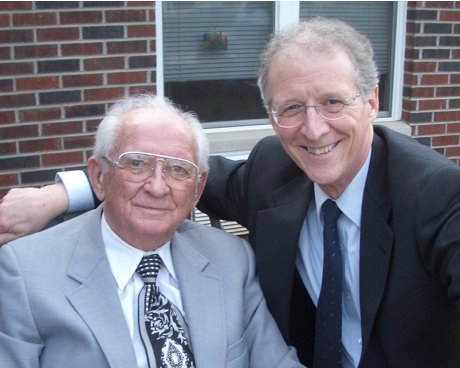
MARION IS NOW PLAYING WITH A FULL DECK..............HAPPY BIRTHDAY......

Marion Clark[who is the Executive Minister at Tenth Church] turned 52 yesterday, and as he says Iam now playing with a full deck.Marion said for years people thought he was not playing with a full deck, but what do those Doctors know.
Marion we love you, and thank you for all of your support that you give to so many of us. May God grant you many more years and many more cards up your sleeve.
Q&A WITH DR. RC. SPROUL

Throughout the Bible we are told to fear God. What does that mean?
We need to make some important distinctions about the biblical meaning of “fearing” God. These distinctions can be helpful, but they can also be a little dangerous.
When Luther struggled with that, he made this distinction, which has since become somewhat famous: He distinguished between what he called a servile fear and a filial fear. The servile fear is a kind of fear that a prisoner in a torture chamber has for his tormentor, the jailer, or the executioner. It’s that kind of dreadful anxiety in which someone is frightened by the clear and present danger that is represented by another person. Or it’s the kind of fear that a slave would have at the hands of a malicious master who would come with the whip and torment the slave. Servile refers to a posture of servitude toward a malevolent owner.
Luther distinguished between that and what he called filial fear, drawing from the Latin concept from which we get the idea of family. It refers to the fear that a child has for his father. In this regard, Luther is thinking of a child who has tremendous respect and love for his father or mother and who dearly wants to please them. He has a fear or an anxiety of offending the one he loves, not because he’s afraid of torture or even of punishment, but rather because he’s afraid of displeasing the one who is, in that child’s world, the source of security and love.
I think this distinction is helpful because the basic meaning of fearing the Lord that we read about in Deuteronomy is also in the Wisdom Literature, where we’re told that “the fear of the Lord is the beginning of wisdom.” The focus here is on a sense of awe and respect for the majesty of God. That’s often lacking in contemporary evangelical Christianity. We get very flippant and cavalier with God, as if we had a casual relationship with the Father. We are invited to call him Abba, Father, and to have the personal intimacy promised to us, but still we’re not to be flippant with God. We’re always to maintain a healthy respect and adoration for him.
One last point: If we really have a healthy adoration for God, we still should have an element of the knowledge that God can be frightening. “It is a frightening thing to fall into the hands of the living God” (Heb. 10:31). As sinful people, we have every reason to fear God’s judgment; it is part of our motivation to be reconciled with God.
Tuesday, March 06, 2007
THE TRUE CALL OF PASTORAL MINISTRY.....BY Alex D. Montoya

Pastoral ministry is a unique divine calling bestowed upon Go"d’s elect ministers of His Word and servants of His church. Men called to such a work feel both unworthy (1 Tim. 1:12–17) and unqualified (2 Cor. 3:4–6) for such a precious task. Yet to those set aside for this ministry, the claim of the apostle Paul applies: "We have this treasure in earthen vessels, that the surpassing greatness of the power may be of God and not from ourselves" (2 Cor. 4:7).
The sinfulness of man and the schemes of the evil one complicate the task of pastoral ministry, but our own ignorance of the basic purposes of the ministry add to the confusion. All too often no awareness exists regarding what the minister is to do in his calling. Such ignorance can lead him to embark on erroneous and dangerous courses.
An understanding of the biblical philosophy of pastoral ministry can serve as a means of helping the minister enter into his vocation properly and in addition can facilitate the proper execution of that vocation. This chapter will deal with two basic tenets: first, the definition and benefits of a basic biblical philosophy of ministry, and second, biblical discussions on the purposes of the church, in the execution of which it is the pastor’s function to lead. Some may wonder why we have a discussion of the purposes of the church in connection with a pastor’s philosophy of ministry. The answer is in the question, how can a pastor minister effectively if he cannot identify, clarify, simplify, and execute the purposes of the church he leads? He will be serving in a fog unless he fully understands the importance of biblical purposes.
A BIBLICAL PHILOSOPHY OF MINISTRY
Every profession needs a mission statement that answers the questions: "Why am I in this role?" "What am I supposed to be doing?" and, "How am I to accomplish this task?" Like one on a journey, a pastor needs to know where he is going. The formulation of a statement of purpose is another way of referring to a philosophy of ministry. For the pastor, a philosophy of ministry must come from the mandates addressed to Christ’s church.
We need to stress here the importance that every pastor know and own the biblical philosophy of pastoral ministry. No variety in philosophies of ministry exists. There is only one! It comes from the Scriptures and applies to all pastors.
Some today endeavor to have churches adopt a particular purpose, such as "a church for the families," "a church for the poor," etc. These may be proper, but they must be part of a larger context of the overall purpose of the church. As we shall see, the church has a purpose, and every minister is called into service to help accomplish this purpose. We dare not enter His service with our preconceived ideas or our personal agenda or a new theory on church ministry. As God said to Moses, so He says to us: "See … that you make all things according to the pattern which was shown you on the mountain" (Heb. 8:5).
Definition
What then is a philosophy of ministry? As already noted, it is a statement of purpose. It spells out exactly what we are to accomplish in ministry. It identifies the reason for the existence of the church and, thus, the reason for the existence of Christian ministry. The ministry does not exist independent of the church but rather as the means for fulfilling the purpose of the church. Paul reminds Timothy of this when he writes, "I am writing these things to you, hoping to come to you before long; but in case I am delayed, I write so that you may know how one ought to conduct himself in the household of God, which is the church of the living God, the pillar and support of the truth" (1 Tim. 3:14–15). He tells Timothy his role in the purpose of the church.
For this reason, a pastor’s philosophy of ministry becomes a guide for his personal ministry. Once established and understood, it will guide the pastor’s ministry accordingly. It becomes the map to keep him on track, a guide for his course of action—to correct him when blown astray by the hazards of ministry—and an encouragement to his life when the weight of the task burdens and almost overcomes him.
Benefits
Many benefits accrue from having a biblical philosophy of ministry. Five are worthy of emphasis. First, it forces us to be biblical. When we look to the Scriptures themselves for our reasons for ministering, it keeps us on a biblical track. The church drifts from its biblical foundation when its leaders abandon the biblical course. Ministers can apostatize by degrees, hardly noticing the slippage. They need constant reminders of the grave responsibility to keep the church firmly rooted and grounded upon the Word. The biblical writers and founding apostles have made clear the divine instructions as to the church’s pattern, purposes, and practices. Even its power is to be from God. Hence we read of traditions (1 Cor. 11:2; 2 Thess. 2:15; 3:6) and practice(s) (1 Cor. 11:16). The earliest churches of God held the same philosophy of ministry (1 Cor. 14:33, 40). Any attempt to abandon that philosophy was a sign of apostasy, either in doctrine or in practice (2 Thess. 3:6; 3 John 9).
A biblical philosophy of ministry includes the means as well as the goals. A shallow and flippant understanding of the divine purposes for the church will lead to pragmatic, carnal, and even sinful approaches to the accomplishment of these ends. The winds of social change, the currents of liberal theology, and the influence of carnal stowaways will surely take the ship off course unless its captain stays faithful to the divine course.
A second advantage to a philosophy of ministry is that it makes practical sense. We must have a definite goal; there must be an aim to what we do. Paul said it best: "Therefore I run in such a way, as not without aim" (1 Cor. 9:26). He would not spend his life shadow-boxing (1 Cor. 9:26). Ministerial burn out usually lies at the feet of a lack of direction.
Efficiency is a third reason for a philosophy of ministry. Knowing his course of action will allow the pastor to concentrate his resources on accomplishing those aspects of ministry that are most essential. Too often, issues, programs, and efforts that have little or nothing to do with the church’s overall purpose consume the pastor’s resources as well as the church’s. The temptation to waste its apostolic energies on social issues came to the early church but was averted through the wisdom of church leaders (Acts 6:1–7).
Fourth, the most obvious result of efficiency is effectiveness. He who aims at nothing hits it every time. A clearly delineated battle plan, architectural blueprint, or work detail ensures success. Ministers laboring under the hit-and-miss philosophy will have little to show after a lifetime of faithful service. Even those with meager personal resources and on difficult ground will have something to show for their labors if they toil under the guidance of a divine blueprint. This undoubtedly was the secret to the church’s success in the first century. The church knew what it had to do and went about doing it. In a short while the church had gained a reputation of upsetting the world (Acts 17:6).
The fifth benefit of holding to a biblical philosophy of ministry applies to a minister’s personal call to be faithful (1 Cor. 4:2). We must one day give an account to the Lord for the ministry entrusted to us. How can we stand before Him and plead ignorance and ask for pardon for a blundering ministry? How can we claim a reward when we have not followed the charted course? Faithfulness includes the wise execution of our work. Men do not reward failure, no matter how much effort goes into it. Neither does God. Only those like Paul achieve the prize (Acts 20:24, 27; 1 Cor. 9:24; 2 Tim. 4:7).
Using another framework, Johnson has summarized eight advantages for having a philosophy of ministry.[1] He said that a church that can articulate its philosophical foundations:
can determine the scope of its ministry
can continuously reevaluate its corporate experience in the light of its message
can evaluate its ministry in the light of thoughtful criteria rather than on the basis of a program’s popularity
is more likely to keep its ministry balanced and focused on essentials
can mobilize a greater proportion of its congregation as ministers
can determine the relative merits of a prospective ministry
can be a clear, attractive alternative community to people seeking relief from systematic failure
can choose to cooperate or not cooperate with other churches and parachurch ministries.
THE PURPOSE OF THE CHURCH
The biblical philosophy of ministry must be rooted in biblical ecclesiology. To understand one’s role as a minister, one needs to understand the role of the church. Getz puts it this way:
Anyone who attempts to formulate a biblical philosophy of the ministry and develop a contemporary strategy, a methodology that stands foursquare on the scriptural foundations, must ask and answer a very fundamental question. Why does the church exist? Put in another way, what is its ultimate purpose? Why has God left it in the world in the first place?[2]
Upon discovering the answers to these questions, the minister can then answer the question, "What is my purpose in the overall purpose of the church?"
Prior to His death, our Lord predicted the establishment of His church, which would be victorious over all foes (Matt. 16:18) and would consist of all believers becoming His body (Eph. 1:22–23). The church replaces Israel as God’s people in the present dispensation and becomes a community of believers, redeemed by Christ’s precious blood, with a threefold function. The church is a worshiping community, a witnessing community, and a working community. In other words, the church is to exalt the Lord, it is to evangelize the world, and it is to edify its members. Everything the New Testament commands the church to do falls under these headings. Only an understanding of these functions can enable an individual believer to fill his or her role in the body of Christ. Only as the minister comprehends the mission of Christ’s church can he properly serve his Lord and execute the pastoral ministry. We shall examine these three purposes in further detail.
A Worshiping Community
The ultimate purpose of mankind is to worship God and to enjoy His creation. The greatest commandment is to love God with your total being and then to love your neighbor as you love yourself (Matt. 22:36–40). The church’s foremost calling is to exalt the Lord, to magnify His character, and to glorify Him before all creation. Saucy states, "Worship is central in the existence of the church. The words of the apostle Paul that God has chosen and predestined sons unto Himself in Christ ‘to the praise of the glory of His grace’ (Eph. 1:4–6) suggests that the ultimate purpose of the church is the worship of the one who called it into being."[3]
Hence we understand the words of Peter as identifying the express purpose of Christ’s church to be the exaltation of God through word and deed:
You also, as living stones, are being built up as a spiritual house for a holy priesthood, to offer up spiritual sacrifices acceptable to God through Jesus Christ. But you are a chosen race, a royal priesthood, a holy nation, a people for God’s own possession; that you may proclaim the excellencies of Him who has called you out of darkness into His marvelous light (1 Pet. 2:4, 9).
The church is a redeemed community of sinners set apart to worship God in Christ. The minister is himself a worshiper of God. He must worship and then assist the community in the worship.
What is worship? "Worship is the honor and adoration directed to God," says MacArthur.[4] Martin says, "Worship is the dramatic celebration of God in His supreme worth in such a manner that his ‘worthiness’ becomes the norm and inspiration of human living."[5] Hence, "to worship God is thus to ascribe Him the supreme worth to which He alone is worthy." We are worshiping God when we give ourselves "completely to God in the actions and attitudes of life."[6]
The New Testament minister must see the clear distinction between worship patterns of Israel and those of the church. A dramatic change transpires between the delineated pattern of worship in Israel and that in the new order in which God is worshiped "in spirit and in truth" (John 4:24). The church has no prescribed format, no temple or holy place, no sacrificial system, and no priesthood. Any attempt to institute any of these old features into the church faces the danger of trying to turn the church back into Israel.
The church is spiritually a temple in that it is the habitation of God and is called a "spiritual house" (1 Cor. 3:16; 1 Pet. 2:5). The church does not contain a priesthood but rather is a priesthood, which in turn offers up spiritual sacrifices to God (Rom. 12:1–2; 1 Pet. 2:5; Rev. 1:6). The New Testament writers, though employing similar terminology in describing the worshiping function of the church, were careful not to impose upon the church the "old wine" that was intended for the "old wine skins."
The absence of a prescribed order introduces some unique and particular ways in which the church offers worship to God. These spiritual sacrifices become the Christian’s ministry to the Lord. The New Testament speaks of these sacrifices, often employing sacrificial terminology, but with an obvious distinction from the Old Testament system implied. The Christian is to be involved in the ministry of the gospel (Acts 6:5; Rom. 15:16; 2 Tim. 4:6), the ministry of holy living (Rom. 12:1–2; 1 Pet. 1:12–16), the ministry of prayer (Acts 6:6; 13:2–3; 1 Tim. 5:5; Rev. 4:8, 10–11), the ministry of serving others (Rom. 12:1–8; Phil. 2:17, 30; Heb. 13:16), the ministry of gratitude (Eph. 5:19–20; Col. 3:16–17; Heb. 12:28; 13:15), and the ministry of giving (Rom. 15:27; 2 Cor. 9:12; Phil. 2:4.; 4:18; Heb. 13:16).
A casual glance at these aspects of New Testament worship reinforces what has been true since the beginning of time—that all of life is to be an act of worship. Moule offers this distinct summary: "All Christian life is worship, ‘liturgy’ means service, all believers share Christ’s priesthood, and the whole Christian church is the house of God (1 Cor. 3:16; Eph. 2:22)."[7]
The New Testament presents but a sketchy picture of any particular type of the actual corporate worship experience in the early church. Here and there, we have a brief glimpse at the meetings of New Testament believers. We know they were "continually devoting themselves to the apostles’ teaching and to fellowship, to the breaking of bread and to prayer" (Acts 2:42). They came together for seasons of prayer (Acts 4:31; 12:5). The best glimpse of a church service is in Paul’s correction of the Corinthian catastrophe over the use of tongues (1 Cor. 12–14). Believers obviously met to exalt God both in prayers and prophecies, as well as in singing (see 1 Cor. 14:26). The intent of all was the worship of God (14:16, 25) and with the purpose that all be edified (14:26).
The function of the pastor is to lead the church in the attainment of this grand design, the worship of God. Obviously, the minister himself must be a true worshiper of God. He must practice in a personal and authentic way the worship of God. Then he must assist the congregation in the worship of God by helping them to understand the New Testament aspects of worship for the believer and to lead in the corporate worship of God during the various gatherings of the Christian community. He must teach the church to worship, lead them in worship, and join them in worship.
A Witnessing Community
It is not unusual to view the second and third grand purposes of the church as extensions of the first. Witnessing and ministering to one another are in a sense individual acts of worship. Hence two more ways to worship God are to win lost people and to help God’s people. At times "only a few things are necessary, really only one" (Luke 10:42), the simple worship of God! Yet we have chosen for the sake of simplicity and development to keep the next two purposes distinct from the first.
The second grand purpose of the church is to evangelize a lost world. The church is to be a community witnessing to the saving grace of Christ. The Gospels are unanimous regarding the Great Commission given to the church by Christ (Matt. 28:18–20; Mark 16:15–16; Luke 24:46–47; John 17:18). The book of Acts not only concurs with this commission (1:8) but records the church’s obedience to the Great Commission, from Jerusalem to the remotest part of the earth.
Evangelism is not an option to be accepted or rejected by the church. Outreach is a command. Evangelism is not limited to the gifted or to the church leadership. It is the mission of the entire church. To the truly faithful, evangelism is not merely a command but a compulsion (Acts 5:42; Rom. 1:14–17; 1 Cor. 9:16–18). Evangelism is the heart and soul of the New Testament church. The mandate is clear "that repentance for forgiveness of sins should be proclaimed in His name to all the nations, beginning from Jerusalem" (Luke 24:47–48).
Carrying out this purpose follows two approaches in Acts. The first is contact with the lost in the immediate surroundings, whether it be the person next to us (Acts 2), the house next door (Acts 5:42), the next town (Acts 8:5), or people of a different ethnic makeup (Acts 10). The early church did not understand the Great Commission as a mandate to do specialty evangelism. There was but one church composed of all peoples (see Rev. 7:9).
The second approach was to reach out to those in the regions beyond (cf. Rom. 15:18–29), which involved commissioning special men with the mission of taking the gospel to the remotest parts of the earth (Acts 13:1–3). The church was not negligent in obeying the Lord’s command, either in soul winning or in planting churches in other communities.
The purpose of the church has not changed today. The Great Commission still stands. Modern technology has not annulled it. Pressing social needs have not abrogated it. Spiritual problems in the church have not surpassed its importance. Neither Christ nor Paul would stay longer than necessary in one particular place. They moved on so that others might hear the gospel.
In our biblical approach to pastoral ministry, the pastor must see his role in leading the congregation in fulfilling the Great Commission. The minister is by Christ’s design himself a missionary. His church is to be a missionary church to those across the street or around the world. He is to be a world-class leader. He must have a vision beyond the pews in his facility. He should lead the way in praying for new fields, praying for God to thrust out laborers (Matt. 9:37–38), praying over the selection of missionaries (Acts 13:1–3), and supporting missionaries and the evangelistic enterprise. If he is a faithful minister, he can do no less and he dare not do otherwise.
A Working Community
The third purpose of the church is to build itself up through the interworking of various members of the Body of Christ. The function of the Christian is to edify or spiritually build up fellow members in the Body of Christ. Getz states, "The church is to become a mature organization through the process of edification so that it will honor and glorify God."[8]
The New Testament contains a number of references to this vital but neglected purpose of the church (Matt. 28:18–20; Acts 20:17–35; Rom. 12:1–8; 1 Cor. 12–14; Eph. 4:7–16; Col. 1:24–29; 1 Pet. 4:10–11). A summary of these texts is that God expects the church, which is a living organism, to grow spiritually in Christlikeness and that God has given every believer a unique spiritual gift that is intended not for self-growth but to enhance the spiritual development of fellow Christians. The role of the pastor, himself gifted for his task, is to help believers discover and utilize their gifts for the growth of the Body of Christ. A mature church can thus remain united, firm in its devotion to Christ, functioning according to the purpose of God, and able to stand against the attacks of Satan.
Paul understood his pastoral ministry well, as he states in Col. 1:28–29: "And we proclaim Him, admonishing every man and teaching every man with all wisdom, that we may present every man complete in Christ. And for this purpose also I labor, striving according to His power, which mightily works with me." This passage serves well in pointing out the express purpose of a Christian minister. Consider these observations from this text:
The purpose—"That we may present every man complete in Christ." Paul makes clear that the purpose of every pastor is not to fill the auditorium with people, nor is it to preach wonderful sermons or entertain a congregation or collect a salary. The minister’s task is to help every believer become Christlike, to prepare every child of God for meeting the Lord and Savior on that great day (see 1:22). "A glorious aim," states Eadie, "… the noblest that can stimulate enthusiasm, or sustain perseverance in suffering or toil."[9]
The plan—"We proclaim Him, admonishing every man, … teaching … with all wisdom" (1:28). Paul’s plan was simple, direct, complete, and effective. Paul preached Christ and Christ alone! (See 1 Cor. 1:23; 2:2.) His goal was to present Christ to every man, exhorting men to repent from their sins and to understand the totality of what a believer has in Christ. Paul felt "the necessity of employing the highest skill and precedence in discharging the duties of his office."[10] By warning and teaching Paul sought to bring about this maturity.[11]
The pain—"For this purpose also I labor, striving …" (1:29). Paul’s purpose was all-consuming, taxing. As an athlete, he strove for a perfect mission.[12] "It was no light work, no pastime; it made a de-mand upon every faculty and every moment," explains Eadie.[13] The work of winning and discipling believers is not easy, nor is it for the fainthearted. The motivation must be the all-consuming goal of presenting mature believers to Christ (see. Eph. 5:26–27).
The power—"According to His power, which mightily works …" (1:29). No minister is adequate for such a task. There must be absolute dependence upon the strength that only Christ can and will supply to those whom He calls and who humbly depend upon His strength, grace, and effective power. Paul elsewhere states that "our adequacy is from God" (2 Cor. 3:5).
Thus we see that Paul saw his role as a minister of the Word to bring about the maturity of every person. His was not an exclusive gospel, but an all-encompassing message.
Another text to consider in discussing the purpose of the church as a working community is Eph. 4:11–16. This passage is important not only in understanding the purpose of the church, but also because it is one of the few places that explicitly tells the role of the pastor in relation to that purpose.
Paul’s epistle to the Ephesians is the epistle on ecclesiology. Chapter 4 treats the relationship believers should have with one another, namely harmonious loving unity. A means of promoting unity in the church is the gracious giving and exercise of these gifts. Paul proceeds in verses 7–16 to expound on this truth. Four observations are apropos.
The distribution of gifts (vv. 7–11). Paul first speaks of the divine distribution of gifts whereby each member of Christ’s church receives a spiritual gift. The gifts vary in nature and effect but have one goal: the benefit or the common good, that is, the building up of one another (see 1 Cor. 12:1–11; Rom. 12:3–8). The distribution of these gifts to the church in general (v. 7) also includes gifts to a particular group of people who fill the offices of apostles, prophets, evangelists, and pastors and teachers (or pastor-teacher).[14] The intent of the apostle Paul is to highlight the specific nature of these gifts so as to indicate the part they play among the rest of the gifted brethren.
The destination of the gifts. Paul states that the purpose of the gifted men is "the equipping of the saints for the work of service, to the building up of the body of Christ" (v. 12). The plain order of the phrases and the arrangement of the prepositions yield the simple sense "for the perfecting of the saints unto all that variety of service which is essential unto the edification of the church."[15] The role of the pastor-teacher is to mature the saints, to mend them, to instruct them in the Word of God. These matured saints are then duly qualified and fit to perform the work of ministry, to exercise their spiritual gifts to serve one another. The purpose of the work of the minister to the saints is that the body of Christ be built up. Eadie states, "The spiritual advancement of the church is the ultimate design of the Christian pastorate."[16]
God did not design the pastor to be the church’s errand boy. Nor is the pastor the only one gifted to do the ministry. In fact, he does not possess all the gifts necessary for the proper and complete building up of the body. His gifts are equipping gifts, whereas the other members of the body have the useful gifts for a well-rounded ministry to the whole body. It is foolish for a church to expect its pastor to do all the ministry, as it is equally foolish for a minister to see himself as the only one capable of serving the saints. His job is to equip. Theirs is to minister to one another. The end result is an edified church.
The description of edification. Paul goes on to explain what building up the body means by giving three parallel descriptions (v. 13). The goal of the church is to be united in the faith and in the full knowledge of the Lord Jesus. A partial comprehension of Christ obviously breeds disunity as history so well testifies. The church is to grow in stature, to move from infancy to manhood, from childhood to maturity. Finally, it is to fill up the measure of Christ’s fullness, to be all that Christ is and that Christ expects the church to be.
No doubt, this is a big order for the pastor. No one can expect to accomplish this goal fully this side of heaven. Yet we are to strive to bring Christ’s church to maturity. Hendriksen comforts the minister with this thought: "Marvelous growth in maturity, nevertheless, is certainly obtainable through human effort springing forth from, and sustained from start to finish by, the Holy Spirit."[17]
The designs of edification. Paul shows what will be the ultimate result of a mature church (vv. 14–16). It will no longer be a church resembling an easily deceived child with an unstable personality. The church will not be carried about by differing doctrines and glaring error. Nor will it be susceptible to the tricks of Satan, but because of its full knowledge of Christ, it will detect, deter, and defend itself against the wiles of the devil.
While upholding the truth in love, the church will grow into all the aspects of Christ. It will become like Christ, or as Hodge states, "We are to grow so as to be conformed to him.… We are to be conformed to our head—because he is our head, i.e. because of the intimate union between him and us."[18]
Christ is really the ultimate source of all power and energy for the accomplishment of the growth of the body (see 4:16). The ultimate goal is a loving community united by the strongest bond of all—God’s divine love.
The pastor, then, has the special duty of equipping the members of his congregation so that they will discover and utilize their respective gifts for the spiritual maturity of one another. Some use the analogy of a coach and his team. The coach teaches the team the fundamentals of the game, and the team plays the game. The church is designed to be a working community where each individual member is faithfully serving the Lord by ministering to the rest.
The apostle Peter concurs with Paul and exhorts the pilgrims in his Epistle:
As each one has received a special gift, employ it in serving one another, as good stewards of the manifold grace of God. Whoever speaks, let him speak, as it were, the utterances of God; whoever serves, let him do so as by the strength which God supplies; so that in all things God may be glorified through Jesus Christ, to whom belongs the glory and dominion forever and ever. Amen (1 Pet. 4:10–11).
The New Testament picture of a shepherd and his sheep provides an excellent model for the church and its leadership. Just as the shepherd leads, feeds, equips, encourages, protects, and multiplies the flock, so the pastor is to view his role with his flock. The parallels are marvelous and illustrative. In modern terms, the church’s leaders must provide direction to Christians by pointing them toward the truth. The leader is to teach the congregation the whole counsel of God as it is revealed in Scripture by a faithful exposition of the whole Bible (see Acts 20:27; 2 Tim. 4:1–5). The pastor must see to it that every member of his flock is growing in Christlikeness by providing the necessary means for the fulfillment of this goal. He is to encourage the sheep as the flock moves through a harsh environment. Because of many dangers from the world, the flesh, and the devil, the minister must protect the flock (Acts 20:28). His watchfulness for wolves and snares ensures a safe and maturing flock. The obvious goal of the pastor is that the church grows both in numbers and in Christlikeness. He will not be content with a few sheep or with a flock so decimated by sin and Satan that they resemble "sheep without a shepherd" (Matt. 9:36).
The pastor plays a vital role in the establishment of a working community. Although the church is an organism, God sees to it that the church has direction and protection by providing a godly leadership for Christ’s body. The minister’s task is obviously never done, but he can see his flock progressing in maturity as it functions together, ministering to the needs of one another.
PRACTICAL APPLICATION
Having proposed a definition and suggested some benefits for a biblical philosophy of pastoral ministry, and having summarized the basic purpose of the church, we can now offer a general statement of the biblical purpose of Christian leadership: The role of the pastoral leadership, composed of a select group of men from the church of redeemed believers, is to provide guidance, care, and oversight for the church so that it fulfills its Christ-ordained mandate of evangelizing the entire world, growing into the likeness of Christ, and existing for the exaltation and worship of God.
The question remains as to how this biblical philosophy fleshes out in the practical ministry of the local church. What programs or practices should the pastor implement in his church to bring about the fulfillment of the church’s purpose? Again, the New Testament is silent on rigidly specifying regulations, rituals, and practices that are to be the pattern for every congregation. The early churches were not clones of one another. Rather than precise patterns, the Lord gave the purpose of the church and the basic means by which the purpose was to be accomplished. We should look for principles rather than patterns. In some instances the apostles are specific (see 1 Cor. 14.); in most cases, they present the ministry of the church in generalities, thus leaving room for each church to adapt its ministry in its own culture and context.
Though the New Testament does not furnish specific programs to implement, it is not lacking in illustrations of how the early church functioned so as to accomplish its goal. Some concepts and practices are quite adaptable and furnish a bare minimum by way of New Testament examples of what should be taking place in every local assembly. The Scriptures indicate seven ministries for accomplishing the three basic purposes of the church: exaltation, evangelism, and edification.
The Ministry of the Word
Acts 2:41–42 provides the first hint of the practice of the early disciples: "So then, those who had received his word were baptized; and there were added that day about three thousand souls. And they were continually devoting themselves to the apostles’ teaching and to fellowship, to the breaking of bread and to prayer."
Entrance into the church came through repentance and baptism accompanied by the gift of the Holy Spirit (Acts 2:38). The newly formed church then devoted itself to a number of activities that resulted in numerical and spiritual growth (see 2:47; 4:32–35). First on the list of practices was continuance in the apostles’ teaching. The Christians learned the Word of God or doctrine of the apostles, and they not only heard it but put the Word into practice. The preaching and teaching of the Word was central to the ministry of the apostles. The Word is the primary means of bringing a Christian to maturity (2 Tim. 3:16–17; cf. Ps. 19:7–11) and must not be neglected (Acts 6:2).
The pastor, then, is responsible for the teaching of the Word of God to the local church. Whether this is done through a preaching service, a Sunday school class, a discipleship group, cell groups, or home Bible studies does not matter ultimately. What is important, however, is that the Word of God be taught. If the Word of God is taught, the church will grow in faith and love (Rom. 10:17). Yet to introduce innovative programs for the sake of change and excitement without actually concentrating on teaching the Word of God is to change dinner plates without concern for the actual food that is served on those plates. The church leader must see to it that God’s people continually devote themselves to the study and practice of the Word of God.
The Ministry of Fellowship
Luke mentions a second practice of the church. They devoted themselves to the fellowship—to the oneness and the commonality of the body of Christ. Rackham states,
This fellowship was begun by our Lord, when he called the apostles to leave all and follow Him. So they formed a fellowship, living a common life and sharing a common purse. When the Lord was taken up, the common life continued: and the most characteristic words in the early chapters of the Acts are all, with one accord, together.[19]
The job of the leadership is to incorporate new believers into the local body of Christ by visible acceptance into the membership of the church, to develop the use of their spiritual gifts, to place them in a useful spiritual function in the church, and to care for their spiritual welfare (see Acts 2:44–45; 4:32–37; 6:1). The focus of the Christian community is a continual devotion to caring for one another. "Christians," adds Getz, "cannot grow effectively in isolation! They need to experience each other."[20]
Leaders need to get Christians involved with one another. They should create meetings, occasions, ministry opportunities, and structures and funnel social patterns so that Christians are involved with one another. The church is not to be a theater, a lecture hall, or a spectator event. Rather, it is to be a community, a body, a mutual sharing of lives (see 1 Cor. 12:14–27). MacArthur gives these insights into fellowship:
Fellowship involves being together, loving each other, and communing together. Fellowship includes listening to someone who has a concern, praying with someone who has a need, visiting someone in the hospital, sitting in a class or a Bible study, even singing a hymn with someone you’ve never met. Fellowship also involves sharing prayer requests.[21]
There are no gimmicks to fellowship, nor can it be artificially maintained. Either Christians care for one another or they do not. They have a sense of belonging or they do not. True maturity in Christlikeness does not develop adequately in assemblies filled with anonymous, noncommitted spectators. Pastors must strive for the opposite and look for ways to make it happen.
The Ministry of the Lord’s Supper[22]
The early church participated regularly in "the breaking of bread," which may be taken in the general sense of eating meals together or in the specific sense of partaking of the Lord’s Supper. We take it as the latter, although there is evidence that the Lord’s Supper as practiced by the early church was accompanied by a common meal (see 1 Cor. 11:17–34).[23]
The Lord’s Supper, like the ordinance of baptism, is no trivial practice, but is one that lies at the heart of the Christian message (1 Cor. 11:23–26). The symbolism, solemnity with celebration, and the sanctity required by all participants makes it one of the most inspirational and worshipful services of the Christian community. Lindsay, speaking of the early church and its practice of observing the Lord’s Supper, recalls its importance as an act of worship: "And the Holy Supper, the very apex and crown of all Christian public worship, where Christ gives Himself to His people, and where His people dedicate themselves to Him in body, soul and spirit, was always a sacrifice as prayers, praising and alms-giving were."[24]
If the church’s worship service never or seldom includes the Lord’s Supper, it falls short of the intentions of the Lord (1 Cor. 11:23) and the practices of the early church (Acts 2:42). Great spiritual benefit comes to the church when the Lord’s Supper is properly observed and is not trivialized as an appendix to a sermon or musical celebration. Pastors must teach and encourage the congregation to celebrate the Lord’s Supper in a way that will be meaningful, uplifting, and edifying to the soul.
The Ministry of Prayer
We observe in Acts 2:42 that the church was devoted not just to prayer, but to "the prayers."[25] The expression probably refers "to their own appointed seasons for united prayer within the new community."[26] Rackham says that "the expression the Prayers almost implies that there were regular hours of prayer, corresponding to the Jewish synagogue prayers, but we have no information on the subject."[27] Prayer was an important part of the church’s life (Acts 1:14; 3:1; 4:23–31; 6:4; 10:9; 12:5, etc.). The church prayed for its leaders (6:6), its missionaries (13:3), its sick (James 5:14–18), governing authorities (1 Tim. 2:1–2), and just about anything one could think of (Phil. 4:5–7).
Prayer moves God; prayer changes things. Effective prayer accomplishes much. A praying church will be a victorious, growing, maturing community. The wonder of today’s church is that so much goes on with so little praying. The answer to many of the church’s problems is not more seminars, programs, and promotional gimmicks but more intercession on the part of God’s people, both as a group and in the closet.
The Ministry of Outreach
Another aspect of the ministry that needs incorporation into the life of the church is educating, involving, and motivating the church to reach out to the lost community around them. Early believers were concerned for the unsaved and made it a lifestyle to testify about the gospel of Jesus Christ. Luke makes this observation about the church’s leadership: "And every day, in the temple and from house to house, they kept right on teaching and preaching Jesus as the Christ" (Acts 5:42). The record of the Acts of the Apostles is a description of the spread of the gospel as Christ had commanded.
Evangelism is expected of the believer, and especially of the local church. The church today commits two grave errors when it comes to evangelism. The first is the notion that the pastor’s role is to teach the people and then the church will naturally go about the business of evangelism. The other fallacy is that evangelism is the task of the pastor or church leadership. They are the "hired ones," paid to do evangelism. More recently, some have suggested that evangelism is a gift held by some who in turn are to do the work of evangelism for the church.
We contend that evangelism is both caught and taught. Pastors must practice personal soul winning as well as teach evangelism to their congregations. A church that does not know how to reproduce and does not reproduce is in reality an immature congregation, regardless of its intellectual comprehension of Scripture or the sophistication of its corporate programs. (The matter of outreach is addressed in more detail in chapter 18, "Outreaching.")
The Ministry of Missions
The obvious result of attempting to fulfill the Great Commission will be the incorporation of a missions program into the local church. Faithfulness to the Lord’s command to disciple all the nations will include a directed effort, regardless of the magnitude, at reaching the regions beyond the local church’s immediate locality. The local church will have a missions program where they participate in selecting, sending, supporting, and interceding for special Christians who are sent out from them to reach the lost in other places.
The pastor will lead the way in establishing and maintaining the missions program. It is not a task to leave to the women’s missionary society or the missions committee. Missions is world-class work and needs top-level guidance and support. The early church considered missions a matter of extreme importance (Acts 13:1–3; 14:27; 15:36–40). It was not a secondary or minor program. Every church, large or small, should have its own involvement in the great missionary enterprise of the body of Christ.
The Ministry of Interchurch Fellowship
New Testament churches were autonomous congregations under the supervision of their own eldership or leadership. They shared in similar traditions and practices, while being distinct congregations. Yet there was a great amount of interdependence. They shared in discipleship efforts (Acts 11:26), in common relief efforts (Acts 11:27–30), and in general ecclesiastical decisions (Acts 15:1–31; 16:4). They maintained an active relationship with one another so that each church saw itself as a part of the whole.
The same needs to be true today; churches should belong to a larger group of churches for mutual support and cooperative efforts. This may be done by belonging to a denomination, an association of churches, or a fellowship of like-minded ministries. The result will be the same.
The pastor should be careful not to become the proverbial lone ranger, isolating himself and his congregation from the rest of the body of Christ. This will result in his own loss and the diminished ministry of his congregation. The minister must lead the church in these cooperative efforts and implement the programs that will sustain and invigorate these fellowships.
As one can see, there is no end to specific ways that the pastor can flesh out the purposes of the biblical church in his particular congregation. Yet he must make sure that he begins with the Scriptures. The Holy Spirit in His sovereign wisdom gave biblical principles that can be applied during all ages to all cultures. The rest is up to Christian ministers.
THE TRINITY........By Dr John MacArthur

The Trinity is an unfathomable, and yet unmistakable doctrine in Scripture. As Jonathan Edwards noted, after studying the topic extensively, “I think [the doctrine of the Trinity] to be the highest and deepest of all Divine mysteries” (An Unpublished Treatise on the Trinity). Yet, though the fullness of the Trinity is far beyond human comprehension, it is unquestionably how God has revealed Himself in Scripture—as one God eternally existing in three Persons.
This is not to suggest, of course, that the Bible presents three different gods (cf. Deut. 6:4). Rather, God is three Persons in one essence; the Divine essence subsists wholly and indivisibly, simultaneously and eternally, in the three members of the one Godhead—the Father, Son, and Holy Spirit.
The Scriptures are clear that these three Persons together are one and only one God (Deut. 6:4). John 10:30 and 33 explain that the Father and the Son are one. First Corinthians 3:16 shows that the Father and the Spirit are one. Romans 8:9 makes clear that the Son and the Spirit are one. And John 14:16, 18, and 23 demonstrate that the Father, Son, and Spirit are one.
Yet, in exhibiting the unity between the members of the Trinity, the Word of God in no way denies the simultaneous existence and distinctiveness of each of the three Persons of the Godhead. In other words, the Bible makes it clear that God is one God (not three), but that the one God is a Trinity of Persons.
In the Old Testament, the Bible implies the idea of the Trinity in several ways. The title Elohim (”God”), for instance, is a plural noun which can suggest multiplicity (cf. Gen. 1:26). This corresponds to the fact that the plural pronoun (”us”) is sometimes used of God (Gen. 1:26; Isa. 6:8). More directly, there are places in which God’s name is applied to more than one Person in the same text (Ps. 110:1; cf. Gen. 19:24). And there are also passages where all three divine Persons are seen at work (Is. 48:16; 61:1).
The New Testament builds significantly on these truths, revealing them more explicitly. The baptismal formula of Matthew 28:19 designates all three Persons of the Trinity: “Go therefore and make disciples of all the nations, baptizing them in the name of the Father and the Son and the Holy Spirit.” In his apostolic benediction to the Corinthians, Paul underscored this same reality. He wrote, “The grace of the Lord Jesus Christ, and the love of God [the Father], and the fellowship of the Holy Spirit, be with you all” (2 Cor. 13:14). Other New Testament passages also spell out the glorious truth of the Triune God (Romans 15:16, 30; 2 Cor. 1:21–22; Eph. 2:18).
In describing the Trinity, the New Testament clearly distinguishes three Persons who are all simultaneously active. They are not merely modes or manifestations of the same person (as Oneness theology incorrectly asserts) who sometimes acts as Father, sometimes as Son, and sometimes as Spirit. At Christ’s baptism, all three Persons were simultaneously active (Matt. 3:16–17), with the Son being baptized, the Spirit descending, and the Father speaking from Heaven. Jesus Himself prayed to the Father (cf. Matt. 6:9), taught that His will was distinct from His Father’s (Matt. 26:39), promised that He would ask the Father to send the Spirit (John 14:6), and asked the Father to glorify Him (John 17:5). These actions would not make sense unless the Father and the Son were two distinct Persons. Elsewhere in the New Testament, the Holy Spirit intercedes before the Father on behalf of believers (Rom. 8:26), as does the Son, who is our Advocate (1 John 2:1). Again, the distinctness of each Person is in view.
The Bible is clear. There is only one God, yet He exists, and always has existed, as a Trinity of Persons—the Father, the Son, and the Spirit (cf. John 1:1, 2). To deny or misunderstand the Trinity is to deny or misunderstand the very nature of God Himself.
THIS YEAR'S......PCRT......IS GOING TO BETTER THEN EVER
First Things First
BY Rick Phillips
It seems that every year at the PCRT, something is said that focuses the entire conference. Last year it was Sinclair Ferguson's insistence that our goal is not merely "to know the truth of God's Word, but to know the power of the truth of God's Word." This last weekend it was a statement made several times by Don Carson. He pointed out that there is a way to be biblical that is not, in fact, biblical. This is to place the peripheral things of God's Word at the center, and to place the central things on the periphery. He argued that if we are to be people of God's Word, then our greatest excitement must be for those things that are most central to God's Word: such as the atoning work of Christ and the glorious grace of God in salvation. The bane of our day, he asserted, is that topics like the atonement, justification, the attributes of God, etc. are considered passe by so many Christians, and especially among scholars. Let us be excited about the whole range of Christian truth and experience. But let God and His saving work always be that which most animates our hearts and minds.
BY Rick Phillips
It seems that every year at the PCRT, something is said that focuses the entire conference. Last year it was Sinclair Ferguson's insistence that our goal is not merely "to know the truth of God's Word, but to know the power of the truth of God's Word." This last weekend it was a statement made several times by Don Carson. He pointed out that there is a way to be biblical that is not, in fact, biblical. This is to place the peripheral things of God's Word at the center, and to place the central things on the periphery. He argued that if we are to be people of God's Word, then our greatest excitement must be for those things that are most central to God's Word: such as the atoning work of Christ and the glorious grace of God in salvation. The bane of our day, he asserted, is that topics like the atonement, justification, the attributes of God, etc. are considered passe by so many Christians, and especially among scholars. Let us be excited about the whole range of Christian truth and experience. But let God and His saving work always be that which most animates our hearts and minds.
Monday, March 05, 2007
WTS BOOKSTORE
In order to accomplish some essential maintenance, the building housing the Westminster Bookstore at Westminster Theological Seminary in Glenside is closed to the general public until further notice. During this construction, the online store (www.wtsbooks.com) and phone order center (215-886-0999) will remain open, and orders will be shipped in the usual timely fashion. The webstore features every book in our retail store at the same low prices, and just $5 shipping for any size order!
THE JESUS TOMB ROLLS ON........ By Derek Thomas
The tiresome story of the "Tomb of Jesus" rolls on, proving once again the eagerness with which unbelief will grasp at anything to believe a lie. Informed responses can be found at the following sites: Andreas Kostenberger, Ben Witherington, Darrell Bock, and Charles Quarles. Link to this post
Sunday, March 04, 2007
THE JESUS TOMB????? By Andreas Kostenberger
 First let's here from Dr Phil Ryken on this matter.
An excerpt from this week's sermon on Luke 24:1-12, a propos of James Cameron and the "The Lost Tomb of Christ."How could the women know that this was true? As far as they were concerned, Jesus was still missing. How could they believe in the resurrection of his body unless they could see Jesus with their own eyes? And perhaps more importantly for us, how can we believe this? Somewhere Harvard Professor Ernest Wright has said, “In biblical faith everything depends upon whether the central events actually occurred or not.” If that is true, then how can we know for sure that Jesus really did rise from the dead?
This question was raised in a fresh way this week by the announcement that the caskets of Jesus and other members of his family had been discovered in a burial cave from a Jerusalem suburb.
According to James Cameron, who produced a documentary film on the subject, DNA evidence would prove that this was, in fact, the family of Jesus of Nazareth. Finally, someone was coming up with the remains of Jesus (which of course the Jewish Sanhedrin would have done anything to produce two thousand years ago, thereby disproving the resurrection and discrediting the apostles!)
What is the best way to respond to such a direct attack on the veracity of the gospel? Some Christians answer by giving evidence for the resurrection. There is a place for this approach in the practice of apologetics, both as a way of confirming the faith and casting doubt on unbelief, if not actually convincing people of the truth of the gospel. The very fact of the empty tomb is evidence that demands a verdict. The body of Jesus was dead, having been crucified. Then it disappeared from the very tomb where it was buried. The body that disappeared was the very body that was crucified. This historical fact—the absence of his body from the empty tomb—joins the crucifixion to the resurrection and helps to confirm that Jesus rose from the dead.
However, this is not how the angels tried to convince the women at the empty tomb. They did not try to reason on the basis of the physical evidence. Nor did they make a case for Christ by refuting alternative explanations for what happened to the missing body. Instead, the angels simply told these women—and us—to remember what Jesus said: “Remember how he told you, while he was still in Galilee, that the Son of Man must be delivered into the hands of sinful men and be crucified and on the third day rise” (Luke 24:6-7). We are to believe in the resurrection on the basis of what Jesus said. The empty tomb is not self-explanatory. There is a word that explains the deed, and this word is the Gospel message that Jesus not only died, but also rose again with a glorious and everlasting body that would never die again.
What the angels told the women to remember were the prophecies Jesus made of his death, burial, and resurrection. Back in chapter 9, after Peter confessed that he was the Christ of God, Jesus said, “The Son of Man must suffer many things and be rejected by the elders and chief priests and scribes, and be killed, and on the third day be raised” (Luke 9:22; cf. 9:44). We find the same thing in chapter 18: “For he will be delivered over to the Gentiles and . . . after flogging him, they will kill him, and on the third day he will rise” (Luke 18:32-33; cf. 17:25). Everything happened just the way that Jesus said. The words of his prophecies all came true. He was crucified, dead, and buried.
Now it was the third day—the day Jesus promised to rise from the grave. Indeed, this was the day when he must rise from the grave, for the earlier promises of the gospel expressed a divine compulsion. Therefore, when the women saw the empty tomb, they should have known that he was alive from the dead. The reason they are perplexed is because they have not yet believed what Jesus said. Dr. Phil Ryken
--------------------------------------------------------------------------------------------
Andreas Kostenberger
As you’ve heard, James Cameron, director of the blockbuster movie “Titanic,” is out to sink an even bigger ship—Christianity. He claims that Jesus’ bones and those of his mother, brothers, wife, and child named Jude, were found in ossuaries (bone boxes) in a Jerusalem tomb.
On Larry King Live, Cameron and his collaborator Simcha Jacobovici claimed that they produced a TV documentary (to air on March 4 on the Discovery Channel) simply in an effort to “report the news” so that people can draw their own conclusion. Yet according to Ben Witherington, Simcha is a practicing, orthodox Jew. Are we really to believe that the “revelation” that Jesus’ bones have been found—hence no resurrection—are of no religious concern to this man? To me, at least, this one has the almighty dollar sign written all over it.
Let me list just some of the most egregious problems with the way in which this find (in the 1980s!) is being interpreted by Cameron and Simcha:
the claim that Mary Magdalene’s bones were found in one of the ossuaries on the basis that the name “Mariamne” (Mary) is inscribed on it is bogus; the connection drawn here is pulled completely out of thin air
the highly suspect use of statistics and DNA “evidence” to support their case; Jesus, Joseph, and Mary were among the most popular names in first-century Palestine, and, of course, people buried in the same family tomb would for the most part be related; as Witherington rightly points out, we “would need an independent control sample from some member of Jesus’ family to confirm that these were members of Jesus’ family”—but, of course, we have no such thing
all the earliest accounts of Jesus’ death and burial indicate that Jesus’ body could not be found and had not been moved; there is no ancient evidence at all for Jesus’ family tomb whatsoever
why would this family tomb have been in Jerusalem? Jesus was born in Bethlehem and grew up in Nazareth
there is no historical evidence for Jesus having a son named Jude; there is no credible historical evidence that Jesus was married, to Mary Magdalene or anyone else (plus see the first point above)
if Jesus died and a year later his bones were transferred to an ossuary, and this ossuary was placed in a Jerusalem family tomb, this would mean that all the early Christian martyrs, including the apostles, knowingly died for a fraudulent religion; this is highly implausible
if you had been Jesus and (for argument’s sake) had had a son, would you have named him Judas (same as Judah or Jude), like the man who betrayed you?
It is hard to know whether one should dignify this kind of warmed-up sensationalist commercial ploy with a serious rebuttal. Why would an orthodox Jew and an unbelieving Hollywood producer time the release of a television documentary denying Jesus’ resurrection just prior to Easter? Because of serious scholarship or maximum personal profit?
Simcha says we Christians should be open to the evidence he presents. I agree; if Jesus’ bones were in that box, Christianity is based on a false premise—the resurrection of Jesus (see the Gospel resurrection narratives; the apostles’ preaching in the Book of Acts; and Paul’s summary of the gospel in 1 Cor. 15:3–4). The problem with Simcha’s “evidence,” however, is that he is connecting the dots far too quickly to arrive at his desired conclusion. Surely it will take better evidence to overturn the well-attested fact of Jesus’ resurrection.
Friday, March 02, 2007

By Chad Van Dixhoorn
British Academy Postdoctoral Fellow and Research Fellow of Wolfson College, University of Cambridge
The purpose of creeds
Confessions are doctrinal summaries of the Bible’s teaching. They are written by the Church for the Church and the world. They are written for the world because churches with creeds and confessions are trying to be honest about themselves. These doctrinal statements announce that this is a church that has beliefs and is willing to list the most important ones for all to see. This is the very thing that cults and sects refuse to do. When they arrive at your door on Saturday mornings they discuss all things peripheral; their pamphlets hide what they believe and so do their websites.
Things are different in orthodox churches and have been so from the beginning. Not only were the Christians of the early church forced to explain themselves to governors unhappy with the exclusive claims of Christians. They also needed to explain their faith simply to new converts wanting summaries of the Bible’s teaching. Creeds and confessions serve this purpose well. They summarize what God’s word has to say about God and they state succinctly the horror of the fall and then the wonder of the gospel.
Although confessions and creeds have sometimes started as signposts to a church’s honesty or catalogues of its core beliefs, the best of them have also served as ecumenical charters of some sort. They were meant to be shared, perhaps by many churches for many centuries. That has meant that those who use a confession might not be able to shape each sentence and paragraph just as they would like. But the value of a shared confession is almost incalculable for the church that uses it, for it helps it to express the unity of the body of Christ. Shared confessions such as the Apostles’ Creed or the Westminster Confession of Faith unite the church to others which have confessed the same doctrines before. These texts remind us that Christianity was not invented last Tuesday and they affirm that we are united to all those that love and preach what we have confessed in written form. And so a good confession is not only public, but it also strikes the right balance between the pure doctrine of the church and the unity of the church. A confession should state each doctrine carefully, but also humbly. It should plainly confess what is plain in Scripture and, if it is necessary to state it at all, it should cautiously express that which is less obvious.
The Westminster Assembly (1643-1652)
Of course it is easier to announce a maxim than it is to live it out and this was certainly true for the theologians of the Westminster Assembly, for they had to decide how to reform the Church of England and its doctrinal standards. Two years before the famous assembly gathered in Westminster Abbey, a prominent minister named Edmund Calamy urged the House of Commons to reform the English Church. This was no nostalgic look back to the Edenic days of England’s boy-king, the evangelical and Reformed Edward VI. On the contrary, Calamy urged Parliament to “reform the Reformation itself.” It was not until 1643 that Calamy’s modern reformation took shape in the calling of what proved to be the last of the great post-Reformation synods, the Westminster Assembly (1643-1652).
The Westminster Assembly was instrumental in purging the church of many appalling preachers and filling it with many less appalling ones. It tried to revise, and eventually re-wrote texts for the Churches of England and Wales, Scotland and Ireland. It drafted directions for Church Government, published a guide for public worship, issued statements on doctrine, corresponded with foreign churches, authored two catechisms and wrote a new Confession of Faith.
Really, Edmund Calamy and his colleagues should have been very pleased, but he was not. The task of revising or writing documents like a Confession looked easier that it really was. Then (as now) there were too many architects wanting reform and not enough builders who could actually effect it. While individual ministers could individually state their own understanding of the Bible, it was much harder to do this as a group. The experience was frustrating, leaving Calamy to mourn that “noe man knows what this reformation is. This is a sin & misery.”
The Westminster Confession of Faith today
In 1644 Edmund Calamy was in despair but by 1646 the Assembly had managed to finish its great Confession. The end product was worth celebrating and still is today. Indeed it is a truly remarkable text in the history of Christianity and all who peruse its pages will find a sure-footed summary of Christian truth for the Christian life.
Its opening pages rejoice in the wonder of God’s revelation of himself in the world and in the Word. Whole paragraphs linger over the fullness and clarity of the Scriptures, and show marked deference to the authority and finality of the Bible’s sixty-six books. With devotion and delight, the Confession goes on to consider the God who reveals himself in all his perfections. With reverence and awe the Westminster divines strive to say what can be said of the God who is one and the God who is three. The glories of the eternal God occupy some lines; the “most loving, gracious” and “merciful” character of God occupies others.
Further chapters remind us that our God has ordained or ordered “whatsoever comes to pass.” This plan of the eternal God was settled from “all eternity.” And from the beginning God’s plan or counsel for the ordering of all things is “most wise and holy.” What else could it be? This plan is worked out in the creation of the world and in the care of the world. Three breathless sentences open up the wonder of creation; the remainder of the Confession shows how “God the great Creator” providentially “upholds” “all things”, or, as the letter to the Hebrews says, “he sustains all things by his powerful word” (Heb 1:3). As we would expect from a God who has decreed and created all things, God’s upholding is no bare upholding. Not at all. He “directs, disposes and governs” his creation – all of his creatures, all their actions, and all of those parts of creation that cannot act. This comes as no surprise for those who are familiar with almost any part of the Bible but, as usual, the footnotes in the Confession point to selected portions of Scripture to make the point. Is not this all-encompassing providence portrayed so vividly in the dreams sent to King Nebuchadnezzar and explained by the prophet Daniel? Is not God’s providence the wonder for which the Psalmist praises the Lord, the Lord who “does whatever pleases him, in the heavens and on the earth, in the seas and all their depths” (Ps 135:6)? Reflection on the lines of the Confession often lead to the study of the words of Scripture. Few other exercises can provide such rich returns on one’s investment in time.
And so it is that chapter by chapter, the Westminster Confession of Faith traces with bold strokes the great history of our redemption. The sad realities of the fall, God’s gracious covenants with man, the stunning announcement of salvation, and our sure hope of eternal life – all these are sketched out here in bold, but considered strokes. Who can read this text and not be warned that those who ignore the Holy Scripture are doomed to stumble through the world in darkness? And who can read this Confession and not see that those who embrace the true God, believe what he promises, and walk by his precepts, will never be without a guide or a light for this life? It is because of the clarity of this gospel message in all of its parts that the Westminster Confession of Faith finds itself in the first rank of great Christian creeds. Perhaps it is the wisest of creeds in its teaching and the finest in its doctrinal expression. Certainly it is a reliable guide to the Scriptures, which are the only guide to God. It is my hope that all who follow its directions will find their way to the Father’s home, through the grace and mercy of the Son and by the power of his Holy Spirit.
-->
SO HOW WAS THE WOMENS CONFERENCE AT TENTH CHURCH????
The women’s conference at Tenth Presbyterian Church was a wonderful example of learning how to resolve conflicts in a truly biblical way.Too often in many churches today worldly influences seems to dominate how we respond to conflicts and this conference was an exceptional presentation of the correct and biblical way we are to resolve them.Tara Barthel did an excellent job and I came away with more knowledge and a better understanding of what God’s word says regarding our relationships with those around us.I look forward to using the biblical guidelines she taught to help me develop and maintain a Godly attitude towards any conflicts in my life and to show others that God’s way is always the best way. MANDY------------------------------------------------------------------------------------------------
The women's conference this past weekend at Tenth Presbyterian was amazing! I have never seen my sin as clearly as it was shown to me in the 4th session of the conference. Seeing our own sin is a huge part of resolving conflicts in our lives. What an eye(and heart)opener!Thankfully in the first session Tara had powerfully shared with us God's amazing grace. "When we are at our worst, God's love is unwavering."Unwavering...can you even imagine being loved so unconditionally? It took this conference for it to really hit home for me.Using Tara's own words from this weekend "She blessed my socks off and I am now standing here sockless because of her!" What a heart for the Lord and for sharing His grace with other people! I am truly grateful to God for the privilege of attending this conference. He used Tara to speak His truth in my life and to challenge me to grow more like Jesus. AMY------------------------------------------------------------------------------------------------'Living The Gospel In Relationships' Conference at Tenth Presbyterian Church was beyond awesome! Tara Barthel, the speaker, was excellent!! She portayed challenging insight on what the word says about being a peacemaker. Her eye opening break down of the scriptures really humbled me. I was in tears before the first session ended.Discovering the steps that we are to glorify God, get the log out of our own eye, gently restore, and go and be reconclied showed me the correct way to take the necessary steps that are proper in conflict/resolution. Every word spoken hit home and was just what I needed to hear. I have much to glean from the conference. It was better than expected and a superb awakening for all of us women! SHANNON.
The women's conference this past weekend at Tenth Presbyterian was amazing! I have never seen my sin as clearly as it was shown to me in the 4th session of the conference. Seeing our own sin is a huge part of resolving conflicts in our lives. What an eye(and heart)opener!Thankfully in the first session Tara had powerfully shared with us God's amazing grace. "When we are at our worst, God's love is unwavering."Unwavering...can you even imagine being loved so unconditionally? It took this conference for it to really hit home for me.Using Tara's own words from this weekend "She blessed my socks off and I am now standing here sockless because of her!" What a heart for the Lord and for sharing His grace with other people! I am truly grateful to God for the privilege of attending this conference. He used Tara to speak His truth in my life and to challenge me to grow more like Jesus. AMY------------------------------------------------------------------------------------------------'Living The Gospel In Relationships' Conference at Tenth Presbyterian Church was beyond awesome! Tara Barthel, the speaker, was excellent!! She portayed challenging insight on what the word says about being a peacemaker. Her eye opening break down of the scriptures really humbled me. I was in tears before the first session ended.Discovering the steps that we are to glorify God, get the log out of our own eye, gently restore, and go and be reconclied showed me the correct way to take the necessary steps that are proper in conflict/resolution. Every word spoken hit home and was just what I needed to hear. I have much to glean from the conference. It was better than expected and a superb awakening for all of us women! SHANNON.
Thursday, March 01, 2007
COME CELEBRATE THE LIFE OF PEG GREEN
Here is the service and viewing information for Peg Green.
The viewing including worship Service will be held at
GUCKIN FUNERAL HOME
1419 HUNTING PARK AVENUE PHILADELPHIA PA. 19124
215- 743-7256
DATE...FRIDAY MARCH 2ND
TIME... 6:30PM UNTIL 9:00PM
IF YOU ARE SENDING FLOWERS HAVE THEM DELIVERED BETWEEN 1- 3PM ON FRIDAY MARCH 2ND
The viewing including worship Service will be held at
GUCKIN FUNERAL HOME
1419 HUNTING PARK AVENUE PHILADELPHIA PA. 19124
215- 743-7256
DATE...FRIDAY MARCH 2ND
TIME... 6:30PM UNTIL 9:00PM
IF YOU ARE SENDING FLOWERS HAVE THEM DELIVERED BETWEEN 1- 3PM ON FRIDAY MARCH 2ND
Subscribe to:
Comments (Atom)